Where to Buy Top China Laser Cutting Machines?

Finding the right laser cutting machines for sale in China requires more than comparing prices. Buyers must examine machine performance, supplier experience, and long-term support. A reliable manufacturer should provide clear specifications, factory details, test videos, and customer references. These details help separate genuine production capability from polished online advertising.

In practice, the best supplier depends on your material, thickness, workload, and workshop conditions. A fiber laser may suit stainless steel and carbon steel, while a CO2 system can serve acrylic, wood, and other non-metal materials. Check cutting samples before ordering. Ask for the laser source brand, rated power, positioning accuracy, bed size, and expected maintenance schedule. A professional supplier should explain these points without avoiding difficult questions.

Service matters as much as speed. Confirm installation guidance, operator training, spare-part availability, warranty terms, and response times. Ask whether engineers can support remote diagnosis when a machine stops unexpectedly. Small details matter. Look closely at cable protection, extraction design, safety guards, and software compatibility. These features affect daily productivity and operator confidence.

Not every highly rated supplier will fit every buyer. Some reviews may lack technical context. Some impressive demonstrations may use unusually thin material. That deserves reflection. Request an independent inspection or a live cutting test when possible. Compare at least three quotations, but do not choose by price alone. A dependable Chinese manufacturer should communicate clearly, document its claims, and admit practical limitations. This guide explores where to buy top China laser cutting machines with greater confidence and fewer costly surprises.

Where to Buy Top China Laser Cutting Machines?

Types of China Laser Cutting Machines and Their Best Uses

Where to Buy Top China Laser Cutting Machines?

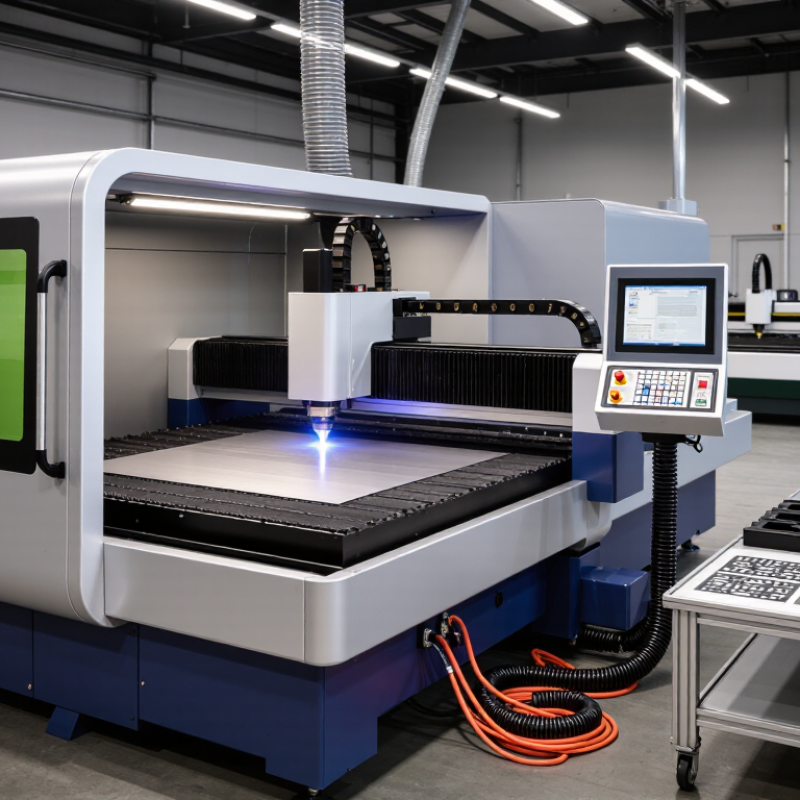
Choosing a China laser cutting machine starts with the material, not the machine’s advertised power. Fiber laser cutters are suitable for stainless steel, carbon steel, aluminum, and brass. They are common in sheet-metal workshops and automotive component production. A 1.5 to 6 kW system can handle many daily fabrication tasks, but thicker metal may require higher power and slower cutting speeds. Check the cutting samples carefully.

CO2 laser machines work well with acrylic, wood, leather, fabric, and some plastics. They suit sign making, interior decoration, packaging, and small furniture production. UV laser machines create fine marks on glass, coated metals, plastics, and electronic parts. Their low heat effect helps protect delicate surfaces. Diode systems are usually compact and affordable. They fit light engraving and hobby-level work, but they may struggle with thick materials.

The best place to buy is an audited manufacturer, qualified exporter, or established industrial marketplace. Request videos of the exact material and thickness you will process. Ask about laser source life, cutting-head maintenance, software support, training, spare parts, and electrical compatibility. I once focused too much on purchase price. That shortcut looked efficient, but it caused expensive delays later. A factory inspection or live remote test can reveal uneven cuts, weak extraction, and poor alignment. Do not trust impressive specifications alone. Confirm warranty terms, installation support, and realistic delivery conditions before paying.

Key Features to Check Before Choosing a Laser Cutting Machine

Where to Buy Top China Laser Cutting Machines?

Choosing a laser cutting machine requires more than comparing online prices. Reliable Chinese suppliers usually provide factory details, test videos, technical documents, and clear service terms. Ask for a live cutting demonstration using your actual material. A clean edge on thin steel may look impressive, but thicker sheets can reveal poor power control.

Check the laser source, rated power, cutting bed, autofocus system, and motion accuracy. The machine should maintain steady cuts across the entire worktable. Cooling performance also matters, especially during long production shifts. Examine the exhaust system, emergency stop, protective enclosure, and electrical certifications. Software compatibility is easy to overlook. Confirm that operators can import common design files without repeated conversion problems. I once underestimated training time, and production slowed for several days.

Tips: Request sample cuts before ordering. Measure kerf width, edge smoothness, and cutting speed. Compare those results with the supplier’s written specifications. Check warranty coverage, spare-part availability, installation support, and response times. A low purchase price may become expensive when basic components are difficult to replace. Read independent customer feedback, but do not trust every online review. Some details remain unclear until the machine runs under real workshop conditions. A careful inspection is worth the extra effort.

Where to Buy Top China Laser Cutting Machines? - Key Features to Check Before Choosing a Laser Cutting Machine

Evaluation Dimension Typical Specification or Range Why It Matters What to Check Before Purchase
Laser Source Type Fiber laser for metal; CO₂ laser for many non-metal materials The source determines material compatibility, operating cost, maintenance needs, and cutting performance. Confirm the source type is suitable for the intended materials and request a sample-cut test.
Laser Power Approximately 1–6 kW for common sheet-metal applications; higher power for thicker production work Higher power can improve cutting capability and productivity, but usually increases equipment and operating costs. Match rated power to the material type, thickness range, expected daily volume, and required edge quality.
Working Area Common sheet sizes include 1,500 × 3,000 mm and 2,000 × 4,000 mm A suitable bed size reduces repositioning, improves workflow, and accommodates standard sheet dimensions. Measure available floor space, loading access, sheet dimensions, and clearance for maintenance.
Supported Materials Carbon steel, stainless steel, aluminum, brass, copper, wood, acrylic, plastics, leather, or textiles depending on laser type Different materials require different wavelengths, power levels, gases, lenses, and processing parameters. Check an explicit material list and verify that reflective metals and non-metal materials are safely supported.
Maximum Cutting Thickness Varies significantly by power and material; thin sheet to several tens of millimeters for metal systems Published maximum thickness is not always the same as the thickness suitable for continuous, high-quality production. Ask for recommended production thickness, cutting speed, gas type, and edge-quality results for each material.
Positioning Accuracy Often specified around ±0.03–0.05 mm, depending on machine configuration and test method Accuracy affects hole size, part fit, repeatability, and downstream assembly. Request the applicable standard, test procedure, measured results, and repeatability data rather than relying only on a marketing figure.
Maximum Travel Speed Commonly about 80–140 m/min for sheet-metal fiber systems; actual cutting speed is lower Travel speed describes rapid movement, while real productivity depends on material, thickness, acceleration, piercing, and part geometry. Compare cycle-time tests using your own drawings and materials instead of comparing maximum travel speed alone.
Cutting Head and Autofocus Automatic focus adjustment with interchangeable protective windows and nozzles Autofocus can simplify setup and maintain more consistent results across different thicknesses. Confirm compatible consumables, focus range, nozzle availability, collision protection, and replacement cost.
Motion and Drive System Rack-and-pinion or linear-drive systems with servo motors and precision guide rails The mechanical system influences acceleration, vibration, positioning stability, service life, and cut consistency. Review drive specifications, rail protection, calibration procedures, frame rigidity, and maintenance requirements.
Control Software CAD/CAM import, nesting, lead-in and lead-out control, parameter libraries, and alarm diagnostics Efficient software can reduce material waste, setup time, programming errors, and operator workload. Check file compatibility, nesting functions, user permissions, language options, updates, and training materials.
Assist Gas System Compressed air, oxygen, or nitrogen, selected according to material and desired edge finish Gas pressure and purity affect cutting speed, oxidation, burr formation, and operating cost. Confirm required pressure, flow rate, purity, regulator type, compressor capacity, and gas consumption.
Cooling System Dedicated industrial chiller with temperature and flow monitoring Stable cooling protects the laser source and helps maintain consistent performance during extended operation. Check cooling capacity, ambient-temperature limits, alarm functions, filter maintenance, and compatible coolant.
Electrical Requirements Three-phase industrial power is common; voltage and frequency vary by market Insufficient or incompatible electrical infrastructure can cause downtime, safety risks, or installation delays. Obtain the complete electrical load, voltage, frequency, grounding, breaker, and power-quality requirements.
Safety Configuration Enclosed work area, interlocked doors, emergency stops, warning indicators, and protective viewing windows where applicable Proper safeguards reduce exposure to laser radiation, sparks, fumes, moving parts, and fire hazards. Verify applicable local safety requirements, guarding, interlocks, emergency circuits, ventilation, and fire-prevention measures.
Fume and Dust Extraction Zoned extraction table or suitable external filtration system Effective extraction improves workplace air quality, protects optical components, and reduces contamination. Check airflow, filter type, filter replacement cost, ducting requirements, noise level, and local ventilation rules.
Automation Options Automatic shuttle table, sheet loader, unloading system, tube rotary axis, or storage integration Automation can reduce manual handling and improve throughput in repetitive production. Calculate return on investment using labor savings, cycle time, batch size, floor space, and loading limitations.
Inspection and Acceptance Testing Factory acceptance test, sample cutting, dimensional inspection, and documented machine checks Testing before shipment helps confirm performance against agreed specifications. Include test materials, drawings, tolerances, edge-quality criteria, acceptance records, and corrective-action terms in the contract.
Installation and Training Remote or on-site installation, operator training, maintenance instruction, and process support Proper commissioning reduces startup problems and helps operators use the machine safely and efficiently. Clarify included training days, travel costs, language support, installation prerequisites, and handover documents.
Warranty and Technical Support Coverage commonly differs by component, with separate terms for the laser source, machine structure, and consumables Responsive support and clear warranty terms directly affect uptime and total ownership cost. Request response-time targets, remote diagnostics, spare-parts availability, exclusions, service contacts, and escalation procedures.
Documentation and Compliance User manuals, electrical diagrams, maintenance schedules, spare-parts lists, and applicable conformity documents Complete documentation supports safe operation, troubleshooting, audits, and future maintenance. Confirm documents are supplied in the required language and that compliance claims match the destination market.
Total Cost of Ownership Purchase price plus freight, installation, electricity, assist gas, consumables, filters, maintenance, and downtime A lower initial price may be outweighed by higher consumable, energy, service, or downtime costs. Compare a three- to five-year cost model using expected utilization, consumable prices, service intervals, and productivity.
Supplier Verification Verified legal entity, production capability, export experience, traceable references, and stable technical support Supplier verification reduces risks related to inconsistent specifications, delivery delays, counterfeit components, and weak after-sales service. Use independent factory verification, inspect production capability, validate references, and match the contract entity with payment documents.

Where to Find Reliable China Laser Cutting Machine Manufacturers

Where to Buy Top China Laser Cutting Machines?

Reliable China laser cutting machine manufacturers are found through careful verification, not attractive prices alone. In my experience, a serious supplier explains the machine’s cutting range, positioning accuracy, power stability, and maintenance needs clearly. Vague answers deserve caution.

Ask for a live cutting demonstration using your own material and design files. Watch the edge finish, piercing time, smoke extraction, and finished dimensions. Request factory videos, quality records, export experience, and references from similar industries. A dependable manufacturer should also provide electrical diagrams, installation guidance, operator training, and a practical spare-parts list.

Inspect the machine bed and motion system closely. Weld seams should look consistent, and cable routing should be protected from heat and movement. Check whether the control software supports secure updates and clear fault messages. Confirm the warranty terms, response time, packaging method, and remote service process in writing. Small details matter.

I once underestimated after-sales support because the machine performed well during testing. That mistake became expensive when a simple sensor failed. A supplier’s technical team should identify replacement parts quickly and explain safe procedures. Still, no manufacturer is perfect. Ask difficult questions, record every promise, and compare several factories before placing an order. Reliability is built through evidence, not confident wording.

How to Compare Suppliers, Prices, Certifications, and Support

Buying a high-quality China laser cutting machine requires more than comparing online prices. I would inspect the supplier’s factory, production records, and machine testing process. Ask for cutting samples using your actual material, thickness, and required edge quality. A clean stainless-steel cut may look impressive, but it proves little for reflective metal or thick plate. Request a detailed quotation covering the laser source, cutting head, control system, table size, installation, training, and spare parts.

Certifications should be verifiable, not decorative files. Check whether electrical safety, electromagnetic compatibility, and machinery requirements match your destination market. Confirm the certificate holder, product model, testing date, and issuing organization. My first comparison was too shallow. I focused on the machine price and ignored shipping, software updates, consumables, and technician response time. That mistake can make a cheap machine expensive within one year.

Tips: Compare at least three suppliers using the same specification sheet. Ask for recent customer references in a similar industry. Clarify warranty coverage in writing. Test remote support before ordering. A supplier that answers technical questions clearly is usually safer than one offering vague discounts. Also check the local service plan, because downtime rarely waits for convenient business hours.

Steps for Ordering, Inspecting, and Installing Your Machine

Where to Buy Top China Laser Cutting Machines?

Before ordering, define the material, thickness, sheet size, and expected daily workload. Ask the supplier for cutting samples using your actual metal and preferred settings. Review the machine’s power requirements, control system, included tools, warranty terms, and spare-parts availability. Request a clear quotation with shipping, packaging, installation, and training listed separately. Hidden costs can change the decision quickly.

Before payment, inspect photos and videos of the completed machine. Check the model plate, electrical cabinet, guide rails, cables, cooling unit, and protective enclosure. Ask for a factory acceptance test report. A live video test is more useful than polished product images. Measure sample edges for burrs, heat marks, and dimensional accuracy. Keep every specification in writing. Verbal promises fade.

Installation needs a prepared foundation, stable power, clean cooling water, ventilation, and enough service space. Follow the supplier’s manual and local electrical and safety requirements. A qualified technician should verify grounding, emergency stops, beam alignment, and protective interlocks. Train operators with simple cutting tests before production begins.

My early checklist missed workspace clearance, and maintenance became awkward. Leave room.

Record initial settings, inspection results, and operator training dates. If the first test fails, pause production and investigate instead of increasing power blindly. Small errors can become expensive damage.