How to Choose a Fiber Laser Cutter for Your Business

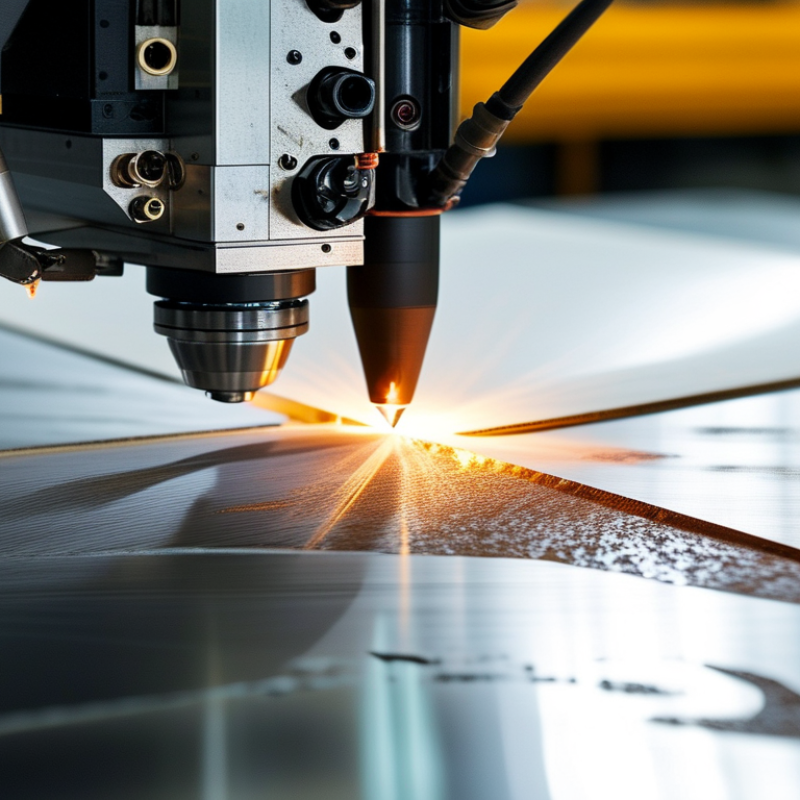
Choosing a fiber laser cutter is not simply a matter of buying the highest wattage. It is a production decision involving material, thickness, speed, accuracy, maintenance, and total ownership cost. A machine that cuts stainless steel beautifully may struggle with reflective brass or unstable shop-floor power. Small details matter.

Industry reports show why this decision deserves careful analysis. Grand View Research’s Fiber Laser Market Size, Share & Trends Analysis Report identifies strong growth in fiber laser adoption through the decade, supported by automation and demand for efficient metal processing. MarketsandMarkets’ Laser Technology Market report also highlights expanding use across automotive, aerospace, electronics, and general manufacturing. These trends sound encouraging, but market growth does not guarantee a suitable machine for every business.

Your choice should begin with real production samples. Test mild steel, aluminum, and stainless steel at your expected thicknesses. Record cutting speed, edge quality, gas consumption, pierce time, and electricity use. Ask suppliers for documented test results, warranty terms, service response times, and spare-parts availability. A lower purchase price can become expensive when lenses, nozzles, chillers, or software support are overlooked. It happens.

Reports from the International Energy Agency and industrial automation studies also reinforce the value of energy efficiency and process automation. Yet efficiency depends on utilization. A powerful fiber laser cutter may be wasteful if it runs only two hours daily. Review your order volume, future capacity, operator skills, floor space, and safety procedures before signing a contract. Independent advice helps. Your best machine is not the most impressive one; it is the one that delivers repeatable results under your actual working conditions.

How to Choose a Fiber Laser Cutter for Your Business

Define Your Cutting Requirements and Production Goals

Choosing a fiber laser cutter begins with your production reality, not its advertised maximum power. Measure material types, thicknesses, sheet sizes, daily cutting hours, tolerance demands, and expected order variety. A workshop cutting 1 mm stainless steel needs different capacity from one processing 20 mm carbon steel. Grand View Research’s 2024 Laser Cutting Machine Market report projects an 8.7% compound annual growth rate through 2030. That growth reflects wider adoption, but market growth does not guarantee a suitable machine for your floor.

Calculate your required output using actual job history. Record parts per sheet, average piercing time, setup changes, and rejected pieces. Then estimate monthly throughput under realistic staffing conditions. A higher-power source may cut thicker material faster, yet it can increase purchase, gas, and maintenance costs. Cutting speed alone is a weak decision metric. Consider beam quality, automation compatibility, extraction capacity, and service response. The 2024 State of Smart Manufacturing Report by Deloitte found that manufacturers continue prioritizing productivity and operational efficiency. Your targets should be measurable, such as 1,200 finished parts monthly or less than 2% scrap.

Tips: Request a cutting test using your own material and drawings. Inspect edge quality, dross, burrs, and hole accuracy. Ask for cycle-time records, not promises. Leave capacity for growth, but avoid paying for unused power. A spreadsheet helps. It can still be wrong. Review the assumptions with operators before signing.

Compare Fiber Laser Types, Power Levels, and Cutting Capacities

Choosing a fiber laser cutter starts with its laser type. Continuous-wave fiber lasers suit sheet and plate cutting, while pulsed systems handle marking and delicate, thin materials. For general fabrication, continuous-wave output is usually more practical.

A 2024 MarketsandMarkets report identifies fiber lasers as a fast-growing industrial laser segment, driven by metal processing and automation.

Power must match your daily workload, not your biggest possible job. A 1–3 kW cutter commonly handles thin steel, stainless steel, and aluminum efficiently. Machines rated at 6–12 kW can process thicker plate faster, but they demand stronger extraction, higher electricity capacity, and better thermal control.

Cutting capacity also depends on material grade, nozzle design, assist gas, and edge-quality requirements. A neat specification sheet can still mislead.

The 2023 Industrial Laser Solutions market review notes that productivity gains depend heavily on application settings, not laser power alone.

Tips: Test your actual materials before purchasing. Send 3–5 sample parts, including your thickest regular plate. Measure cut speed, burr height, kerf width, and gas consumption.

Ask for results at two power levels. This exposes unrealistic claims. I would also leave unused capacity, perhaps 20%, for future orders.

However, buying excessive power can create poor returns when most work involves thin sheet. Record your monthly thickness mix for three months before deciding.

Evaluate Machine Accuracy, Speed, Software, and Automation Features

Choosing a fiber laser cutter starts with measurable accuracy, not impressive brochure language. Check positioning tolerance, repeatability, kerf consistency, and heat distortion on your actual materials. ISO 230-2 provides a useful framework for testing machine positioning performance. Request sample cuts with thin sheet, thick plate, small holes, and tight corners. Small errors become expensive.

Speed also needs context. Compare piercing time, cutting speed, acceleration, and toolpath efficiency, rather than headline wattage alone. Ask for cycle-time records from comparable jobs. In my experience, a fast machine can lose its advantage through poor nesting or frequent manual adjustments. That is easy to overlook.

Software should connect design, nesting, production planning, and machine monitoring. Look for automatic parameter libraries, collision warnings, material tracking, and clear fault messages. Automation matters when it removes repeated handling, not when it merely adds complexity. The International Federation of Robotics reported 553,052 industrial robots installed worldwide in 2022, showing the scale of factory automation. A 2023 smart manufacturing survey found 86% of manufacturers viewed smart manufacturing as important for future competitiveness. Still, automated loading, unloading, and inspection need reliable sensors and safe recovery procedures. Test the workflow during a full shift, including interruptions. One awkward screen can waste hours.

How to Choose a Fiber Laser Cutter for Your Business: Accuracy, Speed, Software, and Automation

Evaluation Area Key Specification Practical Target or Reference Range How to Evaluate It Business Impact Suggested Weight
Machine Accuracy Positioning accuracy Approximately ±0.03–±0.05 mm, subject to the applicable machine standard Request the stated test method and standard. Cut a calibrated test pattern at different table positions, then measure holes, slots, diagonals, and repeated features with calibrated inspection equipment. Controls part fit, assembly quality, and rework rates. 15%
Machine Accuracy Repeatability Approximately ±0.02–±0.03 mm for demanding production work Run the same feature repeatedly without changing the setup. Compare dimensional variation across the first, middle, and final parts of the batch. Important for consistent batches and unattended production. 10%
Machine Accuracy Thermal stability Stable performance after warm-up and during long production runs Review machine compensation functions, structural design, cooling requirements, and results from a multi-hour test. Check whether accuracy changes as the machine heats up. Reduces dimensional drift and quality variation. 8%
Cutting Speed Maximum traverse speed Commonly about 80–140 m/min; maximum speed is not the same as cutting speed Compare actual cutting charts for your material and thickness. Ask for cycle-time data rather than relying only on the advertised axis speed. Affects throughput, but has limited value if acceleration or processing power is insufficient. 8%
Cutting Speed Acceleration Approximately 0.8–2.0 G, depending on machine size and configuration Evaluate a nesting file containing short contours, small holes, and frequent direction changes. These parts reveal the effect of acceleration more clearly than long straight cuts. Often has a greater effect on real cycle time than maximum speed. 10%
Cutting Capability Laser power and thickness range Select power according to the required material mix, thickness, edge quality, and production volume Test the actual grades of mild steel, stainless steel, aluminum, brass, or copper that your business uses. Confirm recommended thickness ranges and gas requirements. Determines whether the machine can support current and planned orders. 12%
Cutting Capability Edge quality and small-feature performance Clean edges, limited dross, stable small holes, and acceptable heat-affected areas Use a representative production file with holes, narrow slots, acute corners, and mixed thicknesses. Inspect dross, taper, kerf consistency, and hole roundness. Reduces deburring, secondary processing, and customer complaints. 10%
Software CAD/CAM and nesting workflow Direct import of common 2D formats, automatic nesting, remnant handling, and reusable cutting libraries Test the complete workflow from drawing import to machine-ready program. Check support for DXF, common sheet formats, part rotation, grain direction, and scrap reduction. Shortens programming time and improves material utilization. 8%
Software Parameter management Material, thickness, nozzle, focus, power, speed, and gas settings stored in editable libraries Confirm whether operators can create controlled recipes, record revisions, and restore proven parameters without manually re-entering every value. Improves repeatability and reduces operator-dependent errors. 6%
Software Monitoring and data access Live status, alarms, production counters, cutting time, and maintenance information Ask whether reports can be exported and whether data can connect to production-management or maintenance systems through supported interfaces. Supports costing, traceability, and continuous improvement. 5%
Automation Sheet loading and unloading Automatic handling matched to sheet weight, format, and daily production volume Check loading capacity, cycle time, storage compatibility, access requirements, and whether the system can handle thin, reflective, or warped sheets safely. Reduces manual handling and enables longer unattended runs. 5%
Automation Nozzle and lens protection Automatic nozzle alignment, collision detection, height sensing, and protective-window monitoring Review alarm functions and test recovery from a simulated collision or contamination event. Confirm replacement procedures and consumable availability. Limits downtime and protects critical optical components. 4%
Operating Cost Assist-gas consumption Measured consumption and cost per part for oxygen, nitrogen, or compressed air Request gas-flow data for the materials and thicknesses you actually cut. Include gas purity, pressure, compressor capacity, and storage costs in the calculation. Can materially affect the cost of stainless steel and aluminum production. 4%
Service and Safety Maintenance and operator safety Enclosed beam path, interlocks, fume extraction, accessible service points, and documented maintenance intervals Verify applicable safety certifications, enclosure interlocks, extraction performance, emergency stops, training materials, spare-parts lead times, and service response procedures. Protects employees and improves machine availability. 5%

Note: The numerical ranges are practical purchasing benchmarks rather than universal specifications. Final selection should be based on representative sample cuts, documented test conditions, total operating cost, and the materials and production volumes of your business.

Assess Operating Costs, Safety Systems, Maintenance, and Support

How to Choose a Fiber Laser Cutter for Your Business

Operating cost deserves more attention than the purchase price. Request a twelve-month estimate covering electricity, assist gas, lenses, nozzles, extraction filters, and software. Ask how costs change during long shifts or thicker material cutting. A machine that saves money on paper may create expensive downtime. I would also measure actual production needs before choosing maximum power. More power is not always better.

Safety systems should be practical, visible, and easy to test. Look for a fully enclosed cutting area, door interlocks, emergency stops, fire detection, and effective fume extraction. Confirm that the operator can access manuals and training materials in a clear language. In a workshop, dust can settle on floors, sensors, and nearby equipment. Small details matter. Safety claims still require regular inspection, documented procedures, and trained staff.

Maintenance affects both accuracy and trust. Operators should check protective lenses, nozzles, cooling levels, filters, and machine alarms each day. Keep a simple log with dates, symptoms, and corrective actions. Fine residue around the cutting head can signal poor cleaning or unsuitable settings. I once underestimated cleaning time in a busy production schedule. That was a planning mistake. Ask about preventive maintenance intervals, spare-part availability, technician response times, remote diagnostics, and warranty limits. Support should remain useful after installation, not only during the sales process.

How to Choose a Fiber Laser Cutter for Your Business

Assess operating costs, safety systems, maintenance, and technical support before making a purchase.

Planning benchmark: Estimated annual cost for a 3 kW fiber laser cutter operating 1,000 productive hours per year. The model assumes electricity at $0.12/kWh, nitrogen at $0.20/m³, and includes routine maintenance, consumables, and technical support.
Operating Costs
Compare electrical consumption, assist-gas usage, consumables, and expected labor requirements.
Safety Systems
Confirm enclosed guarding, door interlocks, emergency stops, warning indicators, and fume extraction.
Maintenance
Review preventive-maintenance intervals, spare-parts availability, optics inspection, and filter replacement needs.
Technical Support
Evaluate installation training, remote diagnostics, response times, warranty coverage, and local service capability.

Select the Best-Fit Cutter Through Testing, Budgeting, and Supplier Review

Choosing a fiber laser cutter should begin with a test, not a catalogue promise.

Prepare your actual steel, aluminum, and stainless-steel samples. Measure cut speed, edge roughness, burrs, kerf width, and piercing time. Record results at different thicknesses. A clean sample can hide unstable production performance. Your operators should run the trial, because daily handling often reveals awkward software, loading, or maintenance issues.

Budget beyond the machine price.

Include extraction, chiller power, assist gases, lenses, nozzles, training, downtime, and service travel. The U.S. Department of Energy reports that compressed air can represent 10% to 30% of industrial electricity use. Gas consumption therefore deserves a line in your cost model. Calculate cost per finished part, not cost per hour. Leave contingency money. My own purchasing reviews often underestimate installation delays and operator training.

Supplier review needs evidence.

Request three customer references with similar materials and production volumes. Ask for measured tolerances, response times, spare-parts availability, and warranty exclusions.

The 2024 Deloitte smart manufacturing survey found that 92% of surveyed manufacturers view smart manufacturing as important to competitiveness.

Connectivity matters, but integration claims require testing. Confirm file compatibility, data access, cybersecurity controls, and remote-support limits in writing. A supplier that avoids practical demonstrations may still sell a capable machine, but that uncertainty should reduce your offer or stop the purchase.