2026 Top Linear Motor Drive Manufacturers for Global Buyers
The 2026 linear motor drive market is entering a more demanding phase. Buyers now expect speed, positioning accuracy, thermal stability, and long service life from one system. The International Federation of Robotics reported 541,302 industrial robots installed worldwide in 2023. That figure shows continuing automation demand, but it does not measure linear motor drives directly. The distinction matters.
Market reports from MarketsandMarkets and Grand View Research forecast strong growth for linear motor technologies through the decade. Their estimates differ because some studies include motors, stages, controllers, and complete motion systems. Others measure only the motor itself. These differences require careful reading. Forecasts are useful, but they are not purchasing evidence.
As linear-motor pioneer Eric Laithwaite famously explained, a linear motor is “a rotary motor unrolled.” The idea remains technically simple, yet real-world selection is not. A packaging line may need rapid acceleration every few seconds. A semiconductor stage may require nanometer-level repeatability in a clean environment. A machine builder may instead prioritize easy commissioning and regional support. Therefore, this guide evaluates leading 2026 manufacturers through measurable criteria, including thrust density, feedback compatibility, drive efficiency, cooling design, integration experience, and after-sales capability. It also considers application details that brochures often understate, such as cable routing, vibration, duty cycles, and replacement lead times. Some rankings remain debatable. That is healthy. Global buyers should verify test conditions, request application data, and compare total ownership costs before selecting a linear motor drive supplier.
What Is a Linear Motor Drive and How Does It Work?
What Is a Linear Motor Drive and How Does It Work?
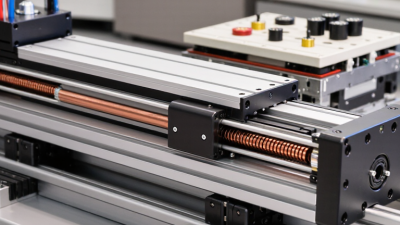
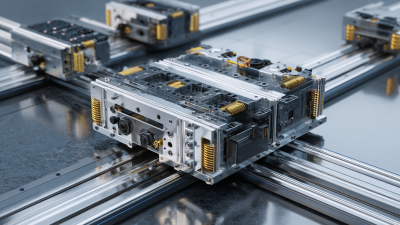
A linear motor drive produces direct motion along a straight path. Unlike a rotary motor, it does not need gears, belts, or a lead screw. Its motor structure resembles a rotary motor opened and flattened. The stationary section contains electromagnetic coils, while the moving section carries permanent magnets. When controlled current flows through the coils, changing magnetic fields create thrust. The moving part then travels across the guideway.
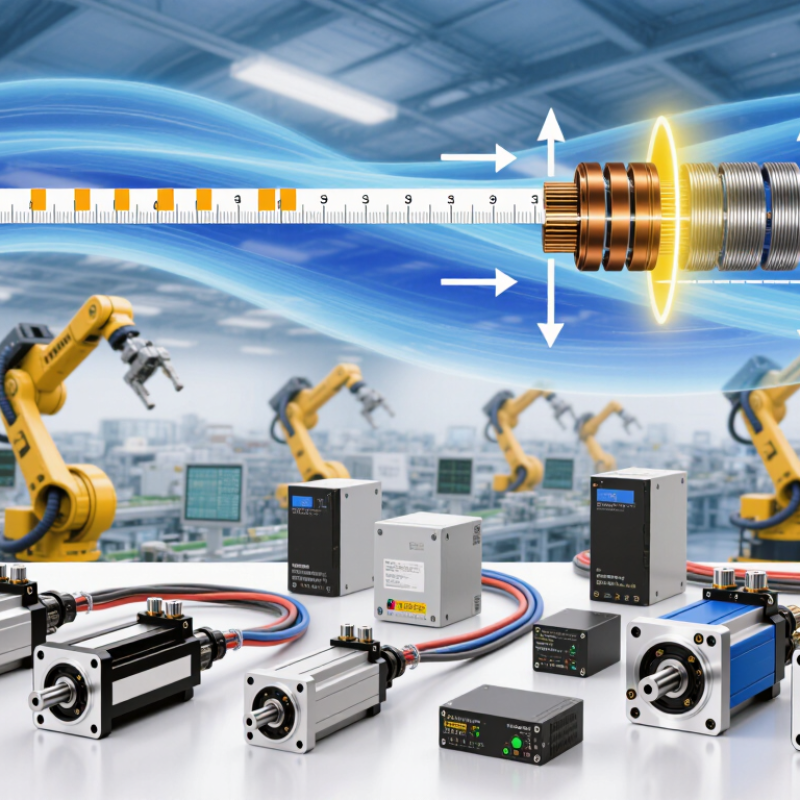
The drive system manages this movement electronically. It regulates current, direction, speed, and acceleration through an inverter and motion controller. An encoder measures the mover’s position, often within micrometre-level accuracy. The controller compares actual position with the target and adjusts current continuously. In factory testing, engineers also check heat, vibration, cable movement, and emergency stopping performance. A common mistake is focusing only on peak speed. Continuous force, cooling, alignment, and load changes matter more in daily operation.
Tips: Match the drive to the required stroke, payload, speed, and duty cycle. Keep the guideway clean and accurately aligned. Review feedback resolution before choosing a controller. Noise may indicate poor tuning, loose mounting, or unexpected friction. Real systems are rarely perfect. Leave safety margins, then validate them under actual working conditions.
Leading Linear Motor Drive Manufacturers for Global Buyers in 2026
Leading Linear Motor Drive Manufacturers for Global Buyers in 2026
Linear motor drive manufacturers are gaining attention as factories demand faster, cleaner, and more precise motion systems. MarketsandMarkets estimates the global linear motor market could grow from about USD 1.3 billion in 2023 to USD 2.2 billion by 2028, with a double-digit CAGR. This growth reflects stronger demand from semiconductor, packaging, medical, and automated inspection equipment.
For global buyers, manufacturer capability matters more than catalog speed. Experienced suppliers should provide force curves, thermal limits, encoder compatibility, and verified positioning data. A drive rated for 500 newtons may perform differently after continuous acceleration, heat buildup, and vertical loading. Factory acceptance tests should record repeatability, settling time, vibration, and emergency-stop behavior. These details reveal engineering maturity. Not just marketing.
Technavio’s industry analysis also identifies automation investment and smart manufacturing as major growth drivers. However, regional support remains uneven. Buyers should check spare-part locations, firmware policies, electrical certifications, and response times before signing contracts. A technically excellent supplier can still create delays if replacement components cross borders slowly. This is an uncomfortable issue, but it affects real production.
Tips: Request a sample motion profile before purchase. Compare peak force with continuous force. Ask for three years of field failure data, not only laboratory results. Review the test method carefully, because “precision” can mean different things. I have seen specifications look impressive until payload, temperature, and cable routing were added. That gap deserves scrutiny.
2026 Top Linear Motor Drive Manufacturers for Global Buyers
Typical continuous-force ranges by linear motor category used in industrial automation and precision motion systems.
Iron-core and tubular linear motors generally support higher continuous-force applications, while ironless and voice-coil designs are commonly selected for low-cogging motion, fast positioning, and compact precision equipment. Actual performance depends on motor length, cooling, duty cycle, stroke, controller, and operating conditions.
Industry Applications and Regional Market Strengths
In 2026, linear motor drive suppliers will compete through application expertise, not speed claims alone. MarketsandMarkets projects continued growth in the linear motors sector, supported by semiconductor equipment, robotics, and precision machinery. These systems deliver direct motion, fewer mechanical wear points, and rapid positioning. However, thermal drift remains a practical concern.
Semiconductor plants in East Asia demand clean, repeatable motion for wafer handling and inspection stages. Regional suppliers often understand high-throughput production better because they work close to electronics manufacturing clusters. European markets show stronger demand for machine tools, packaging lines, and factory modernization. The International Federation of Robotics reported 541,302 industrial robot installations globally in 2023, reinforcing demand for accurate motion components.
North American buyers often prioritize flexible automation, medical equipment, and warehouse systems. Linear drives must support quick integration, diagnostics, and strict maintenance schedules. In field evaluations, cable routing and controller compatibility can matter more than peak acceleration. A higher specification is not always better. It may increase heat, cost, and tuning difficulty.
Regional strength is useful, but it should not replace supplier verification. Buyers should review repeatability data, testing methods, service response, and lifecycle assumptions. Reports from Interact Analysis also indicate growing automation investment across logistics and manufacturing. Still, public market forecasts vary widely. That gap deserves careful review before purchasing decisions.
How to Select the Right Linear Motor Drive Supplier Internationally
Selecting a linear motor drive supplier for 2026 requires more than comparing catalog prices.
Grand View Research estimates the global linear motor market will grow at roughly 7% annually through 2030.
That growth increases supplier choice, but not necessarily supplier quality. Ask for measured force curves, continuous and peak current data, encoder resolution, thermal limits, and documented cycle-life results. A polished brochure is not enough.
Check whether the drive matches your machine’s real duty cycle. Confirm compatibility with your controller, feedback system, voltage range, and required safety functions.
MarketsandMarkets’ 2024 Motion Control Market report projects continued growth through 2029, driven by automation and precision manufacturing.
This makes technical support increasingly important. Request software files, wiring diagrams, test procedures, and response times for international service. Also verify ISO 9001 certification, applicable IEC 61800 requirements, electromagnetic compatibility testing, and export documentation.
Run a sample test before signing a large contract.
Measure positioning error after thermal stabilization, not only during a short demonstration. Calculate total cost, including freight, commissioning, spare drives, customs handling, and downtime risk. A low purchase price can become expensive quickly.
I would also question suppliers that promise identical performance across every installation; machine stiffness, cooling, cable routing, and contamination change results. Supplier selection is partly engineering and partly judgment. Some assumptions will fail. Document them early.