Why Choose an Industrial Laser Cutter for Your Business?
Why Choose an Industrial Laser Cutter for Your Business?
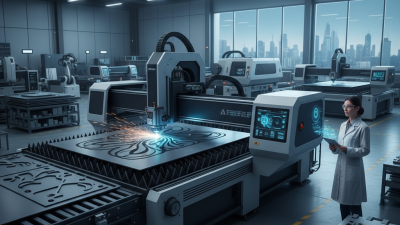
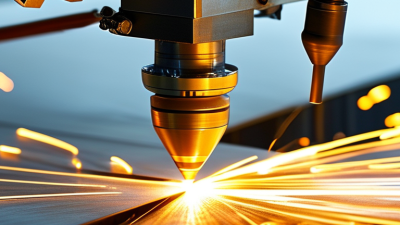
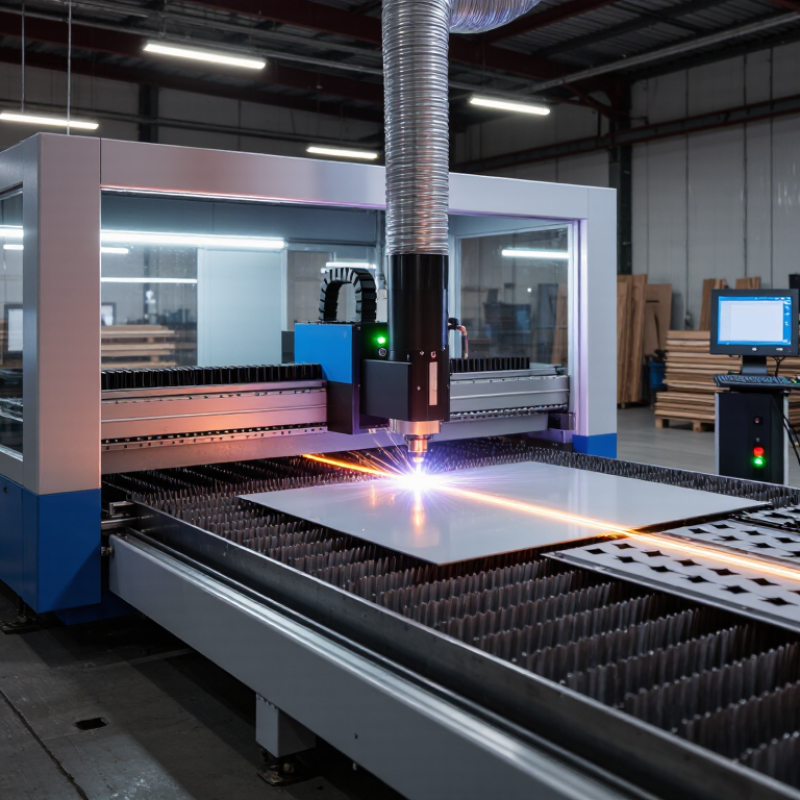
An industrial laser cutter can transform how a fabrication business handles metal, acrylic, wood, and other approved materials. Picture a fiber laser cutting a two-millimeter steel sheet at high speed, leaving a narrow, clean kerf. Less secondary grinding may follow. That difference can affect labor, material waste, and delivery schedules.
Dr. Valentin Gapontsev, founder of IPG Photonics, famously said, “The future belongs to fiber lasers.” His observation reflects a major manufacturing shift toward efficient, precise, and increasingly automated laser systems. Modern machines can combine automatic focusing, nesting software, rotary cutting, and sensor-based monitoring. These features help operators repeat complex parts with fewer manual adjustments. However, purchasing one is not automatically a smart decision. The machine must match your material thickness, production volume, workspace, and technical skills.
Look beyond cutting speed. Examine beam quality, assist-gas consumption, extraction systems, maintenance access, software support, and operator training. A fast machine can still become expensive when downtime interrupts a small production line. The real value appears when accurate cuts reduce rework and help employees complete more orders consistently. Numbers matter here. Track scrap rates, setup time, maintenance costs, and actual machine utilization.
There is no perfect choice.
Some businesses overestimate their output and buy excessive capacity. Others choose a cheaper machine and later face frustrating limitations. A careful review of current orders, future demand, and staff experience creates a more reliable investment path. This guide explores those practical considerations and explains why an industrial laser cutter may—or may not—deserve a place in your operation.
Industrial Laser Cutters: Fiber, CO₂, and Nd:YAG Technologies Explained
Why Choose an Industrial Laser Cutter for Your Business?
Industrial laser cutting now covers three distinct technologies. Fiber lasers use a solid-state source and suit steel, aluminum, brass, and copper. Their electrical efficiency can reach 30–40%, according to the U.S. Department of Energy’s industrial laser technology reviews. They also require fewer consumable parts. Shop-floor trials often show cleaner edges and faster piercing on thin metal. However, reflective materials still demand careful setup.
CO₂ lasers remain useful for acrylic, wood, plastics, textiles, and thicker nonmetal sheets. Their cutting area is often flexible, but their efficiency commonly stays near 10–15%. Nd:YAG lasers deliver concentrated energy for detailed work and reflective metals. Pulsed versions can produce fine features with limited heat spread. They usually cost more to maintain and may process slowly at higher thicknesses. That trade-off is easy to underestimate.
MarketsandMarkets estimates the laser cutting machine market could grow from about USD 5.1 billion in 2023 to USD 8.4 billion by 2028. The report attributes growth to automation, shorter production cycles, and demand for precise components. Grand View Research also identifies fiber technology as the leading segment by revenue in recent assessments. These figures vary because each report defines the market differently. That matters. A factory should compare material mix, thickness, duty cycle, extraction needs, and operator skill before choosing a source. The most advanced laser is not always the most productive one.
How 1.06–1.08 μm Fiber Lasers Improve Metal-Cutting Efficiency
Why Choose an Industrial Laser Cutter for Your Business?
A 1.06–1.08 μm fiber laser transfers energy efficiently into steel, stainless steel, and aluminum. Its shorter wavelength generally couples better with reflective metals than a 10.6 μm CO2 laser. This improves piercing, edge quality, and cutting speed in many production settings. The U.S. Department of Energy reports wall-plug efficiency near 25–35% for fiber lasers, compared with roughly 10–15% for CO2 systems. Lower electrical demand can reduce operating costs during long shifts.
The difference appears clearly on the factory floor. A fiber cutter can pierce thin stainless steel quickly, leaving a narrow heat-affected zone and less secondary finishing. The 2024 Industrial Laser Market report from MarketsandMarkets identifies fiber lasers as a major growth segment, driven by efficient metal processing and automation. However, wavelength alone does not guarantee better results. Assist-gas pressure, nozzle alignment, lens cleanliness, and sheet condition still matter. Small errors show quickly.
Not every job favors fiber technology. Thick mild steel may require careful power selection and slower parameters. Reflective alloys can also challenge inexperienced operators. Practical trials remain essential. Measure parts per hour, energy use, dross, and maintenance time before purchasing. That evidence is more reliable than a brochure.
Cutting Precision: Why Industrial Lasers Can Reach ±0.1 mm Tolerance
Industrial laser cutters earn their value through repeatable accuracy, not impressive speed alone. A well-maintained system can approach ±0.1 mm tolerance under controlled conditions. That figure depends on material thickness, heat buildup, lens condition, gas pressure, and machine calibration.
ISO 230-2:2014 explains how machine-tool positioning accuracy and repeatability should be tested. It does not promise one universal cutting tolerance. ISO 9013:2017 also evaluates thermal-cutting quality through edge geometry, squareness, and surface characteristics.
These standards matter because a clean-looking edge can still hide dimensional drift.
In practice, operators check test coupons before production runs. A six-millimeter steel plate may leave the table within specification, while a long, narrow part shifts after repeated heating. Small details matter.
The 2024 World Robotics report recorded 541,302 new industrial robot installations worldwide in 2023. That growth reflects stronger demand for automated, consistent manufacturing. Laser cutting fits this direction because programmed paths reduce manual layout errors and support digital production records.
Yet ±0.1 mm should be treated as a process target, not a permanent guarantee. I have seen accuracy fall after a dirty protective window or a poorly centered nozzle. That is easy to overlook. Regular calibration, thermal compensation, and documented inspection are essential for reliable results.
Material and Thickness Limits Across 1–20 kW Laser Cutting Systems
Why Choose an Industrial Laser Cutter for Your Business?
Material and thickness limits change sharply across 1–20 kW laser cutting systems. A 1–3 kW machine commonly handles thin steel, stainless steel, and aluminum from 0.5 to 12 mm. It suits brackets, enclosures, signage, and small production batches. Cutting speed drops as thickness increases. That matters during real shift planning.
Systems from 6–12 kW can process mild steel around 25–40 mm, depending on gas, nozzle design, and machine condition. Stainless steel and aluminum often have lower practical limits, sometimes near 20–30 mm.
A 20 kW cutter may reach 50–60 mm mild steel, but maximum thickness is not the same as reliable production thickness. Thick edges can show dross, taper, or slower piercing.
I have seen impressive sample cuts fail during repeated production. The brochure was technically correct, but incomplete.
Tips:
Test your actual grade, thickness, and tolerance before buying. Request cut samples with production settings, not showroom settings. Check piercing time, edge quality, gas use, and hourly output. Leave a safety margin of 20–30 percent below the advertised limit. It may cost more initially. However, stable cutting usually beats extreme capacity. Also consider the thinnest parts in your workload, because excessive power can increase heat effects on delicate sheets. Proper maintenance, clean optics, accurate focus, and trained operators remain essential at every power level.
Evaluating ROI, Automation, Safety, and Maintenance for Business Use
Why Choose an Industrial Laser Cutter for Your Business?
An industrial laser cutter can improve throughput, but the return depends on real production data. Track cutting time, setup minutes, material waste, labor hours, and rework before investing. The 2024 World Robotics report recorded 541,302 industrial robot installations worldwide in 2023. This signals stronger automation demand, not guaranteed profit. A practical ROI model should compare annual savings with equipment, training, energy, extraction, and service costs. The spreadsheet may still disappoint.
Automation becomes valuable when jobs change frequently. Digital nesting can reduce sheet waste and send repeatable programs directly to the machine. Operators spend less time measuring and handling parts. However, poor drawings or incorrect material settings can multiply scrap quickly. Deloitte’s 2023 Smart Manufacturing Survey found that 86% of manufacturing executives expect smart manufacturing to become a primary competitiveness factor within five years. That expectation supports connected equipment, but only when staff understand the data.
Safety requires more than an enclosed cutting area. Risk assessments should address fumes, reflections, moving axes, fire prevention, access controls, and emergency stops. OSHA machine-guarding guidance emphasizes preventing contact with hazardous machine parts. Maintenance also needs structure. Clean optics, inspect extraction filters, check alignment, and review alarm history on a fixed schedule. Predictive monitoring may identify declining performance early, although sensors cannot replace skilled inspection. A small trial run is wiser than an enthusiastic purchase.