China Top Metal Laser Cutting Machine for Home?
Choosing a China top metal laser cutting machine for home requires more than comparing wattage and prices. A compact machine may look suitable beside a workbench, yet stainless steel dust, reflected laser light, fumes, heat, and noise create serious practical concerns. Home users should examine enclosure design, extraction, emergency stops, grounding, software controls, and documented safety certifications.
Dr. Stefan Kaierle, a respected laser-processing specialist at Fraunhofer ILT, offers a useful principle: “The process must serve the application, not the other way around.” This idea matters when selecting a metal laser cutting machine for home. A 1,000-watt fiber laser may cut thin steel efficiently, but it can demand industrial ventilation, stable electrical supply, and professional maintenance. Power alone does not prove quality.
This guide compares Chinese manufacturers through cutting accuracy, machine rigidity, software support, replacement parts, warranty response, and operator training. Look for clean edges on test samples, consistent kerf width, and minimal dross around small holes. Ask suppliers for real videos, not only polished demonstrations. Check the machine’s working area against your available space. Measure twice.
Some recommendations may remain imperfect. Supplier claims can change, and a low purchase price may hide shipping, installation, or service costs. Buyers should verify local regulations before operation and consult a qualified technician when necessary. A genuinely suitable machine should fit the material, workspace, budget, and safety requirements—not merely win a ranking table.
What Is a Metal Laser Cutting Machine for Home Use?
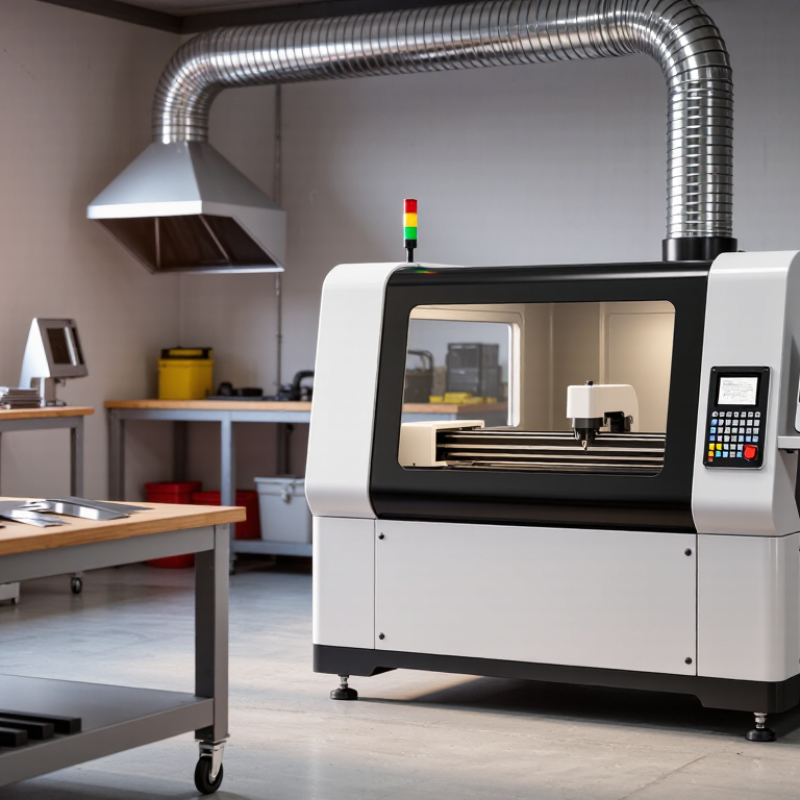
A metal laser cutting machine for home use is a compact system that cuts thin metal sheets with a focused laser beam. Unlike a handheld tool, it usually includes a cutting bed, motion rails, a laser source, and computer control. Some models use fiber lasers for stainless steel, mild steel, and aluminum. Others suit lighter materials and smaller projects.
Home users should check the machine’s working area before buying. A bed measuring 600 by 900 millimeters may fit small signs, brackets, and repair parts. It may not handle large panels. Space matters. The machine also needs stable electricity, ventilation, and a dry floor. An enclosed design helps control reflections, sparks, and smoke, but it does not remove every risk. Operators still need approved eye protection, fire prevention equipment, and proper training.
A reliable supplier should provide clear cutting parameters, maintenance instructions, electrical documentation, and responsive technical support. Ask about maximum thickness, replacement lenses, cooling requirements, and software compatibility. Local safety rules may require additional extraction or electrical protection. In a home workshop, noise and metal dust can become annoying after several hours. I would also leave room around the machine for cleaning and emergency access. My first estimate might focus too much on cutting power; that is a mistake. Accuracy, ventilation, service access, and operator discipline often matter more than impressive specifications.
Which Metals Can a Home Laser Cutter Process?
A home laser cutter can process mild steel, stainless steel, and aluminum when it uses a suitable fiber laser source. Mild steel is usually the easiest starting point because it absorbs the beam efficiently and cuts predictably. Stainless steel needs careful control of speed, focus, and nitrogen or compressed air. Aluminum is also workable, but its high reflectivity and thermal conductivity demand better beam control. Small desktop diode lasers usually mark bare metal; they rarely cut it.
Copper and brass can be processed, but they reflect laser energy strongly and may damage unsuitable optical systems. Galvanized steel is technically possible, yet its zinc coating can produce hazardous fumes and should not be treated casually. Titanium may be cut in professional setups, although it is a poor choice for an improvised home workspace. Ventilation matters.
Fortune Business Insights’ 2024 laser-cutting-machine report identifies fiber systems as a major market segment, reflecting their industrial use for metal processing. The International Energy Agency reports that industrial motors and production equipment remain significant electricity users, so a home machine’s power demand deserves attention. Published thickness charts are not promises. A 1,500-watt system may cut 10-millimeter steel under ideal conditions, but actual results depend on material grade, gas pressure, lens cleanliness, and machine rigidity. I would test small coupons first. Metal edges become extremely hot. Thin sheets warp easily. Safety claims need skepticism.
China Top Metal Laser Cutting Machine for Home? - Which Metals Can a Home Laser Cutter Process?
| Metal |
Typical Home-Use Laser Type |
Practical Processing Capability |
Indicative Thickness Range |
Processing Notes |
Home Suitability |
| Mild Steel |
Fiber laser |
Cutting is possible with a properly enclosed, high-power fiber system. |
Approximately 0.5–3 mm with compact systems; thicker material requires substantially more power. |
Usually cut with oxygen or nitrogen. Oxygen can produce darker, more oxidized edges. |
Limited — requires ventilation, fume extraction, cooling, and electrical capacity. |
| Stainless Steel |
Fiber laser |
Thin-sheet cutting and engraving are feasible with suitable settings. |
Approximately 0.5–2 mm for compact cutting equipment. |
Nitrogen generally gives a cleaner, brighter edge than oxygen. Heat can discolor the surface. |
Limited — suitable only with industrial-grade safety controls. |
| Aluminum |
Fiber laser |
Cutting and marking are possible, but cutting is more demanding than mild steel. |
Approximately 0.5–2 mm with suitable fiber equipment. |
High reflectivity and thermal conductivity can reduce cutting stability and increase back-reflection risk. |
Limited — use equipment specifically designed to process reflective metals. |
| Brass |
Fiber laser |
Marking is common; cutting thin brass requires specialized settings and protection. |
Usually limited to thin foil or sheet in compact systems. |
Reflectivity can cause unstable cutting and potential damage to unsuitable laser sources. |
Not recommended for casual home use. |
| Copper |
Specialized fiber laser |
Thin-sheet cutting is possible on systems designed for highly reflective metals; marking is more accessible. |
Generally limited to very thin sheet on compact equipment. |
Copper reflects near-infrared laser light strongly and conducts heat quickly, making it difficult to cut. |
Not recommended without professional equipment and safeguards. |
| Galvanized Steel |
Fiber laser |
Thin galvanized sheet can be cut, but coating fumes require effective extraction. |
Approximately 0.5–2 mm with suitable equipment. |
Zinc coating may generate hazardous fumes and can affect edge quality; avoid indoor exposure. |
Not recommended in an ordinary home workshop. |
| Titanium |
Fiber laser |
Thin titanium can be cut or marked with controlled parameters and appropriate assist gas. |
Usually thin sheet only for compact systems. |
Requires careful heat control and fume management; contamination can affect the cut edge. |
Not recommended for inexperienced home users. |
| Painted or Powder-Coated Metal |
Fiber laser or industrial CO₂ laser |
Surface marking or coating removal may be possible; cutting depends on the base metal. |
Determined by the underlying metal and laser power. |
Coatings can release irritating or hazardous fumes. Material safety information should be checked first. |
Limited — use enclosed equipment with dedicated extraction. |
| Steel or Aluminum with a Low-Power Diode Laser |
Diode laser |
Usually surface marking only; reliable cutting of bare metal is generally not practical. |
Not applicable for dependable sheet-metal cutting. |
Anodized, painted, or coated surfaces may mark more easily than bare reflective metal. |
Suitable for marking, not for general metal cutting. |
Note: Actual cutting performance depends on laser power, beam quality, focal length, assist gas, material grade, sheet flatness, and machine design. Fiber lasers capable of cutting metal require proper enclosure, interlocks, fume extraction, cooling, fire protection, and electrical installation; they should not be operated as open-frame household appliances.
How to Choose the Best Home Metal Laser Cutting Machine
China Top Metal Laser Cutting Machine for Home?
Choosing the best home metal laser cutting machine requires more than comparing cutting speed.
Measure your workspace first. Leave room for ventilation, material loading, and safe movement around the machine. A compact garage may not support a large industrial unit.
Check the laser power against your real projects.
Thin stainless steel and mild steel need different settings. Ask for test samples using your own metal thickness. Review the cutting bed, focus system, assist-gas requirements, and electrical load. A machine that needs special wiring can create unexpected installation costs. It should also include a secure enclosure, emergency stop, fire protection, and clear operating instructions.
Never ignore local safety and electrical regulations.
Reliability matters at home.
Examine maintenance access, replacement-part availability, software stability, and technical support response times. Inspect the machine’s frame and moving parts, not only its advertised specifications. I would not choose a model based on speed alone. Faster cutting can produce rough edges when settings are poorly matched. That detail is easy to miss. Keep a small testing log for power, speed, gas pressure, and material results. My own preference would be a slightly slower machine with predictable cuts and practical support. Even then, workshop noise, fumes, and fire risks deserve regular review.
What Safety Features and Workspace Requirements Are Needed?
China Top Metal Laser Cutting Machine for Home?
A home metal laser cutter needs more than a compact frame and a clean workbench. Choose a fully enclosed design with a door interlock, emergency stop, key control, and thermal monitoring. The laser should stop when the enclosure opens. Never bypass that feature. It is not a harmless shortcut.
Place the machine on a rigid, non-combustible floor with clear space around vents and service panels. Keep paper, wood dust, solvents, and fabrics away from the cutting area. A dedicated, correctly grounded electrical circuit is essential. The circuit should match the machine’s rated voltage and current. Ask a qualified electrician when uncertain. One loose connection can create serious heat.
Metal cutting produces smoke, fine particles, sparks, and reflected light. Use a properly sized extraction system that vents safely outdoors or through an approved filtration setup. Wear wavelength-appropriate eye protection, even with an enclosure, and avoid reflective jewelry. Do not cut unknown coatings, plastics containing chlorine, or painted metal without verified material data. Keep a suitable fire extinguisher nearby, but never leave an active cut unattended. A tidy bench is not enough. In practice, maintenance is often overlooked: inspect lenses, filters, cables, interlocks, and cooling systems regularly. I would also test the emergency stop before every serious job, although that habit can feel excessive.
Home Metal Laser-Cutting Workspace: Key Safety Planning Values
Practical planning values for a small home workshop. Confirm final requirements with local regulations and the equipment manufacturer.
Keep at least 90 cm of clear access space around the machine, provide about 100 cm of service clearance where possible, separate combustible materials by at least 100 cm, and maintain a minimum 90 cm emergency walkway. A Class ABC fire extinguisher, enclosed beam path, interlocked access panels, fume extraction, and an emergency stop are essential safety controls; exact specifications depend on the laser type, material, and local fire code.
How Much Does a Home Metal Laser Cutting Machine Cost?
China Top Metal Laser Cutting Machine for Home?
How Much Does a Home Metal Laser Cutting Machine Cost?
A realistic home setup often costs between $8,000 and $30,000. The machine may account for $5,000 to $20,000, depending on power, bed size, and automation. Entry-level units can cut thin stainless steel, aluminum, and mild steel. They are not always complete installations. Add extraction, cooling, electrical upgrades, delivery, and setup. These extras can add $2,000 to $10,000.
From evaluating workshop equipment, I have learned that the purchase price is only one part. A 1,000-watt fiber source may suit small jobs, while thicker sheet requires more power and slower passes. Lens replacements, assist gas, nozzles, filters, and electricity create recurring costs. Compressed nitrogen can become expensive. A basic monthly budget may reach $200 to $800 with regular use. Actual spending depends heavily on material thickness and local utility prices.
Home use also needs a safe, compliant room with ventilation, fire protection, and controlled access. Verify electrical requirements and applicable local regulations before payment. Ask for cutting samples, test the supplied specifications, and confirm service response times. A written warranty matters. My first budget was too optimistic because delivery and installation were underestimated. That mistake changed my buying checklist. Downtime, unsafe modifications, and weak training can erase the apparent saving.