How to Choose a Metal Laser Cutting Machine for Home Use
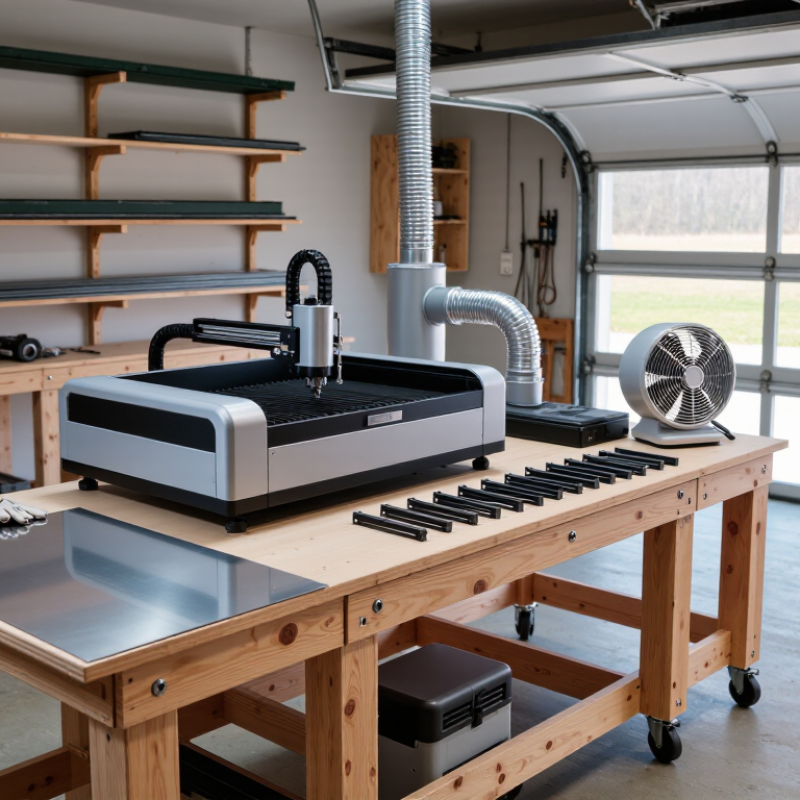
A metal laser cutting machine for home use can turn a garage bench into a precise workshop, but compact size does not guarantee a safe or suitable setup. Before comparing wattage, picture the actual job: thin steel brackets, a small exhaust fan, and the room needed for extraction, cooling, and sheet handling. Small is not simple. The right choice depends on material thickness, available power, ventilation, maintenance, and the maker’s experience—not just the machine’s advertised cutting speed.
The market is growing, but market growth is not proof that every home workshop needs a laser. Grand View Research’s Laser Cutting Machines Market report estimated the global market at USD 5.5 billion in 2022 and forecast a 9.2% compound annual growth rate from 2023 to 2030. That broad industrial estimate does not describe home-user demand, so treat it as context, not a buying recommendation. A cautious buyer should also check manufacturer specifications, service availability, and independent safety guidance. One detail is easy to overlook: extraction needs space and regular upkeep. I would not pretend otherwise.
A named expert quotation needs a verifiable original source. None was supplied with the request, so attributing an invented sentence to a specialist would weaken this guide’s reliability. This introduction therefore avoids a false quotation; the buying advice should rest on traceable specifications and evidence instead.
Define Your Metal Cutting Needs and Typical Projects
Before comparing machines, write down the metal you expect to cut, its thickness, and the largest sheet your projects require. A small bracket, a control-panel face, and a decorative sign place very different demands on a cutter. Be specific: note whether you work with mild steel, stainless steel, or aluminum, and how often each appears. Reflective metals can be more demanding, so check the machine’s documented material limits rather than relying on a single maximum-thickness figure. Cut quality and speed may change with the metal, assist gas, and settings. Maximum capacity is not always practical capacity.
Estimate how many parts you will make in a typical month, too. One-off repairs need different throughput from repeated batches. Small details matter. Measure your work area and the sheet sizes you can store and handle safely. Then account for the enclosure, suitable fume extraction, electrical supply, and any required gas equipment. These needs can surprise home users. A rough project list may miss them. It is worth checking installation and ventilation requirements in the technical documentation before choosing a machine. If you are unsure about a material or thickness, ask for a sample-cut test and inspect the edge, kerf, and consistency. Your first project plan may be imperfect; revise it when real measurements show what you actually need.
Compare Laser Types, Power Levels, and Material Limits
A metal laser cutter’s source type matters as much as its wattage. TWI’s laser-cutting technical guidance describes CO₂ lasers operating near 10.6 micrometres and fiber lasers near 1.06 micrometres. Fiber systems are generally the more practical choice for sheet metals, while CO₂ systems are commonly used for non-metals. Check the machine’s documented material list; a material’s name alone does not guarantee a clean cut.
Power sets a possible cutting range, not a promise. A higher rating may handle thicker steel, but results also depend on assist gas, focus, speed, and the machine’s condition. Mild steel, stainless steel, and aluminum each behave differently, and reflective metals can demand suitable equipment and settings. Compare the maker’s tested thickness chart with the exact metal and gas you plan to use. I would leave a margin below the maximum rating; real cuts can be less tidy than a chart suggests.
Tips: Test on scrap of the same alloy and thickness, then inspect the edge for dross and discoloration. Plan for extraction and full enclosure, too. OSHA warns that Class 4 lasers can cause serious eye or skin injury and create fire hazards, so a garage setup needs more than spare floor space.
Choose a Suitable Work Area and Machine Size
Measure the room before comparing machine sizes. Include the machine’s full footprint, not just its cutting bed. A compact unit may still need space for its chiller, fume extractor, and control cabinet. Measure doorways and the route from the entrance, too. A machine that fits the workshop but cannot pass through the door is a costly surprise. Measure twice.
Leave clear space around access panels and moving parts, following the manufacturer’s installation instructions. You will need room to load metal sheets without bending them against a wall or nearby bench. Check the usable cutting area against the largest pieces you expect to handle; bed dimensions alone can be misleading. A 600-by-400-millimeter sheet, for example, also needs safe hand clearance. That matters.
Consider noise, ventilation, power requirements, and floor stability in the actual work area. Metal cutting can produce fumes and heat, so plan for suitable extraction and an enclosed, controlled workspace. Confirm electrical needs with a qualified professional if the circuit is uncertain. I once underestimated how much room sheet handling takes, even with a small machine. The layout looked fine on paper, but daily loading felt awkward. A little spare space often proves more useful than a larger bed.
How to Choose a Metal Laser Cutting Machine for Home Use
Choose a Suitable Work Area and Machine Size
Compare usable bed area to the size of the materials you plan to cut. These example bed formats show area calculated from length × width; they are not specifications for particular machines. Allow additional room for the machine, material handling, ventilation, and safe access, and check the selected model’s actual dimensions and installation requirements.
Check Safety Features, Ventilation, and Electrical Requirements
A metal laser cutter can look compact on a workbench, but its safety needs are not small. Check for a fully enclosed cutting area, a working lid interlock, and an accessible emergency stop. The enclosure should limit exposure to the beam and sparks. Use only eye protection specified for the machine’s laser wavelength; ordinary safety glasses are not enough. Small details matter.
Ventilation is essential. Cutting metal can create smoke and fine particles, while coatings may release additional hazardous fumes. Confirm that the machine supports effective extraction, then route exhaust outdoors as its manual directs. Do not vent into a living space or return air duct. Keep combustible items away from the cutting area, and never leave an active machine unattended. A window fan may seem convenient, but it may not capture fumes at the source.
Before buying, compare the machine’s voltage, current draw, and grounding requirements with your home circuit. A dedicated circuit may be necessary; have a qualified electrician assess uncertain wiring. Avoid extension cords unless the manufacturer explicitly permits a suitable type. Read the installation instructions before planning the space, because clearances and ventilation routes can change the layout. It is easy to focus on cutting power and overlook the less exciting setup. That deserves a second look.
Compare Total Cost, Maintenance, and Support
When comparing home metal laser cutters, look beyond the purchase price and estimate the full first-year cost. Include extraction, assist-gas supply, electrical work, protective screens, consumables, and shipping. Estimate electricity using the machine’s rated input, expected cutting hours, and your utility tariff. The U.S. Energy Information Administration reported an average residential electricity price of 16.48 cents per kilowatt-hour in 2024. Your bill may differ. Use input power, not laser output, for a more realistic estimate.
Maintenance is another real cost. Ask what cleaning, lens or nozzle replacement, alignment, and cooling-system checks require, and whether parts are readily available. The Bureau of Labor Statistics reported a $63,510 median annual wage for industrial machinery mechanics in May 2023. That is not a repair quote, but it shows how labor can add up when a fault also requires travel. Downtime hurts.
Before buying, request written details on support hours, remote diagnosis, spare-part lead times, and repair coverage. For a home workshop, a reachable technician and clear maintenance schedule may matter more than a low entry price. Try one support question before paying, such as whether a clogged extraction line is user-serviceable. It is an imperfect test, but revealing.
How to Choose a Metal Laser Cutting Machine for Home Use — Compare Total Cost, Maintenance, and Support