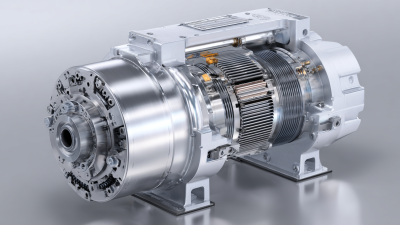
Minimal Space. Maximum Impact! Designed for when every millimeter matters> the new IRONLESS UNANO SERIES
Semiconductors
Increase throughput and precision of your system
Display
Enhance accuracy and precision with linear motors
Science and aerospace
Improve motion quality for a variety of applications
Machine tooling
Robust solutions for increased speed and precision
Digital cutting
Create modular and high throughput applications
Printing
Increase printing speed and quality using linear motors
Robotics
Integrate compact solutions for guaranteed uptime and high dynamics
Life science
Establish precise and clean integrated solutions
Woodworking
Maximize performance and accuracy for high throughput
Stages and system solutions
Compact integration and high performance for your axis
Vacuum applications
Best performance for clean and vacuum applications
Characteristics
Choosing a high torque motor supplier in China is not merely a matter of comparing prices. Buyers must match torque output, speed, voltage, and duty cycle to the machine’s real operating conditions. A motor that starts a loaded conveyor may need different characteristics from one used in a compact robotic joint. Small details matter. A torque curve, temperature-rise report, and clear dimensional drawing can reveal more than a polished product page.
Nikola Tesla, the electrical engineer whose work helped shape modern motor technology, wrote, “The present is theirs; the future, for which I really worked, is mine.” His words offer a fitting lens for this market: useful motor design connects proven engineering with changing industrial needs. Still, a famous quotation cannot validate a supplier. Buyers should request model-specific test data, review winding and insulation options, and confirm how peak torque differs from continuous torque. Ask about sample testing, production consistency, and technical support after delivery. Check whether stated certifications apply to the exact product and destination market.
This guide compares China’s high torque motor suppliers through practical criteria, including product range, customization, manufacturing capability, and export readiness. No supplier is perfect. A low-cost unit may need extra integration work, while a technically strong option may exceed the project budget. That trade-off deserves honest review. Specifications can look convincing on paper; performance under load is what counts. Use the shortlist as a starting point, then verify claims with documents, samples, and direct engineering discussions.
A high-torque motor produces strong rotational force, especially at low speeds. This makes it useful when a machine must start under load or move heavy materials steadily. Torque is not the same as power: speed, operating time, and load all affect performance. A motor rated for a brief peak may not sustain that force throughout a full shift. This is easy to overlook.
In factories, high-torque motors can drive conveyor belts carrying dense packages, mixers turning thick materials, and lifting equipment moving loads at controlled speeds. Some systems pair a motor with a gearbox; others use direct drive to reduce mechanical parts. The right choice depends on the required starting torque, speed range, duty cycle, and available space. Heat matters too. A motor repeatedly starting and stopping may need different cooling and control settings than one running continuously. Not always obvious.
Buyers comparing suppliers in China should ask for clear continuous and peak torque figures, test conditions, efficiency data, and maintenance guidance. They should also check whether the motor fits the actual machine, not just its catalogue description. A mismatch can cause overheating, vibration, or wasted energy. Specifications help, but they do not replace careful application review.
China’s high-torque motor supplier landscape covers custom industrial drives, geared motors, and direct-drive designs. Suppliers often serve automation, material handling, machine tools, and heavy equipment. The key difference is not simply rated torque. It is how reliably a motor delivers torque at low speed, under heat, vibration, and changing loads.
The International Energy Agency’s report, Energy-Efficiency Policy Opportunities for Electric Motor-Driven Systems, estimates that motor-driven systems use about 46% of global electricity. That figure explains why efficiency and correct motor selection matter beyond the purchase price. Chinese manufacturers offer broad production capacity, but engineering depth and testing practices can vary. Buyers should compare continuous and peak torque, duty cycle, thermal limits, encoder options, and motor-drive compatibility. A catalog number rarely tells the whole story.
For supplier screening, request load curves and test records taken under clearly stated conditions. Check rated-load temperature rise, vibration, noise, mounting dimensions, and spare-part availability. Small gaps matter. A motor that meets a short peak-torque test may perform differently during a full production shift. One limitation is that published specifications may not reveal how a supplier handles unusual loads or installation constraints. A sample evaluation and a detailed application review can expose those gaps before volume orders begin.
| Supplier product segment | Typical motor configuration | How high torque is achieved | Common application areas | Key buyer evaluation points | Relevant technical references |
|---|---|---|---|---|---|
| Geared induction motors | AC induction motor paired with a gearbox, commonly offered with helical, bevel, worm, or planetary gearing. | The gearbox reduces output speed and increases output torque; the actual result depends on the gear ratio, efficiency, and motor rating. | Conveyors, mixers, packaging machinery, material handling, and general industrial equipment. | Confirm output torque at the required speed, service factor, duty cycle, mounting position, gearbox efficiency, backlash, and lubrication requirements. | IEC 60034 series for rotating electrical machine ratings and performance; IEC 60072 series for frame dimensions and output ratings. |
| Servo motor systems | Permanent-magnet synchronous servo motor used with a compatible servo drive and feedback device. | Electromagnetic design and closed-loop drive control provide controlled torque and speed; peak torque and continuous torque are distinct ratings. | Robotics, CNC equipment, pick-and-place systems, and automated production machinery. | Compare continuous and peak torque, speed range, inertia, encoder type, overload duration, cooling method, and drive compatibility. | IEC 61800 series for adjustable-speed electrical power drive systems; IEC 60034 series for motor-related requirements. |
| BLDC and permanent-magnet motors | Brushless DC or permanent-magnet synchronous motor, often paired with an electronic controller; some versions are supplied with a gearbox. | Permanent magnets provide rotor excitation. Available torque depends on motor size, current, speed, thermal limits, and control method. | Electric mobility, pumps, fans, automation equipment, and compact machinery. | Check the torque-speed curve, continuous thermal rating, controller and sensor compatibility, operating voltage, cooling, and environmental protection. | IEC 60034 series for rotating electrical machine requirements; IEC 60529 for enclosure IP-code classification. |
| Direct-drive torque motors | Large-diameter, low-speed motor connected directly to the load, without a mechanical reduction gearbox. | The motor produces torque directly at the load shaft, avoiding gearbox reduction and its associated mechanical transmission components. | Rotary tables, indexing equipment, machine tools, precision positioning, and certain winding systems. | Verify continuous torque at the required speed, peak torque, thermal management, bearing and load support, encoder resolution, and installation space. | IEC 60034 series for rotating electrical machine ratings and performance; IEC 61800 series where a drive system is used. |
| Brushed DC motors | DC motor with brushes and a commutator, available with or without a gearbox. | Motor torque is related to armature current; gearbox versions increase output torque by reducing speed. | Actuators, small transport systems, battery-powered equipment, and general-purpose mechanisms. | Assess rated voltage, current, speed, duty cycle, brush service life, gearbox rating, and the availability of replacement parts. | IEC 60034 series for applicable rotating electrical machine requirements; confirm the specific motor’s declared ratings and test conditions. |
| Low-voltage traction motors | Typically a permanent-magnet or induction motor combined with a traction inverter; often supplied as part of a drive system. | Motor and inverter control deliver torque across a speed range; usable output depends on current limits, cooling, and the duty cycle. | Electric industrial vehicles, utility vehicles, material-handling equipment, and other electric-drive applications. | Confirm voltage range, continuous and peak torque, cooling, protection against vibration and moisture, inverter matching, and applicable vehicle requirements. | IEC 60034 series and IEC 61800 series may be relevant; application-specific vehicle regulations and test requirements also apply. |

Procurement note: The product segments above describe motor technologies commonly available from industrial suppliers; they do not rank or identify individual companies. Torque figures should only be compared at the same speed, duty cycle, cooling conditions, and measurement point (motor shaft or gearbox output). Standards listed are technical references, not a claim that every product is certified to them.
Chinese suppliers commonly offer permanent-magnet synchronous, induction, and switched-reluctance motors. Permanent-magnet designs deliver high torque in compact traction and robotics systems. Induction motors avoid magnets, while switched-reluctance designs can tolerate demanding thermal conditions. Torque matters here. The best choice depends on speed range, duty cycle, cooling, and cost—not torque alone.
The International Energy Agency reported nearly 14 million electric cars sold worldwide in 2023, about 18% of car sales. That growth has sharpened interest in traction motors with strong low-speed output and efficient control. Suppliers may offer hairpin or concentrated windings, liquid cooling, high-pole designs, and vector-control drives. Ask for torque curves, temperature-rise data, and performance across the operating range. A peak-torque figure without test conditions tells little.
For industrial equipment, direct-drive motors can reduce gearbox stages in conveyors, mixers, and rotary tables. Yet they may require larger frames and careful thermal management. The IEA estimates that electric motor systems consume roughly 45% of global electricity, making efficiency a practical purchasing concern. That distinction is easy to overlook. Compare tested efficiency, insulation class, and cooling method for the actual load; supplier specifications are not always presented consistently.
Geared motors, direct-drive torque motors, permanent-magnet motors, and induction motors are common options for high-torque applications. This chart illustrates the relationship between speed and torque at a constant 1 kW mechanical output, calculated using T (N·m) = 9550 × P (kW) ÷ speed (rpm). Values are ideal calculations, not supplier specifications; real output torque varies with motor design, gearing, and efficiency.
Global buyers comparing high torque motor suppliers should begin with the same operating brief: required torque, speed range, duty cycle, supply voltage, and mounting limits. A rating alone tells little. Request torque-speed curves and continuous-duty data, then check that the figures match your actual load. Numbers need context. A motor handling a brief peak may not sustain that torque through a full shift.
Compare test methods, not just headline specifications. Ask whether efficiency, temperature rise, noise, and vibration were measured under stated conditions. Review sample test reports and confirm production units follow the same inspection process. Ask for details on winding insulation, bearing life, shaft tolerances, and cooling options. Small differences can matter. A few millimeters of shaft mismatch can complicate installation, while poor heat dissipation may shorten service life.
Assess communication and support alongside technical performance. Can the supplier explain test assumptions, provide drawings promptly, and clarify what happens if a sample misses its target? A polished datasheet can still leave gaps, especially around overload limits or maintenance intervals. Request a representative sample and test it with your controller and load before committing. This takes time, and it may expose flaws in your own requirements too. That is useful. Compare total delivered cost, lead time, documentation quality, and service access using one consistent checklist.
China Top High Torque Motor Suppliers for Global Buyers
Sourcing, Quality Assurance, and Export Considerations for Buyers
Selecting a supplier starts with a clear duty profile. Share required torque, speed range, operating cycle, mounting dimensions, and ambient conditions. A motor that meets peak torque alone may overheat during continuous operation. Ask how the supplier verifies winding temperature, shaft alignment, and performance under load. Request test records for the specific model, not just a general product sheet. Small details matter.
Tips: Provide a written specification and ask suppliers to confirm each point. Compare sample results against agreed limits. Check that inspection reports identify test methods and measurement conditions. A checklist helps, but it cannot catch every mismatch; confirm critical dimensions on a sample before approving a larger order.
For export, agree on packaging, delivery terms, lead time, and document responsibilities before production. Heavy motors need secure restraint and moisture protection, especially during sea transport. Confirm that labels, invoices, packing lists, and technical documents match the shipment. Ask about spare parts and warranty handling across borders. Keep records. Shipping plans can change, so leave time for inspection and document review rather than relying on the earliest quoted dispatch date.