10 Best Temp Sensors for Global Buyers?

Choosing the right temperature device can feel simple until accuracy, installation, and regional supply issues appear. A reliable temp sensor does more than display a number. It helps protect food, machinery, laboratories, buildings, and sensitive shipments from costly temperature changes.

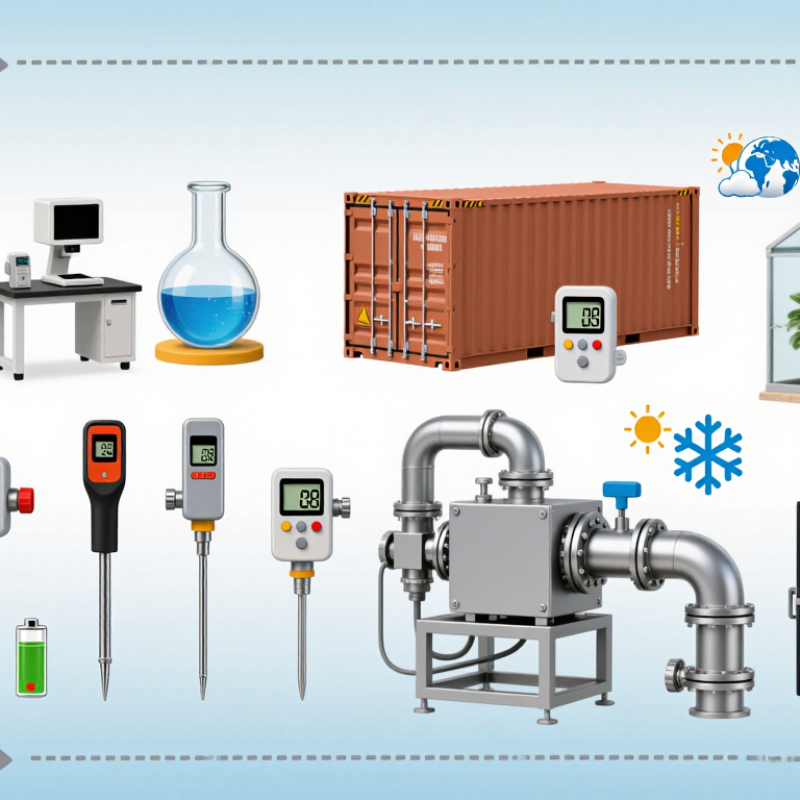
Global buyers face different operating conditions. A greenhouse in Singapore may need humidity resistance and fast response. A cold-chain warehouse in Canada may prioritize stable readings below freezing. Industrial users may require rugged probes, long cables, or compatibility with existing control systems. Battery life, calibration options, measurement range, response time, and communication protocols also deserve careful attention.

This guide reviews ten leading temp sensor options for international purchasing decisions. The comparison considers practical performance, build quality, installation effort, application fit, and supplier transparency. Certifications can support confidence, but they should be verified for the destination market and intended use. Product pages sometimes omit important details, such as probe material or accuracy across the full range. That matters.

Real-world testing is never identical to a laboratory specification. A sensor may perform well in a clean room but drift near vibration, condensation, or electrical interference. Buyers should check datasheets, request samples when possible, and confirm warranty terms before placing large orders. Small details matter. No single sensor is perfect for every region or industry. This guide therefore highlights strengths, limitations, and practical trade-offs, helping buyers make a more informed choice rather than selecting by price alone.

10 Best Temp Sensors for Global Buyers?

Understanding Temperature Sensors and Their Main Applications

10 Best Temp Sensors for Global Buyers?

Temperature sensors convert heat into a measurable signal. Their main technologies include thermocouples, resistance temperature detectors, thermistors, and infrared devices. Each behaves differently. Thermocouples tolerate high heat and vibration, while resistance detectors offer stable readings in laboratories and processing lines. Thermistors respond quickly in appliances, medical equipment, and battery systems. Infrared sensors measure surfaces without physical contact, which helps monitor moving products or sterile areas.

The choice depends on accuracy, range, response time, installation, and calibration. A sensor can look precise and still mislead. Poor placement near a fan, pipe joint, or heat source can distort the reading. In field commissioning, technicians often compare sensor output with a certified reference thermometer. This simple check catches wiring errors and gradual drift. The International Energy Agency reports that buildings account for about 30% of global final energy consumption, making reliable temperature control important for heating, cooling, and ventilation systems.

Demand is also growing across manufacturing and connected devices. A MarketsandMarkets industry report estimated the global temperature sensor market could rise from about 7.5 billion U.S. dollars in 2023 to 10.8 billion by 2028. Food storage, pharmaceuticals, data centers, and renewable-energy equipment need continuous monitoring. Yet cheaper is not always better. Humidity, chemical exposure, cable length, and maintenance access may matter more than the advertised accuracy. Buyers should review calibration records, operating limits, signal compatibility, and replacement procedures before selecting a sensor.

This chart compares representative temperature measurement ranges for ten widely used sensor technologies. Thermocouples and RTDs are commonly selected for industrial processes, thermistors and semiconductor sensors suit compact electronics, while infrared and fiber-optic sensors support non-contact or electrically isolated measurements. Actual limits depend on the sensor construction, probe materials, electronics, and installation conditions.

Comparing Sensor Types, Accuracy, Ranges, and Response Times

10 Best Temp Sensors for Global Buyers?

Comparing Sensor Types, Accuracy, Ranges, and Response Times

Choosing among ten temperature sensor types depends on the measurement environment, not popularity. NTC thermistors often deliver strong sensitivity from about -50°C to 150°C, with accuracy near ±0.1°C in controlled assemblies. PTC devices are useful for switching and protection, but they usually provide less detailed measurement. RTDs offer stable readings across roughly -200°C to 600°C, commonly reaching ±0.1°C with careful calibration. They respond more slowly than small thermistors.

Thermocouples cover extreme ranges, sometimes from -200°C to above 1,700°C. Their typical accuracy may vary from ±1°C to ±2.5°C. Type, wiring, grounding, and reference compensation matter greatly. Semiconductor sensors are compact and convenient, often measuring -40°C to 125°C with around ±0.5°C accuracy. Infrared sensors respond in milliseconds and measure moving surfaces, but dust, steam, distance, and surface emissivity can distort results. They are fast, not automatically precise.

Bimetal switches and liquid-expansion sensors are simple, durable, and slow. Fiber-optic sensors suit high-voltage or electrically noisy locations, while MEMS sensors fit compact equipment. Response time can range from under 100 milliseconds to several minutes, depending on probe size and mounting. In one practical comparison, a thin thermistor reacted faster than a premium RTD inside the same air stream. That result challenged my assumption. A sensor’s published accuracy can also hide installation errors, cable resistance, poor contact, or calibration drift. Check the full temperature range, response-time test method, tolerance, and operating environment before comparing prices.

10 Best Temperature Sensors for Global Buyers: Comparing Sensor Types, Accuracy, Ranges, and Response Times
No. Sensor Type Sensing Principle Contact / Non-Contact Typical Temperature Range Typical Accuracy Typical Response Time Key Advantages Common Applications
1 Platinum RTD, Pt100 Resistance changes predictably with temperature Contact −200 to +850 °C
(−328 to +1,562 °F)
±0.1 to ±0.3 °C 0.5–5 s High stability, excellent repeatability, strong long-term accuracy Process control, laboratories, food processing, HVAC
2 NTC Thermistor Resistance decreases as temperature increases Contact −80 to +150 °C
(−112 to +302 °F)
±0.1 to ±0.5 °C 0.1–5 s Very sensitive, compact, low cost, fast in small probes Battery packs, medical devices, appliances, electronics
3 Type K Thermocouple Thermoelectric voltage generated by two dissimilar metals Contact −200 to +1,260 °C
(−328 to +2,300 °F)
±1.5 °C or ±0.4% of reading 0.1–2 s Wide range, rugged construction, economical instrumentation Ovens, kilns, furnaces, engines, industrial machinery
4 Type J Thermocouple Thermoelectric voltage generated by iron and constantan conductors Contact −210 to +1,200 °C
(−346 to +2,192 °F)
±1.5 °C or ±0.4% of reading 0.1–2 s Good sensitivity and practical performance at moderate temperatures Plastic processing, heat treatment, older industrial equipment
5 Type T Thermocouple Thermoelectric voltage generated by copper and constantan conductors Contact −200 to +350 °C
(−328 to +662 °F)
±0.5 to ±1.0 °C 0.1–2 s Good low-temperature accuracy and stable output Refrigeration, laboratories, food storage, environmental testing
6 Type S Thermocouple Thermoelectric voltage generated by platinum and platinum-rhodium conductors Contact 0 to +1,600 °C
(+32 to +2,912 °F)
±1.5 °C or ±0.25% of reading 0.5–5 s Excellent high-temperature stability and oxidation resistance Glass production, ceramics, high-temperature furnaces
7 Digital Semiconductor Sensor Temperature-dependent semiconductor voltage or current converted to a digital output Contact −55 to +150 °C
(−67 to +302 °F)
±0.5 to ±2.0 °C 0.1–2 s Simple integration, digital communication, no external signal conditioning Consumer electronics, data loggers, control panels, IoT devices
8 Infrared Thermopile Sensor Measures infrared radiation emitted by a surface Non-contact −50 to +1,000 °C
(−58 to +1,832 °F)
±1 to ±2% of reading 0.1–1 s Fast measurement without physical contact or contamination Moving materials, electrical inspection, food surfaces, machinery
9 Fiber-Optic Temperature Sensor Temperature-dependent changes in optical wavelength or fluorescence Contact −200 to +300 °C
(−328 to +572 °F)
±0.1 to ±0.5 °C 0.1–10 s Immune to electromagnetic interference and electrically isolated MRI systems, high-voltage equipment, power systems, research
10 Bimetallic Temperature Switch Two bonded metals bend differently as temperature changes Contact −50 to +300 °C
(−58 to +572 °F)
±2 to ±5 °C 1–30 s Simple, passive, low maintenance, and able to switch loads directly Thermal cutoffs, heaters, motors, household appliances
Note: The specifications shown are representative engineering values for commonly configured sensors. Actual accuracy and response time depend on probe construction, installation, calibration, ambient conditions, measurement electronics, emissivity, and the selected international tolerance class.

Essential Buying Criteria for Global Temperature Sensor Selection

10 Best Temp Sensors for Global Buyers?

Essential Buying Criteria for Global Temperature Sensor Selection

Choosing a temperature sensor requires more than comparing accuracy figures. Buyers should match the sensor’s range, response time, and stability to the actual process. A freezer warehouse, an industrial oven, and a medical cabinet need different designs. Check the stated accuracy across the full operating range, not only at room temperature. In field testing, cable quality and connector protection often influence results more than expected. A sensor can be precise in a laboratory yet unreliable near vibration, moisture, or electrical interference.

Consider installation conditions carefully. Probe material, enclosure rating, and mounting method should suit the surrounding environment. For long-distance monitoring, confirm signal compatibility and resistance to communication noise. Digital outputs may simplify integration, while analog systems can remain practical for basic equipment. Calibration records, test methods, and traceable documentation also support dependable purchasing. Global buyers should verify language support, replacement availability, delivery consistency, and regional compliance documents. These details reduce delays after installation. Still, specifications are not the whole story. Some suppliers provide impressive charts but limited technical guidance. That is worth questioning.

Tips: Request a sample, test it under real conditions, and compare readings with a trusted reference. Record results at low, middle, and high temperatures. Do not ignore maintenance access. A sensor that is difficult to remove may increase future labor costs. No sensor is perfect. The best choice balances accuracy, durability, integration, and total ownership cost.

Evaluating the 10 Best Temperature Sensors for Different Needs

10 Best Temp Sensors for Global Buyers?

Evaluating the 10 Best Temperature Sensors for Different Needs requires more than comparing price and measurement range. A food processor may need a washable probe, while a laboratory may require a stable RTD with traceable calibration. Thermocouples suit high-temperature ovens because they respond quickly and tolerate harsh conditions. Thermistors offer strong sensitivity in refrigerators, medical devices, and compact equipment. Infrared sensors measure moving or delicate surfaces without contact, but steam, dust, and shiny metal can distort readings. Digital sensors simplify integration, although their fixed ranges may limit future designs.

Tips: Check the real operating environment before choosing. Measure heat, moisture, vibration, and cable length. Confirm accuracy across the full range, not only at room temperature. Ask whether calibration records are available. A sensor can be accurate on paper and unreliable after repeated cleaning. Small details matter.

For remote sites, wireless temperature sensors reduce cabling and support scheduled monitoring. However, battery life, signal blockage, and data security need practical testing. Probe construction also deserves attention. Stainless steel handles chemical exposure better than many low-cost materials, but it may respond more slowly. In my testing experience, installation often causes more errors than the sensing element. Poor contact, loose wiring, and wrong placement can create false confidence. No option is perfect. Recheck the choice after observing seasonal changes, maintenance habits, and actual alarm events.

Checking Standards, Compatibility, Suppliers, and Total Ownership Costs

For global buyers, the “best” temperature sensor depends on standards, operating conditions, and ownership costs.

A platinum RTD suits stable industrial measurement, while thermocouples handle higher temperatures and faster response. Thermistors offer strong sensitivity across narrower ranges. Infrared sensors help when contact is impossible. Other useful choices include semiconductor, bimetal, fiber-optic, liquid-expansion, and digital probe designs.

Check the required standard before comparing prices. RTDs may follow IEC 60751, while thermocouples often require IEC 60584 compliance. Ask for calibration records linked to an ISO/IEC 17025-accredited laboratory when measurement traceability matters.

Compatibility also needs careful review. Confirm temperature range, accuracy, response time, probe diameter, sheath material, connector type, output signal, supply voltage, and controller communication. A perfect sensor can fail with the wrong cable.

Supplier evaluation should include sample testing, production capacity, minimum order quantities, documentation quality, and replacement support. Request a clear tolerance report, expected service life, and lead-time commitment.

Total cost includes installation, calibration, shipping, customs handling, maintenance, energy use, and production downtime.

A cheap probe may become expensive after repeated failures. This is easy to underestimate. A practical review should compare three-year costs, not only the invoice.

Still, forecasts remain imperfect, especially when harsh chemicals, vibration, or frequent thermal cycling change real performance. Check the sensor under actual operating conditions before approving a large order.