What Is an Aluminum Profile for Pergola?
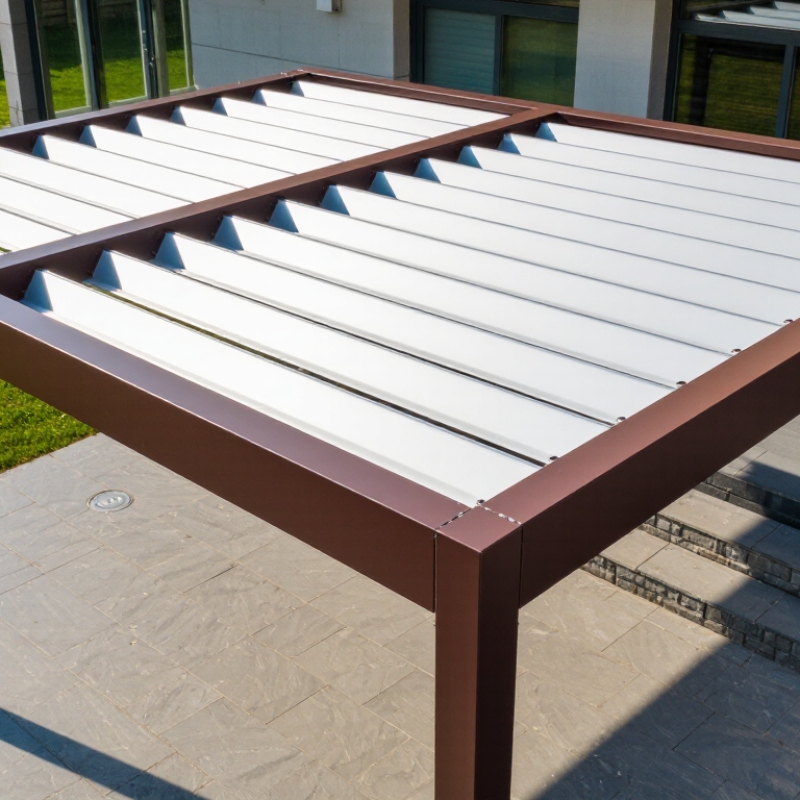
An Aluminum Profile For Pergola is more than a hollow metal section supporting a roof. It is the structural and visual framework of an outdoor living space. Extruded aluminum creates clean beams, slim posts, and accurate connections. It also resists rust, insects, and seasonal moisture better than many traditional materials.
James Chen, a senior aluminum extrusion engineer, says, “A pergola profile must balance strength, drainage, and visual lightness.” That balance matters on a real patio. A beam may carry adjustable louvers, lighting cables, and rainwater channels. Meanwhile, the posts must transfer wind pressure safely into the foundation. A beautiful profile can still fail when its wall thickness, span, or fasteners are poorly selected.
Look closely at the details.
Quality systems often include powder-coated surfaces, concealed gutters, reinforced corner joints, and expansion allowances. These features help protect the structure under strong sunlight and changing temperatures. A dark bronze finish may look refined, but it can absorb significant heat. A white finish may feel cooler, yet it can reveal dirt more easily.
Choosing an Aluminum Profile For Pergola should involve more than comparing prices per meter. Check alloy grade, profile dimensions, coating durability, drainage design, and installation tolerances. Local wind and snow conditions also deserve attention. Small errors become visible quickly. Misaligned posts, weak anchors, or blocked gutters can spoil an otherwise careful project.
The profile is not magic.
It is a designed system. Its reliability depends on engineering, fabrication, installation, and maintenance working together. Even experienced builders should review their assumptions before finalizing the pergola design.
Aluminum Pergola Profiles: 6063 Alloy and 2.70 g/cm³ Density
An aluminum profile for a pergola is an extruded section shaped for posts, beams, rafters, and roof supports. Many systems use 6063 aluminum alloy because it offers good formability, a smooth surface, and dependable corrosion resistance. Its density is about 2.70 g/cm³, making it considerably lighter than steel. This lower weight can simplify handling, cutting, and on-site assembly.
The 6063 alloy works well for architectural applications where appearance matters. Its surface can receive anodizing or powder coating, but the finish must be matched to the local climate and maintenance plan. Profiles should also include suitable wall thickness, internal reinforcement, and accurate connector points. A large-looking section may still be weak if its walls are too thin.
Details matter more than the alloy name.
In practical design, engineers check span length, wind pressure, roof load, drainage, and fastener placement before selecting a profile. A 2.70 g/cm³ density does not guarantee structural safety; it only describes the material’s mass per volume. I have seen lightweight designs become unstable when connection strength was treated as an afterthought. That mistake is easy to repeat.
Good pergola profiles should fit cleanly, resist water collection, and allow thermal movement. Cut edges need protection, especially near dissimilar metals. Local building requirements should guide final sizing, because climate and installation conditions can change the calculation.
What Is an Aluminum Profile for Pergola?
Aluminum Pergola Profiles are extruded structural sections commonly made from 6063 aluminum alloy. The alloy has a typical density of approximately 2.70 g/cm³, providing a lightweight alternative to steel for pergola frames.
Typical material density comparison. Values are approximate reference values in g/cm³.
Profile Geometry: Hollow Sections, Wall Thickness, and Load Paths
What Is an Aluminum Profile for Pergola?
An aluminum pergola profile is an engineered section used for posts, beams, rafters, and louvers. Its geometry affects strength more than its appearance alone. Hollow sections provide efficient stiffness while keeping the structure relatively light. A rectangular tube usually resists bending better in one direction. A square tube offers more balanced behavior around both axes.
Wall thickness also matters. Thin walls reduce weight, but they may dent during transport or installation. They can also weaken around bolts, brackets, and drainage openings. Thicker walls improve local strength, although excessive thickness adds cost and weight. The best choice depends on span, wind exposure, roof load, connection design, and alloy properties. A profile should not be judged by thickness alone.
Tips: Check the actual load path. Roof panels transfer weight to rafters, rafters transfer it to beams, and beams transfer it through posts into foundations. Keep fasteners away from unsupported edges. Use internal sleeves where joints receive concentrated loads. Water trapped inside a hollow section can create problems later, so sealed ends and planned drainage deserve attention.
In practical installation, small errors can change performance. Misaligned posts may twist a beam before loading begins. I have seen attractive sections fail to perform because the connections were treated as an afterthought. Engineering calculations should confirm deflection, buckling, uplift, and anchorage for the local conditions. The profile is only one part of a reliable pergola system.
Structural Ratings: Wind Loads Under ASCE 7 and Span-Based Sizing
What Is an Aluminum Profile for Pergola?
Structural Ratings: Wind Loads Under ASCE 7 and Span-Based Sizing
An aluminum pergola profile is a formed structural member, not merely a decorative frame. Its performance depends on alloy, wall thickness, section depth, connections, and unsupported span. A slim-looking beam may carry moderate gravity loads yet twist under uplift. That difference matters.
ASCE/SEI 7-22 calculates wind actions using site wind speed, exposure category, building height, enclosure condition, and risk category. Its wind maps use three-second gust speeds, with many U.S. locations exceeding 100 mph. Roof-edge zones often receive higher localized pressures than interior areas. Therefore, a single “maximum wind rating” can be misleading. The engineer must convert pressure into reactions at posts, beams, anchors, and footings.
Span-based sizing begins with bending and deflection. The Aluminum Association’s Aluminum Design Manual provides alloy properties and design procedures, including strength reductions for structural conditions. A longer beam needs greater section modulus and moment of inertia, not simply thicker paint or a larger-looking cap. For example, doubling the span can increase bending demand about four times under uniform loading. Deflection may control before strength does. A practical check often limits visible beam sag to roughly L/240, but the project engineer should confirm the applicable criterion.
Small details decide outcomes. A 20-foot beam with a midspan post behaves very differently from a clear-span beam. Fastener spacing, thermal movement, drainage openings, and connection slip also deserve review. Rules of thumb help during early design, but they are imperfect by nature. A stamped calculation remains necessary for unusual spans, coastal exposure, or elevated risk categories.
Surface Protection: Powder Coating Under AAMA 2603–2605 Standards
An aluminum profile for a pergola forms the frame around the roof, posts, and supporting beams. Its surface must resist sunlight, moisture, and daily handling. Powder coating provides a dry, bonded finish without liquid drips. The result feels smooth and even.
AAMA 2603, 2604, and 2605 describe increasing performance levels for coatings on architectural aluminum. AAMA 2603 suits projects with moderate exposure and basic color retention needs. AAMA 2604 offers stronger resistance to weathering, chemicals, and abrasion. AAMA 2605 represents the highest level, with stricter requirements for fading, chalking, gloss loss, and corrosion resistance.
The standard matters. So does preparation. Before coating, the aluminum should be cleaned, treated, and dried carefully. A thin film or trapped moisture can weaken adhesion. During installation, cut edges and drilled areas need attention because exposed metal may become vulnerable. Small scratches are easy to overlook.
Color selection also affects expectations. Dark finishes absorb more heat and may show surface marks sooner. Even a certified coating can fail when the profile is stored carelessly or installed near aggressive coastal air. This is where project inspection becomes useful. Check coating thickness, coverage, color consistency, and visible damage. A certificate helps, but it does not replace practical inspection. Powder coating is durable, not invincible.