Top 10 Steel Metal Plate Suppliers Worldwide?
Choosing among the Top 10 Steel Metal Plate Suppliers Worldwide requires more than comparing prices. A reliable supplier must deliver consistent chemistry, accurate dimensions, and verifiable mill documentation. Buyers should examine plate grades, thickness ranges, production capacity, and quality certifications. Traceability matters when a plate becomes part of a bridge, pressure vessel, ship, or heavy machine. Edwin Basson, Director General of worldsteel, has said, “Steel is essential to modern life.” That simple observation explains why supplier selection deserves careful attention.
This guide compares leading suppliers through practical criteria, including technical expertise, export experience, delivery performance, and customer support. It also considers whether manufacturers provide inspection reports, heat numbers, and clear information about standards such as ASTM, EN, and JIS. A strong supplier should answer difficult questions before a contract is signed. Can it maintain flatness across large plates? Can it replace damaged material quickly? Does its sustainability data come from measurable processes?
No ranking is flawless. Market conditions change, and a smaller regional mill may outperform a global producer for a specific project. That limitation deserves attention. Real purchasing experience often reveals details that brochures hide, such as packaging quality, communication delays, or inconsistent edge conditions. The following list therefore combines industry reputation with practical buyer concerns. It is designed to help engineers, fabricators, and procurement teams make a more informed decision. Prices alone do not tell the whole story. Sometimes, the cheapest plate becomes the most expensive choice.
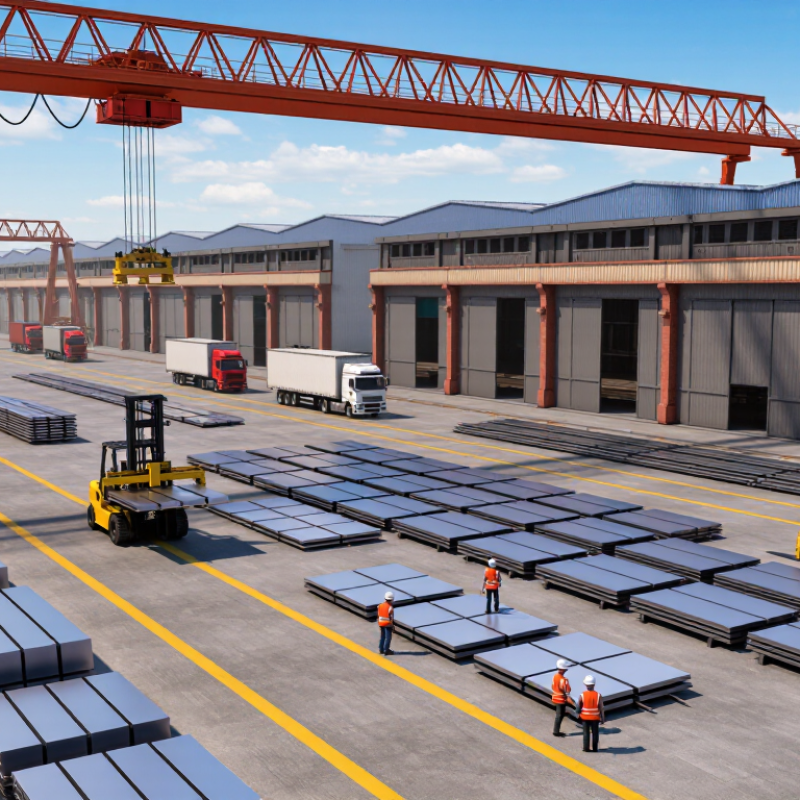
Defining Steel Metal Plates and Their Main Industrial Applications
Defining Steel Metal Plates and Their Main Industrial Applications
Steel metal plate is a flat-rolled product with substantial thickness and structural strength. Many industry standards classify plate as material thicker than 6 millimeters, although definitions vary by region and application. It is produced from slabs, then reheated and rolled to controlled dimensions. Buyers usually evaluate yield strength, tensile strength, impact toughness, weldability, and surface condition. Thickness alone is not enough.
The World Steel Association reported approximately 1.89 billion tonnes of crude steel production worldwide in 2023. A significant share supports construction, energy, transport, and heavy equipment manufacturing. In buildings, steel plates form columns, bridge girders, base plates, and reinforced connections. Shipyards use marine-grade plate for hulls and internal structures. Energy projects require plate for storage tanks, pipelines, pressure vessels, and offshore platforms. A six-meter plate can look simple, yet its chemistry and heat treatment determine whether it survives freezing weather or repeated loading.
Industrial machinery also depends on abrasion-resistant and high-strength plates. Mining trucks, crushers, excavators, and agricultural equipment face impact, friction, and sudden stress. The International Energy Agency estimates that steelmaking creates about 7% to 9% of global energy-related carbon dioxide emissions. This makes material efficiency increasingly important. Thinner plate can reduce weight, but poor design may shorten service life. The boundary is not always neat. Actual performance depends on welding practice, inspection records, corrosion protection, and operating conditions. Reports and certificates help, but field experience still exposes weaknesses that specifications may overlook.
Criteria for Evaluating Global Steel Plate Suppliers
Evaluating the top ten steel plate suppliers requires more than comparing quoted prices. World Steel Association data shows global crude steel production reached about 1.89 billion tonnes in 2023. This scale makes capacity easy to claim, but consistent plate quality is harder to prove. Buyers should examine mill certificates, heat numbers, chemical analysis, mechanical results, and independent inspection records. Traceability matters.
Delivery performance deserves equal attention. Request shipment data for comparable projects, not general promises. Check plate thickness tolerance, flatness, cutting capability, packaging, and port access. OECD steel market reports repeatedly highlight global overcapacity and trade pressure. Therefore, a large factory is not automatically a reliable partner. Financial stability, raw-material access, and realistic lead times should influence the score.
Environmental evidence is also becoming measurable. The International Energy Agency estimates steelmaking creates roughly 7–9% of global energy-related carbon emissions. Suppliers should disclose production emissions, energy sources, scrap usage, and credible reduction targets. Certifications such as ISO 9001 can support evaluation, but certificates alone prove little. Audit the process.
A practical scorecard might assign 30% to technical quality, 20% to delivery, 15% to total cost, 15% to compliance, and 20% to financial and environmental resilience. The weighting is imperfect. Project risk should change it. Request samples, verify documents with issuing bodies, and speak with recent customers before ranking any supplier.
Top 10 Steel Metal Plate Suppliers Worldwide
Top 10 Steel Metal Plate Suppliers Worldwide should be evaluated through measurable performance, not advertising claims. The World Steel Association’s 2025 World Steel in Figures reports global crude steel production of roughly 1.84 billion tonnes in 2024. This volume supports a broad supplier field, but plate quality varies sharply by grade, thickness, and rolling method. Experienced buyers should inspect mill certificates, heat numbers, ultrasonic testing, and actual delivery records.
The strongest top-ten suppliers usually combine large production capacity with dependable plate processing. Look for carbon steel, low-alloy, pressure-vessel, and weather-resistant grades. Thickness tolerance matters on bridge beams, ship panels, and heavy machinery beds. So does consistency across multiple batches. A supplier may offer an attractive price, yet weak edge quality can create costly cutting losses.
OECD steel market analysis has warned that global excess capacity may approach 721 million tonnes by 2027. That pressure can encourage aggressive quotations and unstable export schedules. It also makes supplier verification more important. Check ISO-based quality systems, independent inspection access, export packaging, and port-to-site lead times. No ranking is perfect. Capacity data can hide maintenance delays, regional restrictions, or limited plate availability. I would compare at least three recent mill certificates and one completed shipment before approving any top-ten supplier.
Comparing Product Range, Quality Standards, and Global Coverage
A global review of the top ten steel metal plate suppliers should begin with product range, not advertising claims. Strong suppliers usually offer carbon steel, stainless steel, alloy plate, and abrasion-resistant grades. Thickness may range from 3 millimeters to more than 300 millimeters. Width, length, heat treatment, and cutting options also matter. A practical buyer checks whether one supplier can support both standard construction plate and demanding pressure equipment projects.
Quality standards reveal more than a polished website. Look for traceable heat numbers, mill test certificates, dimensional records, and controlled sampling procedures. Common certifications include ISO 9001, while project requirements may reference ASTM, EN, JIS, or other recognized specifications. Independent inspection can verify ultrasonic testing, yield strength, impact toughness, and surface condition. Details count. A plate with clean edges and consistent thickness reduces fabrication waste.
Global coverage involves more than having warehouses on a map. Reliable suppliers maintain regional stock, export experience, stable packaging, and clear delivery schedules. They should explain port options, inland transport, and document control without vague promises. Some suppliers perform well in Asia but respond slowly in Europe or South America. That weakness deserves attention. In my own comparisons, supplier rankings changed when lead times and complaint handling were examined. The cheapest quotation was not always the most dependable choice. Even test certificates require careful review, because paperwork can look complete while important technical data remains unclear.
Top 10 Steel Metal Plate Suppliers Worldwide? — Comparing Product Range, Quality Standards, and Global Coverage
Supplier-neutral benchmark of widely traded steel plate specifications, using minimum specified yield strength as a comparable quality indicator.
The chart compares ten internationally recognized plate grades and standards. Yield-strength values are minimum specified requirements stated in the relevant standards; actual availability, certification, thickness range, and delivery coverage vary by producer and region. No company or brand ranking is implied.
Reference standards: ASTM A36, ASTM A572, ASTM A516, API 5L, EN 10025, EN 10025-6, ASTM A514, ASTM A240, and ASTM A131.
Selecting the Right Supplier for Your Project Requirements
Selecting the Right Supplier for Your Project Requirements
Choosing among the top steel metal plate suppliers worldwide requires more than comparing prices. Your project may need carbon steel, stainless steel, or alloy plate with specific thickness, width, grade, and surface condition. Confirm the applicable standards, test methods, and certification requirements before requesting quotations. A plate designed for structural support may not suit pressure equipment or heavy machining.
Ask each supplier for recent mill test certificates, dimensional tolerances, heat numbers, and inspection records. Check whether independent inspection is available before shipment. In practical sourcing work, I also compare production capacity with the project schedule. A supplier may offer an attractive price but lack consistent availability in the required thickness. That creates expensive delays. Small details matter.
I once focused too heavily on unit cost and overlooked packaging quality. Several plates arrived with damaged edges and surface corrosion. The problem was preventable. Discuss moisture protection, lifting points, labeling, and transport conditions in writing. Review the supplier’s response time, technical support, and handling of nonconforming material. Ask for sample documents, not promises. Still, no checklist is perfect. Project teams should revisit their assumptions when specifications change, especially after welding trials or fabrication feedback. A reliable supplier should explain limitations clearly and support traceability from production to delivery.


