Minimal Space. Maximum Impact! Designed for when every millimeter matters> the new IRONLESS UNANO SERIES
Semiconductors
Increase throughput and precision of your system
Display
Enhance accuracy and precision with linear motors
Science and aerospace
Improve motion quality for a variety of applications
Machine tooling
Robust solutions for increased speed and precision
Digital cutting
Create modular and high throughput applications
Printing
Increase printing speed and quality using linear motors
Robotics
Integrate compact solutions for guaranteed uptime and high dynamics
Life science
Establish precise and clean integrated solutions
Woodworking
Maximize performance and accuracy for high throughput
Stages and system solutions
Compact integration and high performance for your axis
Vacuum applications
Best performance for clean and vacuum applications
Characteristics
China’s Powerline Transformer industry serves utilities, renewable-energy projects, factories, and expanding urban networks. This introduction examines ten manufacturers through practical factors: product range, rated capacity, voltage class, efficiency, testing, and after-sales support. The list should be treated as a comparison, not a universal ranking. Buyers’ needs differ.
Transformer author Martin J. Heathcote, known for The J & P Transformer Book, emphasizes the practical importance of design, workmanship, and maintenance to reliable service. Those principles matter when assessing a Powerline Transformer, not just its catalogue specifications. Ask how a unit handles heat, moisture, and changing loads. Check whether test reports match the offered model. A nameplate is only one clue.
Look closely.
China-based suppliers vary in scale, export experience, and technical focus. Some concentrate on utility-scale equipment; others serve distribution networks or specialized projects. Manufacturing capability, component sourcing, delivery times, and local service can differ even among firms with similar product lists. This overview will identify manufacturers and explain what to verify before shortlisting them. Standards such as IEC 60076 and applicable IEEE requirements can guide technical comparisons, but project specifications still govern. One limitation deserves attention: public company information may not reveal factory-level quality consistency. Request current test documentation, references for comparable installations, and clear warranty terms. A careful comparison is less tidy than a ranked list, but more useful.
Powerline transformers transfer electrical energy between circuits while changing voltage. At generating stations, step-up units raise voltage for long-distance transmission, reducing current and associated line losses. Near homes, businesses, and factories, step-down transformers lower voltage to usable levels. A small distribution unit may sit on a pole; a larger substation transformer rests behind a fenced yard, connected to heavy busbars and cooling equipment.
Common designs include oil-immersed transformers, which use insulating fluid for cooling, and dry-type units, often selected for indoor settings. The right choice depends on voltage, load profile, installation space, cooling needs, and maintenance access. Applications range from utility substations and rural feeders to renewable-energy connections and industrial plants. A transformer must handle expected peak demand, not just average use. That detail is easy to overlook.
Grid expansion makes reliable equipment increasingly important. The International Energy Agency’s 2023 report, Electricity Grids and Secure Energy Transitions, says annual grid investment must rise above US$600 billion by 2030, from about US$300 billion. It also estimates that 80 million kilometres of grids need to be added or refurbished by 2040.
These figures describe grids broadly, not transformer demand alone. Still, they show why careful transformer selection, routine inspection, and realistic load forecasts matter. Planning can be imperfect; local conditions deserve another look.
China’s powerline transformer industry supports a vast and rapidly changing electricity system. The National Energy Administration reported 2.92 terawatts of installed power-generation capacity in 2023, including 1.45 terawatts of renewable capacity. More generation does not automatically mean more transformer demand, but it can require grid connections, upgrades, and flexible substations. That distinction matters.
The International Energy Agency’s 2023 report, Electricity Grids and Secure Energy Transitions, says annual global grid investment must exceed 600 billion US dollars by 2030, up from about 300 billion. This is a global estimate, not a China-specific forecast. Still, it highlights the pressure on transformer supply chains. Lead times, material costs, and testing capacity can all affect delivery schedules. A large unit is not simply a bigger version of a small one.
Manufacturers serving China’s power network therefore need to demonstrate dependable performance across voltage levels, operating conditions, and service life. Buyers may assess efficiency, insulation, temperature rise, noise, and maintenance access, alongside price. Details matter: a cramped substation can make routine inspection harder. Market summaries often focus on capacity, yet public data rarely reveals actual factory utilization or order quality. That picture is incomplete.
China’s annual electricity grid investment, 2020–2024 (RMB billion)
Grid investment rose from RMB 469.9 billion in 2020 to RMB 608.3 billion in 2024. This national infrastructure-spending trend provides demand context for powerline transformers; it is not a measure of transformer sales or production. Data: National Energy Administration.
A reliable evaluation begins with the transformer’s actual duty, not a supplier’s broad product list. Define the voltage level, rated capacity, cooling method, installation environment, and expected load profile. Then compare manufacturers against the same technical specification. Small differences matter.
Request type-test evidence and recent routine-test records for comparable units. Check insulation levels, temperature-rise limits, losses, impedance, and short-circuit performance. Reports should identify the tested model and applicable standards. Ask how design changes are controlled and how key components are traced through production. Details matter.
Factory capability deserves a close look. During an audit, observe winding cleanliness, core assembly, drying processes, and final testing. Ask who reviews test results and how defects are handled. Confirm realistic lead times, spare-parts support, warranty terms, and access to qualified technical staff. References from projects with similar operating conditions can add useful context, but verify them independently. A polished report cannot reveal every shop-floor habit. One limitation of any checklist is that it may miss small process variations, so revisit assumptions after seeing the production line. Ask again when an answer seems vague.
A useful profile of a powerline transformer manufacturer goes beyond its product catalogue. It examines voltage ranges, rated capacity, insulation design, cooling methods, and documented testing practices. Details matter. A clear account should also distinguish standard models from equipment built to project specifications.
Across ten Chinese manufacturers, readers can compare different areas of focus: utility-scale units, distribution transformers, renewable-energy connections, and customized grid equipment. Look for practical evidence, such as whether a manufacturer describes temperature-rise tests, winding materials, loss ratings, and factory inspection procedures. These details help buyers judge technical fit without relying on broad claims. Service capacity matters, too. Spare-parts planning and access to engineering support can affect a project long after installation.
The profiles should be treated as starting points, not as a definitive ranking. Public information varies in depth, and a polished catalogue does not prove consistent field performance. That comparison is imperfect. Buyers should verify certificates, test records, delivery scope, and local service arrangements directly. A site visit or technical discussion may reveal gaps that a short profile cannot show. Clear questions often help more than a longer sales pitch.
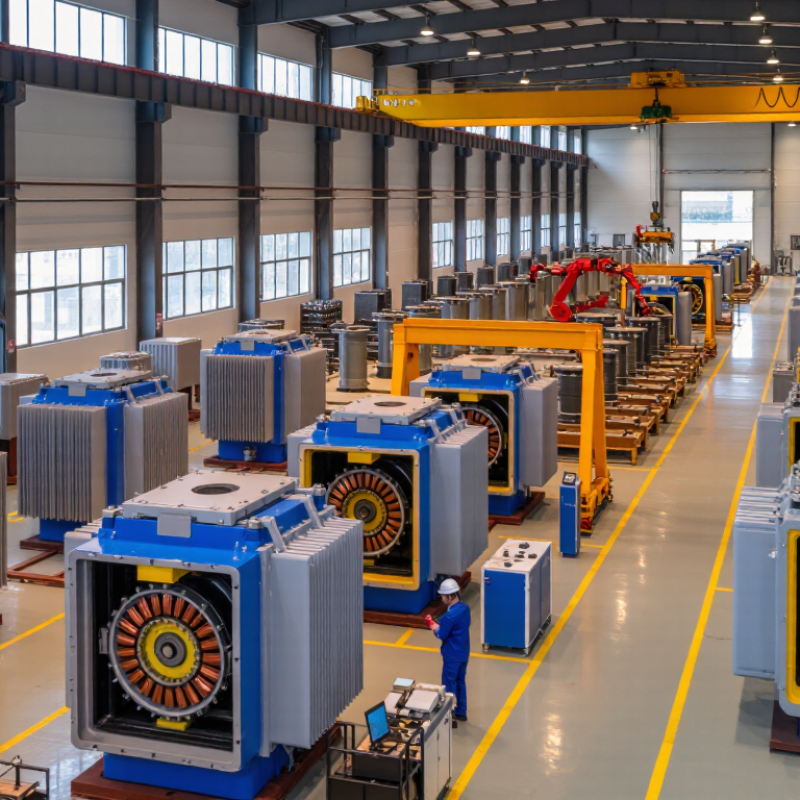
A credible comparison of China’s top powerline transformer manufacturers should begin on the factory floor, not in a catalogue. Check whether production lines support the required voltage classes, ratings, and annual volumes. Ask how core cutting, coil winding, vacuum drying, and tank sealing are controlled. These steps affect losses, insulation life, and leakage risk. Small details matter. A clean assembly area is useful, but it does not replace documented process checks.
Certifications and test records deserve close review. Confirm that quality-management certificates are current and cover the relevant manufacturing site. Check whether products are designed and tested against applicable IEC or IEEE requirements for the destination market. Request routine and type-test reports for comparable models, including temperature-rise, dielectric, and loss results. A certificate alone is not enough. The scope and model details should match the equipment being quoted.
Product range is another practical measure. Suppliers may offer oil-immersed distribution units, pole-mounted transformers, substation models, or dry-type designs. Verify that options such as tap changers, bushings, cooling systems, and enclosure ratings fit the installation. Ask about customization limits, spare parts, and inspection access. I would be cautious about treating a broad product list as proof of equal expertise across every category. Manufacturer claims still need checking.
An anonymized, non-ranked industry reference. The entries describe transformer product categories and relevant evaluation criteria; they are not company-specific claims or a verified ranking of manufacturers.
| No. | Capability Area | Manufacturing Capability Reference | Typical Product Range | Standards and Verification |
|---|---|---|---|---|
| 1 | Oil-Immersed Distribution Transformers | Production commonly includes core-and-coil assembly, tank fabrication, oil processing, and routine electrical testing. Rated capacity and voltage depend on the network and project specification. | Three-phase and single-phase distribution transformers; sealed or conservator designs; utility and industrial applications. | IEC 60076 series and applicable national requirements. Confirm the tested design, voltage rating, losses, and temperature-rise limits. |
| 2 | Dry-Type Transformers | Manufacturing may use cast-resin or vacuum-pressure-impregnated insulation systems. Suitability depends on enclosure, cooling, ambient conditions, and installation environment. | Indoor distribution transformers for buildings, commercial facilities, transport infrastructure, and industrial sites. | IEC 60076-11 addresses dry-type power transformers. Verify the applicable design, environmental class, enclosure, and test reports. |
| 3 | High-Voltage and Extra-High-Voltage Transformers | Manufacturing and testing can include high-voltage winding systems, insulation coordination, bushing integration, and factory dielectric tests. Available voltage classes vary by supplier and design. | Grid interconnection, transmission, and substation power transformers across project-specific voltage and capacity ratings. | IEC 60076-3 covers insulation levels, dielectric tests, and external clearances. Request rating-specific routine and type-test evidence. |
| 4 | Autotransformers | Design and production require engineering for interconnected voltage levels, winding arrangement, insulation, and system fault conditions. | Transmission and substation applications where interconnected networks operate at different voltage levels. | IEC 60076 series as applicable. Confirm winding configuration, impedance, neutral arrangements, and short-circuit withstand evidence. |
| 5 | Shunt Reactors | Capability may include reactor-core and winding design, thermal management, tank assembly, and tests for electrical and acoustic performance. | Oil-immersed or other project-specified reactors for reactive-power compensation in transmission and substation networks. | IEC 60076 requirements may apply, alongside reactor-specific project specifications. Verify the applicable standard and test scope for each design. |
| 6 | Phase-Shifting Transformers | These specialized designs require coordinated electrical and mechanical engineering to control phase displacement and power flow. | Grid applications requiring controlled active-power flow between transmission paths. | Requirements are usually project-specific in addition to relevant IEC 60076 provisions. Check control range, operating scheme, and test documentation. |
| 7 | Traction Transformers | Design considerations can include cyclic loading, vibration, compact installation, and railway-specific operating conditions. | Transformers for railway substations, onboard traction systems, and other rail-power applications, depending on the design. | Applicable railway and transformer standards depend on installation type and jurisdiction. Verify the required qualification and test reports. |
| 8 | Furnace and Rectifier Transformers | Special-purpose production may involve high-current windings, reinforced cooling, and electrical designs matched to the load duty cycle. | Transformers for electric furnaces, rectifier systems, electrochemical processes, and other industrial loads. | Ratings and tests are generally specified for the application. Confirm duty cycle, harmonic conditions, cooling, and required factory tests. |
| 9 | Factory Testing and Quality Control | Typical transformer verification can include winding resistance, voltage ratio, impedance, load loss, no-load loss, insulation tests, and other tests required by the specification. | Testing should be matched to the exact transformer design, rating, and purchase specification. | IEC 60076-1 sets general requirements; other parts address specific test topics. Review traceable test reports and confirm whether tests are routine, type, or special tests. |
| 10 | Management-System Certifications | Quality, environmental, and occupational health and safety management systems can be assessed through third-party certification. | Certifications relate to the certified organization and scope; they do not by themselves certify every transformer model or performance claim. | Check current ISO 9001, ISO 14001, or ISO 45001 certificates where relevant, including issuing body, validity dates, site, and certified scope. |