Minimal Space. Maximum Impact! Designed for when every millimeter matters> the new IRONLESS UNANO SERIES
Semiconductors
Increase throughput and precision of your system
Display
Enhance accuracy and precision with linear motors
Science and aerospace
Improve motion quality for a variety of applications
Machine tooling
Robust solutions for increased speed and precision
Digital cutting
Create modular and high throughput applications
Printing
Increase printing speed and quality using linear motors
Robotics
Integrate compact solutions for guaranteed uptime and high dynamics
Life science
Establish precise and clean integrated solutions
Woodworking
Maximize performance and accuracy for high throughput
Stages and system solutions
Compact integration and high performance for your axis
Vacuum applications
Best performance for clean and vacuum applications
Characteristics
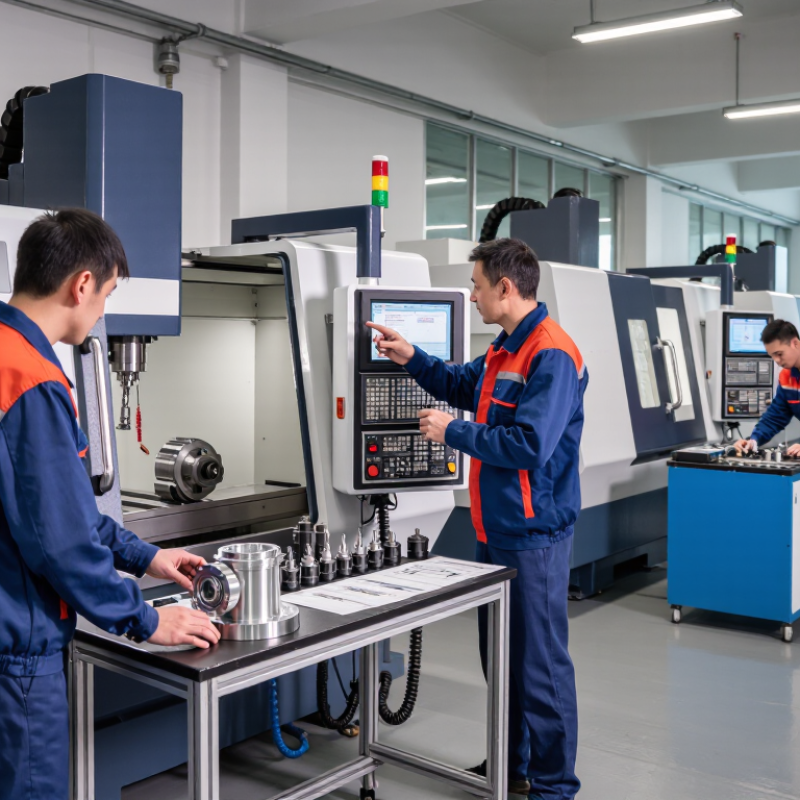
Choosing a reliable CNC Machining Trainer in China requires more than scanning course advertisements. A polished website does not prove practical competence. The strongest trainers connect classroom concepts with real machine behavior, including tool deflection, chatter, workholding, and measurement errors.
John Saunders, founder of NYC CNC and a respected manufacturing educator, often expresses this practical mindset: “Make something, measure it, and learn from the result.” That principle matters in Chinese training centers, where learners may stand beside a three-axis mill, inspect fresh aluminum chips, and compare a machined feature with its CAD drawing. Effective instruction should cover CNC programming, CAD/CAM workflows, cutting parameters, probing, tolerance control, and safe machine operation. It should also explain why a tool breaks, not merely how to replace it.
This guide examines ten leading CNC Machining Trainer options in China through experience, technical depth, equipment access, learner feedback, and industry relevance. The selection considers trainers serving beginners, factory technicians, engineers, and international learners. Some providers publish detailed results. Others offer limited public evidence, which deserves caution. Rankings are never perfect. A trainer praised by an automotive supplier may not suit a small workshop or a student needing English instruction. Regional differences also matter, from Shenzhen’s electronics manufacturing ecosystem to Suzhou’s precision engineering base. Look for verifiable instructor backgrounds, maintained machines, clear safety procedures, sample projects, and honest assessments. Ask difficult questions. The best trainer welcomes them.
A strong CNC machining trainer in China must prove skill on the shop floor, not only present certificates. A credible top-ten ranking should examine practical teaching, technical depth, and learner outcomes. Trainers should demonstrate setup planning, tool selection, workholding, probing, and tolerance control. They should also explain why a tool failed, not simply replace it. That detail reveals real experience.
The World Economic Forum’s Future of Jobs Report 2023 found that 44% of workers’ skills may change by 2027. Its findings support continuous training in digital manufacturing, problem-solving, and automation. A standout trainer connects these skills to actual machines. Learners should edit programs, inspect a finished part, and trace errors back to feeds, speeds, or alignment. Simulation helps, but it cannot fully reproduce vibration, heat, or a damaged insert. Shop-floor judgment still matters.
According to Deloitte and the Manufacturing Institute’s 2024 workforce study, manufacturing could face 3.8 million new roles by 2033, with 1.9 million potentially unfilled. This pressure makes teaching quality measurable. The best trainers use structured assessments, documented projects, and clear safety routines.
They adapt lessons for beginners and experienced operators. They also discuss mistakes openly. No trainer is perfect. Some may explain advanced five-axis work well but overlook inspection habits. Others may teach software confidently yet lack production discipline. Reliable evaluation should include student feedback, repeatable test parts, machine-side observation, and evidence of improved cycle time or first-pass yield.
Choosing the top 10 CNC machining trainers in China requires more than counting certificates or online followers. A strong evaluation begins with workshop experience. Trainers should explain tool selection, workholding, cutting parameters, and tolerance control using real machining examples. Their lessons should connect drawings with finished parts.
Practical testing matters. Reviewers can observe a trial class, inspect sample components, and ask trainees to explain each setup decision. Effective trainers teach safe machine operation, measurement with calipers and micrometers, and basic process planning. They should also adapt lessons for beginners, operators, and experienced programmers. Clear demonstrations often reveal more than polished profiles.
Evidence must remain independent. Training records, learner feedback, assessment results, and professional references can support each trainer’s ranking. A useful score may include technical expertise, teaching clarity, workshop safety, equipment access, curriculum depth, and after-class support. However, public information is sometimes incomplete. That weakens confidence. A trainer with fewer reviews may still teach exceptionally well. Personal teaching style is difficult to measure. I would use interviews and repeated class observations, not one impressive demonstration. Small details matter, such as whether the trainer checks tool wear before blaming the program. Mistakes should be discussed openly. That honesty builds trust.
| Rank | Anonymous Trainer Profile | Primary Learners | Core Training Areas | Machine Coverage | Programming Coverage | Hands-on Practice | Assessment Method | Typical Course Length | Evaluation Score |
|---|---|---|---|---|---|---|---|---|---|
| 1 | Profile A — Advanced Production Specialist | Experienced machinists and process engineers | Process planning, cycle-time reduction, tooling, tolerance control | 3-axis and 5-axis milling; CNC turning | G-code, parametric programming, CAM verification | 60% | Practical part, setup checklist, dimensional report | 8–12 weeks | 94/100 |
| 2 | Profile B — Industrial Skills Instructor | Vocational students and entry-level operators | Machine operation, work offsets, tooling, safety | CNC milling and turning centers | 2D drawing interpretation, basic G-code, CAM fundamentals | 55% | Skills test, supervised setup, final machined part | 12–20 weeks | 92/100 |
| 3 | Profile C — Five-Axis Application Mentor | Aerospace, medical, and complex-part manufacturers | Multi-axis positioning, collision avoidance, toolpath strategy | 3+2 and simultaneous 5-axis machining | Advanced CAM, post-processors, machine simulation | 65% | Complex component, simulation review, process audit | 4–8 weeks | 91/100 |
| 4 | Profile D — CNC Turning Specialist | Lathe operators and production technicians | Turning cycles, threading, grooving, boring, workholding | 2-axis and live-tool CNC lathes | Turning G-code, canned cycles, tool compensation | 58% | Setup demonstration, tool-setting test, sample batch | 6–10 weeks | 89/100 |
| 5 | Profile E — CNC Milling Fundamentals Coach | Beginners, apprentices, and new production staff | Basic milling, coordinates, cutting data, inspection | 3-axis vertical machining centers | Basic G-code, 2.5D CAM, program editing | 50% | Written quiz, machine operation test, finished workpiece | 8–16 weeks | 87/100 |
| 6 | Profile F — CAD/CAM Programming Trainer | Programmers, design engineers, and job-shop staff | CAD modeling, CAM strategy, post-processing, verification | Milling, turning, and mill-turn workflows | 3D CAD, 2D/3D CAM, toolpath simulation | 45% | Program portfolio, simulation report, post-processor check | 4–8 weeks | 86/100 |
| 7 | Profile G — Quality and Metrology Trainer | Quality inspectors and machining supervisors | GD&T, inspection planning, measurement systems, SPC | Milled and turned component inspection | Inspection data, drawing interpretation, traceability records | 40% | Measurement exercise, capability study, inspection report | 3–6 weeks | 84/100 |
| 8 | Profile H — Automation and Production Trainer | Factory technicians and production leaders | Pallet systems, probing, bar feeding, process monitoring | CNC cells, turning centers, automated workholding | Machine macros, probing routines, basic data collection | 48% | Cell setup, fault recovery, production trial | 2–6 weeks | 83/100 |
| 9 | Profile I — Maintenance and Troubleshooting Mentor | Maintenance technicians and shift supervisors | Alarm diagnosis, preventive maintenance, accuracy checks | Milling and turning equipment | Control-panel operation, diagnostic screens, parameter basics | 52% | Fault simulation, recovery procedure, maintenance log | 2–5 weeks | 81/100 |
| 10 | Profile J — Short-Course Industry Coach | Small job-shop owners and career changers | Machine basics, setup workflow, quoting, production safety | Entry-level milling and turning centers | Basic G-code, drawing reading, introductory CAM | 42% | Short practical task, safety checklist, operator interview | 1–3 weeks | 79/100 |
The top ten CNC machining trainers in China stand out through practical teaching, not polished promises. Their profiles emphasize shop-floor habits, measurable skills, and safer decision-making.
The turning mentor from Guangdong teaches tool offsets beside a production lathe. Trainees check diameter drift with a micrometer after every adjustment.
The five-axis specialist in Jiangsu explains fixture loading through real collision studies. His lessons include unfinished simulations, because perfect examples can hide risk.
The mold-making instructor in Zhejiang focuses on steel behavior, cutter selection, and surface inspection under angled light. She asks learners to record tool wear before changing feeds.
The aerospace-process trainer in Shaanxi uses controlled demonstrations of difficult alloys. He insists on traceable setup sheets and independent verification.
The small-batch machining coach in Sichuan trains operators to estimate cycle time without ignoring setup delays. His estimates are useful, but sometimes too optimistic.
The quality-focused trainer in Shanghai teaches datum selection, CMM reporting, and careful interpretation of tolerance drawings.
The maintenance-minded instructor in Liaoning connects spindle vibration with worn bearings and poor balancing. Students hear the fault before seeing the gauge.
The CAD/CAM educator in Beijing links toolpaths to material removal, rather than teaching software commands alone.
The production supervisor in Fujian uses daily improvement meetings to expose recurring errors without humiliating beginners.
The vocational mentor in Hubei combines manual measurement, machine simulation, and supervised cutting. Her approach is slower, yet newcomers retain more.
Strong trainers admit uncertainty, update methods after failed trials, and invite peer review.
What Are the Top 10 CNC Machining Trainers in China?
The strongest CNC machining trainers combine shop-floor experience with structured teaching. Their methods usually begin with a drawing, material sample, and machine setup. Trainees read tolerances, select tools, and plan cutting sequences before touching the controller. Short demonstrations help, but supervised practice builds real confidence. Mistakes become useful when the trainer explains their causes clearly.
Technical training should cover G-code, CAM programming, workholding, tool compensation, and precision measurement. Learners should inspect parts with calipers, micrometers, and height gauges. They also need practice reducing chatter, burrs, tool wear, and dimensional drift. A reliable trainer records cutting data and compares results after each operation. Small details matter.
The top ten should also prepare students for recognized vocational assessments and relevant industry certifications. Training may include CNC operation, machining process planning, drawing interpretation, quality control, and workplace safety. Certificates alone prove little. Practical tests, documented projects, and assessor feedback offer stronger evidence. In workshop observations, some trainers explain theory well but rush machine setup. That weakness deserves attention. Even experienced instructors need reflection, updated software skills, and regular contact with modern production methods. A credible program shows lesson plans, assessment criteria, machine maintenance records, and honest limits. Safety remains non-negotiable.
Training methods, technical skills, and industry certification coverage
The chart compares ten anonymized trainer profiles using a 100-point coverage index. The index reflects commonly recognized CNC training areas in China, including hands-on machining, CNC programming, CAD/CAM, multi-axis machining, metrology, production safety, and national vocational skill certification preparation.
Choosing among the top 10 CNC machining trainers in China requires more than comparing course prices.
Look for trainers with proven shop-floor experience, verified technical qualifications, and clear teaching records. A capable trainer should explain coordinate systems, tool offsets, tolerances, and workholding without hiding practical difficulties. Ask whether lessons include real machines, measured parts, and controlled cutting tests. A classroom demonstration is useful, but a finished component tells you more.
Tips: Request a sample lesson before enrolling. Check the trainer’s inspection tools, maintenance habits, and safety procedures. Ask for anonymized learner results, not only promotional claims. Confirm whether the course covers your materials, such as aluminum, steel, or engineering plastics. Short answers deserve caution.
Your needs should guide the choice. A beginner may need patient instruction on machine setup and drawing interpretation. An experienced operator may need advanced programming, five-axis planning, or process optimization.
In my experience, trainers who encourage questions create fewer hidden mistakes later. However, even skilled instructors may explain too quickly. I would observe how they respond when a measurement fails or a tool breaks unexpectedly. That moment reveals their judgment.
Reliable trainers provide structured exercises, readable documentation, and feedback after each operation.
They should also explain how to verify programs before machining. A trial project can expose weaknesses: uneven surfaces, incorrect dimensions, or unclear inspection records. Do not ignore these details. Training quality is not always perfect, and your own learning pace matters. Choose a program that admits limitations and adjusts practice accordingly.