What Is an MCB Lock Off Kit and How Does It Work?

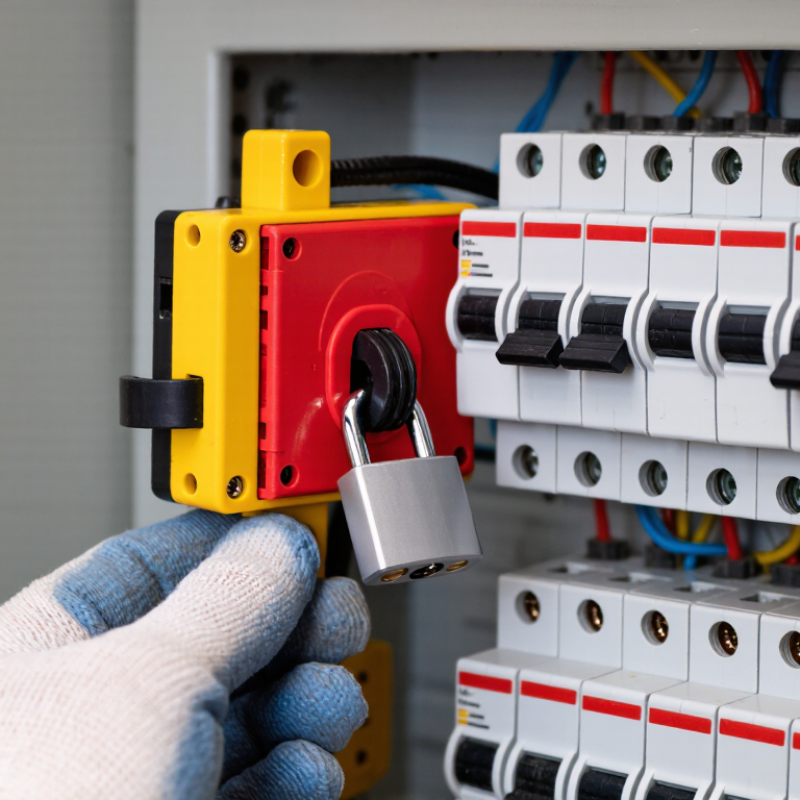
An Mcb Lock Off Kit is a small but important device for securing a miniature circuit breaker in the off position. It typically fits over or around the breaker’s toggle, then accepts a padlock to help prevent accidental re-energization during maintenance. Designs differ, so compatibility with the specific breaker matters. A loose fit is not a minor detail.

The U.S. Occupational Safety and Health Administration (OSHA) estimates that effective lockout/tagout practices prevent about 120 fatalities and 50,000 injuries each year. That figure concerns lockout/tagout programs broadly, not MCB kits alone. Still, it shows why a simple physical barrier can matter. Safety scientist James Reason captured a related principle: “We cannot change the human condition, but we can change the conditions under which humans work.” An Mcb Lock Off Kit helps create one such condition, but it cannot replace a complete isolation procedure.

That sounds simple. It is not foolproof. A locked breaker does not, by itself, prove that a circuit is de-energized. Workers must follow their site procedures and have a qualified person verify the safe state with suitable test equipment. This guide explains how the kit works, what its parts do, and what to check before choosing one. The details matter: breaker shape, handle clearance, lock size, and a clear identification tag can all affect practical use. OSHA guidance is a useful reference, but local procedures and equipment instructions should guide the actual work.

What Is an MCB Lock Off Kit and How Does It Work?

What an MCB Lock-Off Kit Is

An MCB lock-off kit is a physical device used to hold a miniature circuit breaker in the OFF position. MCBs protect electrical circuits by interrupting power when a fault or overload occurs. During maintenance, someone could accidentally switch a breaker back on. A lock-off device helps prevent that.

The kit usually includes a breaker-compatible clamp or cover and a point for attaching a padlock. Once fitted, it blocks or secures the breaker’s switch, while a tag can identify who is working and why power must remain off. Fit varies. Breakers differ in shape and switch design, so a device that suits one model may not suit another. The fit can be fiddly, and a loose attachment may not provide reliable restraint.

A lock-off kit is one part of a safe isolation process, not proof that a circuit is dead. A qualified person should isolate the correct supply and verify the absence of voltage with a suitable tester before work begins. That matters. A locked switch can reduce the chance of accidental operation, but it cannot detect another supply or confirm that wiring is safe to touch. These distinctions are easy to overlook when the device itself looks simple.

Key Components and Their Functions

An MCB lock-off kit usually combines a breaker clamp, a fixing screw or lever, a padlock, and a warning tag. The clamp grips the miniature circuit breaker’s toggle or body, depending on the breaker design. Tightening the fixing mechanism holds the switch in its off position. A padlock then prevents casual or accidental operation. The tag identifies who applied the lock and why. Some kits include a hasp, allowing more than one authorized worker to attach a personal lock.

Fit matters.

A device that sits loosely may fail to keep the toggle secure, so check compatibility with the specific breaker before use.

Each component serves a distinct purpose: the clamp blocks movement, the lock controls access, and the tag communicates the hazard. The U.S. Occupational Safety and Health Administration estimates that effective lockout/tagout practices prevent about 120 fatalities and 50,000 injuries each year. That figure covers workplace energy-control practices broadly, not MCB kits alone.

A lock-off device also does not prove that a circuit is de-energized. A qualified person must verify the electrical condition with an appropriately rated tester, following site procedures.

It is easy to treat the tag as the safeguard. It is only a warning. A careful fit check and independent verification still matter.

How the Lock-Off Mechanism Works

An MCB lock-off kit is a small device that holds a miniature circuit breaker in its off position. Depending on the breaker design, it may clamp around the toggle or attach to the front of the enclosure. A padlock then secures the device, making it harder for someone to switch the breaker back on accidentally. The exact fit matters. A loose or incompatible lock-off can give a false sense of security.

The mechanism is simple. The lock-off blocks movement of the breaker handle, while the padlock keeps the block in place. The person carrying out the work keeps the key, and a warning tag can identify who applied the lock and why. It is a physical reminder, too.

Still, an off handle does not prove that equipment is safe to touch. Other supplies or wiring arrangements may leave parts energized. A competent person should follow the site’s isolation procedure and verify the absence of voltage with a suitable tester. It is easy to treat the lock as the whole safety process; it is only one part of it. A careful check takes a little longer, but that detail matters.

Steps for Securing an MCB During Maintenance

An MCB lock-off kit is a mechanical device that holds a miniature circuit breaker in the OFF position and accepts a personal padlock. It helps prevent accidental re-energization while electrical work is underway. The kit must fit the breaker securely; a loose or incompatible device can create false confidence. OSHA estimates that effective lockout/tagout practices prevent about 120 deaths and 50,000 injuries each year. Those figures cover hazardous-energy control broadly, not MCB work alone.

Before maintenance, identify the correct circuit and check drawings for alternate supplies or backfeeds. Tell affected workers, shut down connected equipment, and switch the MCB off. Fit the lock-off device according to its instructions, then attach your personal lock and a clear warning tag. Never assume. Verify the circuit is dead with a suitably rated tester. Test the instrument on a known live source before and after checking the conductors. If the reading is uncertain, stop and investigate. OSHA’s Control of Hazardous Energy guidance stresses isolation and verification; switching off alone is not proof of safety.

Keep the key under the worker’s control, and check that the breaker cannot be moved. A weak point in many procedures is rushing the identification step, especially in crowded distribution boards. Reflect on that risk before work begins. Follow site procedures and use a qualified person for electrical testing. Remove the lock only when the work area is clear and the authorized worker is ready to restore power.

What Is an MCB Lock-Off Kit and How Does It Work?

A lock-off kit secures a miniature circuit breaker (MCB) in the OFF position so it cannot be switched on accidentally during maintenance.

How to read this chart: Each bar counts the key actions listed for that stage. Identify and isolate the correct circuit, fit a compatible lock and warning tag, then verify the circuit is de-energized with an appropriate tester. An MCB in the OFF position is not, by itself, proof that a circuit is safe to work on. Work should be carried out by a competent person following applicable electrical safety procedures.

Safety Checks and Common Limitations

An MCB lock off kit is a small device that holds a miniature circuit breaker in its off position. Depending on the breaker design, it may clamp onto the toggle or attach through a fixing point. A padlock then helps prevent someone from switching it back on during maintenance. It is a warning and restraint, not proof that a circuit is safe.

Check the breaker is compatible with the kit before use. Fit it securely, and confirm the switch cannot move to “on.” Then follow your site’s isolation procedure, including testing for absence of voltage with suitable, verified equipment. A locked breaker can still leave hazards: another supply, stored energy, or incorrect circuit identification. Some kits also fit only certain breaker shapes. That detail is easy to miss. If the device feels loose or blocks access to the switch, stop and reassess rather than improvising.

Tips: Keep the key controlled, attach a clear identification tag, and tell affected people who applied the lock. Never rely on the lock alone; verify the circuit at the point of work. If you are unsure about the installation or the test results, ask a qualified electrician. Even careful procedures can have gaps.

What Is an MCB Lock Off Kit and How Does It Work? - Safety Checks and Common Limitations

Topic Practical information Safety check or limitation
What it is A lock-off kit is a lockout device, usually used with a personal safety padlock and tag, to secure a miniature circuit breaker (MCB) in its OFF position. It helps prevent someone from switching the breaker back on; it does not itself prove that the circuit is electrically safe.
How it works The device is fitted to the breaker or its toggle using a method designed for that breaker style. A padlock secures the device, and a tag can identify who applied it and why. Fit it only as instructed for the specific device. Confirm it is secure and the breaker cannot be moved to ON without removing the lockout.
Before isolation Identify the correct circuit and the equipment it supplies. Check for drawings, labels, other supply sources, and any equipment-specific isolation requirements. Labels and circuit schedules can be inaccurate. Do not rely on a label alone to establish which circuit has been isolated.
Apply the lockout Switch the identified breaker OFF, fit the compatible lock-off device, apply a personal lock, and attach a clear tag where the procedure requires one. A tag is a warning, not a physical restraint. Use a lockout arrangement that prevents unauthorized operation.
Verify dead A competent person should verify the relevant conductors are de-energized at the point of work using a suitable tester and an appropriate safe-isolation procedure. Prove the tester on a known source or proving unit before and after the test. A breaker in OFF, even when locked, is not a substitute for testing.
Compatibility Lock-off devices are made for different breaker shapes, toggle designs, and panel arrangements. Compatibility depends on the actual breaker and available clearance. There is no guarantee that one device fits every MCB. Do not force, modify, or use a loose-fitting device; select a suitable alternative isolation method if needed.
Electrical scope The lockout secures the breaker control; the electrical isolation achieved depends on the circuit design and the switching arrangement. It may not isolate every conductor or eliminate backfeed, alternate supplies, or stored energy. Check the installation and isolate all relevant sources.
During work Keep the lock and tag in place while work is in progress. Follow site procedures for control of keys and communication with affected people. Do not remove another person’s lock except under a formally controlled procedure. Recheck isolation if conditions change or the work is interrupted.
Common limitations A lock-off kit is a physical control against operating a breaker. It does not detect voltage, confirm circuit identity, or assess the condition of wiring or equipment. Use it as one part of a safe-isolation process, not as a replacement for risk assessment, competent work, suitable test equipment, or applicable electrical procedures.
Return to service Before restoring supply, check that work is complete, covers and barriers are in place, and people are clear. Each worker should remove their own lock according to the site procedure. Restore power only when authorized and safe to do so; notify affected people as required.

Safety note: Electrical isolation and testing should be carried out by a competent person in accordance with applicable local regulations and site procedures.