How to Choose the Right Hall Effect Sensor for Your Needs?
Choosing the right Hall Effect sensor is crucial for many applications. These sensors are pivotal in industries like automotive, consumer electronics, and industrial automation. According to a report by MarketsandMarkets, the global Hall Effect sensor market is expected to reach $2.51 billion by 2026, growing at a CAGR of 6.9%. This growth underscores their increasing importance and versatility.
Dr. Emily Chen, a leading expert in sensor technology, emphasizes, "Selecting the right Hall Effect sensor can significantly impact system performance and efficiency." This statement reflects the need for proper evaluation. Hall Effect sensors vary in sensitivity, size, and output type. Users must consider these factors when making a choice.
Some applications may require very specific sensor characteristics. Misjudging these needs can lead to inefficiencies. Obtaining expert guidance is often beneficial. Nonetheless, it's essential to understand that not every sensor will meet every requirement perfectly. Exploring innovative solutions and adjustments can also enhance the performance of Hall Effect sensors in the long run.
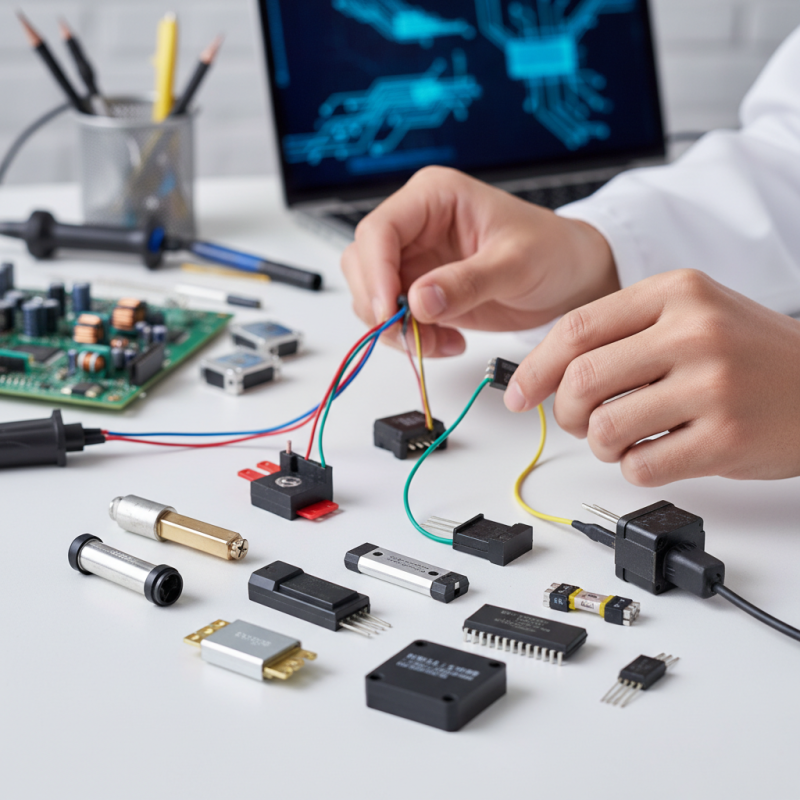
Understanding Hall Effect Sensors: Principles and Applications
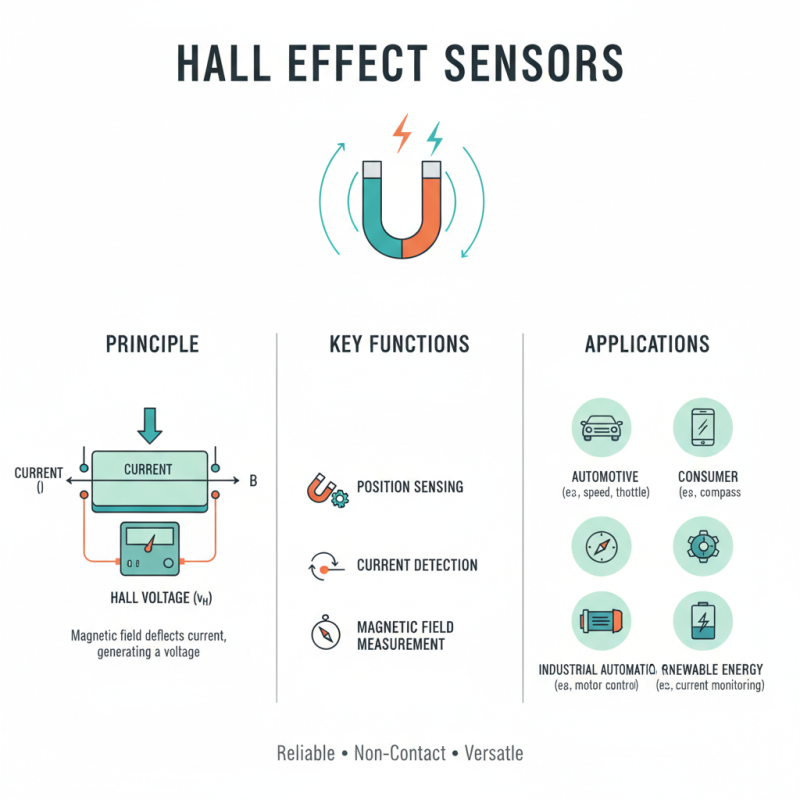
Hall Effect sensors are essential components in various applications. They function based on the Hall Effect principle, which states that a voltage is generated when a magnetic field interacts with an electric current. This phenomenon makes them valuable in detecting positions, currents, and magnetic fields.
When selecting a Hall Effect sensor, consider the environment where it will be used. Factors like temperature, humidity, and magnetic field strength are crucial. Sensors may perform differently under various conditions. A sensor may react slowly in extreme temperatures.
Tips: Always assess the specific requirements for your application. Look at how sensitive the sensor needs to be. Sometimes, a high sensitivity isn't necessary. This choice can save costs while maintaining performance.
Another key factor is the output type of the sensor. You can find analog, digital, and latch output options. Each output type has its use cases. Analog outputs can provide continuous data, while digital outputs are easier to work with.
Choosing the right Hall Effect sensor involves balancing these considerations. It's essential to have a clear understanding of both your needs and the sensor capabilities. Misjudgment can lead to performance issues and increased costs. Make informed choices to optimize efficiency and reliability in your applications.
Identifying Your Specific Requirements for Hall Effect Sensors
When selecting a Hall Effect sensor, identifying specific requirements is crucial. You need to consider application type, magnetic field strength, and temperature range. According to a recent industry report, 70% of organizations cite these factors as their primary influencers in sensor selection. Understanding these aspects can streamline your decision-making process.
It helps to evaluate the environment where the sensor will operate. For example, harsh conditions may require sensors with robust casings or broader temperature tolerances. Remember, not every sensor suits every environment. Research indicates that improper selection can lead to 30% higher failure rates.
Tips: Always verify sensor specifications before purchasing. Look for datasheets that include detailed performance metrics. Engage with industry experts when possible, as their insights can illuminate potential pitfalls. Having a clear understanding of your project needs will lead to better sensor choices. Be prepared to revisit your initial selections; it’s not uncommon for initial requirements to evolve.
How to Choose the Right Hall Effect Sensor for Your Needs?
| Parameter |
Description |
Recommended Values |
| Supply Voltage |
Voltage range in which the sensor operates effectively. |
5V, 12V, or 24V |
| Sensitivity |
The magnetic field strength required to trigger the sensor. |
2mT, 5mT, 10mT |
| Temperature Range |
Operating temperature limits of the sensor. |
-40°C to 125°C |
| Output Type |
Type of output signal provided by the sensor. |
Analog, Digital, or Latch |
| Package Type |
Physical packaging of the sensor. |
SMD, DIP, or TO-92 |
Evaluating Key Parameters: Sensitivity, Range, and Response Time
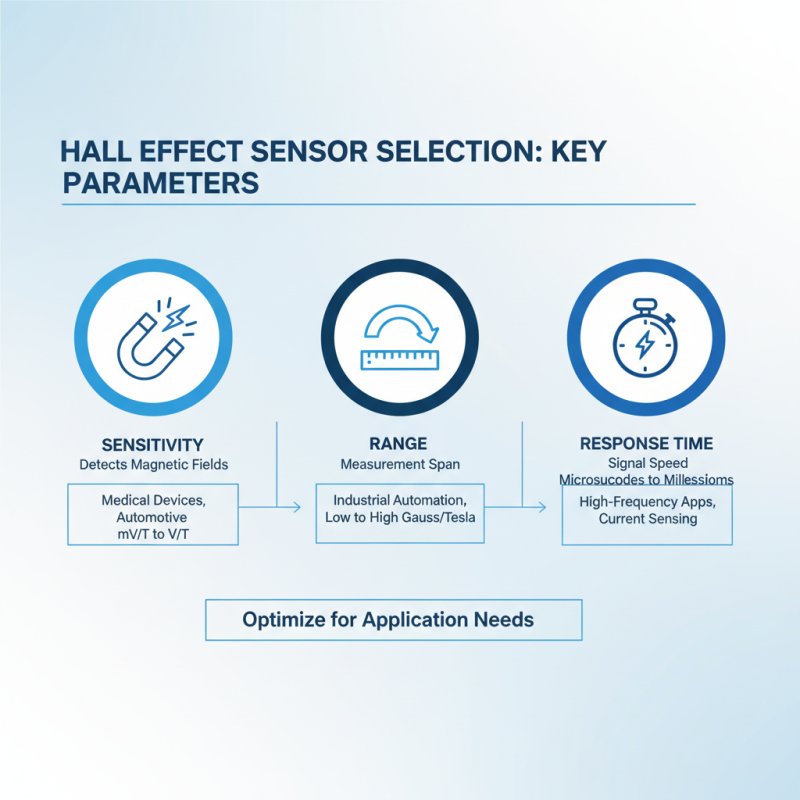
When choosing a Hall Effect sensor, three key parameters are often critical: sensitivity, range, and response time. Sensitivity refers to the sensor's ability to detect magnetic fields. Typical values can range from a few millivolts per Tesla to several volts per Tesla, depending on the application. For instance, high-sensitivity sensors are essential in precise measurements, such as in medical devices or automotive applications.
Range defines the magnetic field strength that the sensor can accurately measure. Many industrial-grade Hall Effect sensors operate effectively within a range of -1 to +1 Tesla. This performance is often influenced by the materials used in construction and the design of the sensor itself. However, users must consider that exceeding the specified range can lead to saturation, which compromises accuracy.
Response time is another crucial parameter to consider. The best sensors on the market have response times under 10 microseconds. This speed is vital in high-speed applications, like motor control or real-time monitoring systems. However, balancing sensitivity, range, and response time can be challenging. An ideal sensor might excel in one area while being less effective in another, necessitating careful evaluation based on application needs.
Comparing Different Types of Hall Effect Sensors Available
When selecting a Hall Effect sensor, understanding available types is crucial. Generally, these sensors fall into three categories: linear, switched, and omnipolar sensors. Linear Hall Effect sensors output a voltage proportional to the magnetic field strength, making them ideal for applications needing precise measurements. In contrast, switched sensors provide on/off signals and are commonly used in simple applications like proximity detection.
The omnipolar sensor offers versatility. It responds to magnetic fields from either pole, making it useful in applications requiring flexible installations. According to a 2023 market analysis from Research and Markets, linear sensors comprise nearly 40% of the market due to their high accuracy and reliability. Engineers often have to choose between these types based on specific application needs, which can lead to second-guessing.
Despite advancements, some challenges remain. For instance, interference from nearby magnetic fields can affect performance. Additionally, not all sensors are designed for extreme environmental conditions. Engineers must look at specifications carefully. Differences in sensitivity and operating temperature can impact system performance significantly. Balancing precision and application scope requires thorough understanding and careful decision-making.
Comparison of Different Types of Hall Effect Sensors
This chart compares the sensitivity of different types of Hall Effect sensors used in various applications. Understanding the sensitivity helps in selecting the appropriate sensor for specific needs.
Selecting the Right Hall Effect Sensor for Your Project Needs
Selecting the right Hall Effect sensor for your project requires careful consideration. These sensors come in various types, each designed for specific applications. Understanding the diverse functionalities is crucial. For example, some sensors detect magnetic fields for position sensing, while others measure current flow. Knowing the purpose of your project can guide your choice.
Consider the sensor's sensitivity and range. A more sensitive sensor may provide accurate readings, but it can also pick up unwanted noise. You might find that a less sensitive sensor offers just the right balance for your application. Remember, selecting a sensor that fits your needs is vital, but it is also a chance to explore different technology options. Don't overlook the importance of the operating environment. Temperature fluctuations can affect performance, and this should not be taken lightly.
After you narrow down your choices, testing is key. Prototyping with several options can reveal unexpected preferences. A sensor that seems ideal on paper may not perform as expected in real-life conditions. Engagement in hands-on experiences can often highlight strengths and weaknesses not evident from specifications alone. Always take time to reflect on the results and adjust your choices accordingly.