Minimal Space. Maximum Impact! Designed for when every millimeter matters> the new IRONLESS UNANO SERIES
Semiconductors
Increase throughput and precision of your system
Display
Enhance accuracy and precision with linear motors
Science and aerospace
Improve motion quality for a variety of applications
Machine tooling
Robust solutions for increased speed and precision
Digital cutting
Create modular and high throughput applications
Printing
Increase printing speed and quality using linear motors
Robotics
Integrate compact solutions for guaranteed uptime and high dynamics
Life science
Establish precise and clean integrated solutions
Woodworking
Maximize performance and accuracy for high throughput
Stages and system solutions
Compact integration and high performance for your axis
Vacuum applications
Best performance for clean and vacuum applications
Characteristics
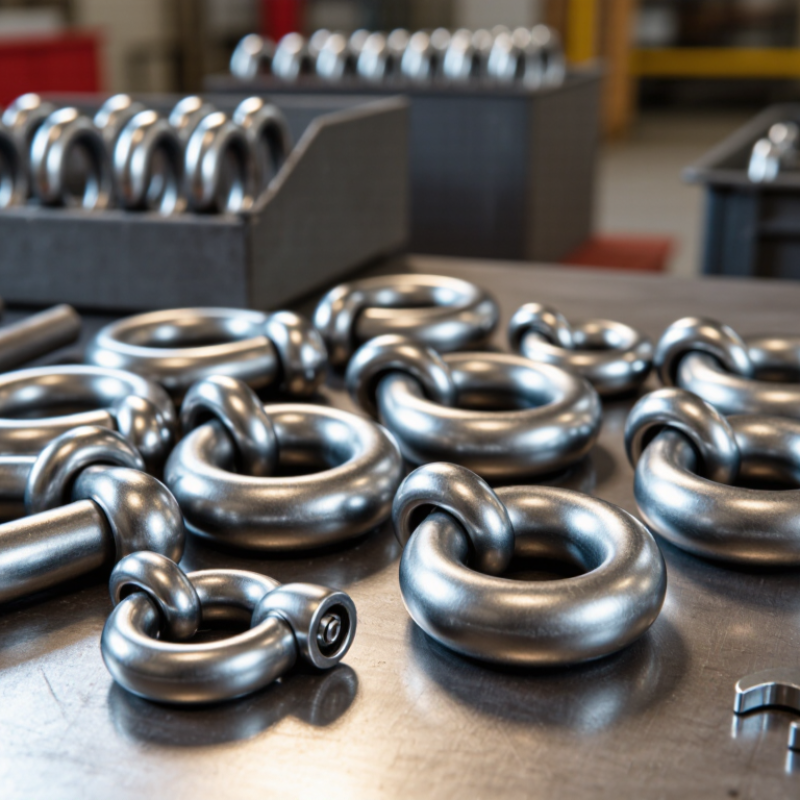
China Top 10 Stainless Steel Shackles Manufacturers offers a practical starting point for buyers, engineers, and lifting professionals. China’s manufacturers produce shackles for marine hardware, construction lifting, offshore work, and industrial rigging. Yet appearance can mislead. A mirror-polished surface does not prove dependable performance.
Rigging educator David Duerr captures this concern clearly: “A shackle is only as dependable as the inspection behind it.” His principle is useful here. Reliable Stainless Steel Shackles require more than attractive machining and competitive prices. Buyers should examine stainless steel grade, working load limit, pin design, heat treatment, corrosion resistance, and proof-testing records. Traceable certificates matter. So do production photos and independent inspection reports.
Small details reveal manufacturing discipline. Look for clean threads, even forging lines, readable markings, and a pin that seats without force. Ask whether the manufacturer follows recognized lifting-equipment standards. Confirm whether load ratings apply to straight loading, side loading, or both. These differences can change a purchasing decision.
The ranking in this article considers product quality, manufacturing experience, export capability, customization, testing systems, and customer support. It does not assume that the largest factory is the safest choice. That assumption deserves doubt. Some smaller suppliers may provide closer technical communication and better batch control.
Specifications can still be incomplete. Online information changes. Buyers should verify current certificates before placing an order. Careful comparison remains essential when selecting China’s top Stainless Steel Shackles manufacturers for demanding applications.
China Top 10 Stainless Steel Shackles Manufacturers
Stainless steel shackles connect ropes, chains, slings, and lifting points through a removable pin. Common designs include D shackles, bow shackles, screw-pin shackles, and bolt-type shackles. D shackles suit direct, controlled loads. Bow shackles provide more room for several connections. Screw pins support frequent assembly, while bolt-type designs offer stronger resistance to accidental opening.
Material selection matters. Grade 304 stainless steel performs well in general outdoor and industrial environments. Grade 316 offers better resistance to saltwater and chloride exposure. World Stainless reported global crude stainless steel production of about 58.4 million tonnes in 2023. This scale reflects strong material demand, but it does not prove that every shackle has equal corrosion resistance. Surface finish, forging quality, pin design, and inspection still matter.
Marine mooring, architectural cables, food-processing equipment, and light rigging use these components widely. UNCTAD’s Review of Maritime Transport 2024 placed the global commercial fleet above 2.4 billion deadweight tonnes, showing the scale of marine hardware demand. Yet stainless shackles are not automatically suitable for overhead lifting. Buyers should verify working load limits, test certificates, thread condition, and manufacturer instructions. A polished surface can hide defects. That is easy to forget. For harsh seawater, routine rinsing and inspection remain practical, although cleaning alone cannot correct metal fatigue, deformation, or overloading.
| No. | Shackle Type | Common Stainless Steel | Typical Pin Design | Indicative WLL Range* | Main Applications | Key Characteristics |
|---|---|---|---|---|---|---|
| 1 | Stainless Steel D Shackle | AISI 316 / EN 1.4401 or 1.4404 | Threaded screw pin | Approximately 0.10–2.00 t | Marine rigging, cable connections, sailboat hardware, general light lifting | Narrow body supports focused loading; compact and easy to install. |
| 2 | Stainless Steel Bow Shackle | AISI 316 / EN 1.4401 or 1.4404 | Screw pin or captive pin | Approximately 0.20–3.00 t | Multi-directional rigging, anchoring, mooring, lifting slings | Wide bow accommodates multiple connections and allows greater articulation. |
| 3 | Safety Screw-Pin Shackle | AISI 316L / EN 1.4404 | Threaded pin with retaining feature | Approximately 0.15–2.50 t | Permanent outdoor assemblies, marine structures, safety-critical connections | Reduces the risk of accidental pin loss or loosening during service. |
| 4 | Captive-Pin Shackle | AISI 316 / AISI 316L | Pin permanently retained in the body | Approximately 0.10–1.50 t | Access systems, architectural cables, maintenance equipment, exposed installations | Useful where preventing component separation is more important than rapid replacement. |
| 5 | Long D Shackle | AISI 316 / EN 1.4401 | Extended threaded screw pin | Approximately 0.10–1.50 t | Long-eye lifting points, cable assemblies, narrow attachment locations | Provides additional internal length while maintaining a relatively narrow profile. |
| 6 | Anchor Shackle | AISI 316L, subject to certified design | Heavy screw pin or bolt-type pin | Approximately 0.50–5.00 t | Mooring systems, anchor chains, dock hardware, offshore support equipment | Designed for higher loads; dimensional and certification requirements vary significantly. |
| 7 | High-Polish Architectural Shackle | AISI 316L | Concealed or low-profile screw pin | Approximately 0.05–0.50 t | Cable railings, facades, canopies, signage, decorative structures | Prioritizes appearance, surface finish, and corrosion resistance over heavy lifting capacity. |
| 8 | Swivel Shackle | AISI 316 / AISI 316L | Integrated rotating eye or swivel assembly | Approximately 0.10–1.00 t | Rotating signs, marine fittings, suspended equipment, directional cable systems | Allows controlled rotation; the swivel mechanism must not be treated as a universal anti-twist device. |
| 9 | Quick-Release Shackle | AISI 316 / AISI 316L | Spring-loaded or manually operated release pin | Approximately 0.05–0.50 t | Sailing, rescue accessories, removable barriers, temporary rigging connections | Enables fast connection and release; unsuitable for applications requiring an unverified locking mechanism. |
| 10 | Heavy-Duty Bolt-Type Shackle | AISI 316L or certified precipitation-hardened stainless steel | Bolt, nut, and cotter-pin assembly | Approximately 1.00–8.00 t | Industrial lifting, permanent rigging, offshore fixtures, heavy marine connections | Provides stronger retention for long-term service; requires inspection of the bolt, nut, and cotter pin. |

China’s stainless steel shackle manufacturing industry has developed around strong metalworking, casting, forging, and machining capabilities. Many manufacturers serve marine equipment, lifting systems, architectural hardware, and industrial maintenance markets. Their products commonly use stainless steel grades selected for corrosion resistance, strength, and working conditions.
A reliable manufacturer should control every major step. This includes material verification, forging temperature, thread machining, surface polishing, and final inspection. Experienced factories usually provide load testing, dimensional reports, and traceable production records. A practical buyer should check pin fit, thread smoothness, body alignment, and surface finish. Small flaws often reveal weak process control.
Some factories offer custom sizes, laser marking, and packaging for export projects. However, capacity alone does not prove quality. A large workshop may still have inconsistent polishing or incomplete inspection records. This is worth questioning. Manufacturers should explain working load limits, safety factors, testing methods, and material certificates clearly. Independent verification can reduce uncertainty, especially for shackles used near saltwater or repeated loads. China’s top stainless steel shackle manufacturers are better judged by stable performance, transparent documentation, and responsive technical support than by catalog size.
The chart compares the minimum chromium content specified or commonly cited for ten stainless steel grades considered in shackle manufacturing. Higher chromium generally improves passive corrosion resistance, while final suitability also depends on nickel, molybdenum, heat treatment, load design, and applicable standards. Values are based on nominal grade composition ranges and are not company-specific production data.
When evaluating Chinese shackle manufacturers, inspect more than product photos and price lists. Ask for material certificates, heat numbers, and batch traceability records. Stainless steel grade, pin design, thread quality, and working load limits should match the intended lifting or marine application. A reliable factory can explain its testing process clearly. Look for proof-load reports, dimensional checks, and corrosion testing completed by qualified personnel. Factory experience matters, but documented evidence matters more.
Request samples from different production batches. Check the shackle body for smooth machining, visible cracks, uneven polishing, or loose pin threads. Compare measured dimensions with the approved drawing. Supplier audits should cover raw-material storage, calibration records, worker training, and final inspection. A professional manufacturer should also provide consistent packaging and clear identification on every batch. A polished catalog is not proof. I have seen attractive samples hide weak documentation, so supplier claims need careful verification.
Tips: Confirm load markings before ordering. Test samples independently when safety is critical. Ask how rejected parts are controlled. Review response quality, not just response speed. Small communication gaps can become costly. Do not accept vague certificates. Some buyers focus too heavily on unit price and overlook replacement risk, delivery delays, or inconsistent finishing. That approach may save money briefly, but it weakens long-term purchasing reliability.
China’s Top 10 Stainless Steel Shackle Manufacturers are judged by more than polished catalogs. Strong suppliers combine material control, machining accuracy, and documented load testing. Their workshops commonly process 304 or 316 stainless steel for marine, lifting, and architectural applications. Look closely.
A reliable manufacturer can provide heat numbers, dimensional drawings, batch records, and proof-test reports. Experienced buyers inspect pin threads, bow symmetry, hole alignment, and surface finish before approval.
For coastal use, 316 stainless steel usually offers better chloride resistance. Still, “marine grade” is not a complete specification. Salt concentration, crevice design, and cleaning routines affect performance. That detail matters.
The leading ten should demonstrate repeatable production, clear tolerances, and responsive technical support. In-house inspection helps verify hardness, dimensions, and working load limits before shipment.
Photographs help, but independent test evidence is stronger. Some suppliers publish impressive figures while omitting test conditions. That weakness deserves scrutiny. A practical evaluation should compare samples, certificates, packaging, and after-sales responses, not price alone. Even experienced purchasers can overlook thread damage beneath protective caps. Careful sampling prevents expensive surprises.
China’s top 10 stainless steel shackle manufacturers should be judged beyond price and polished catalogs. The International Stainless Steel Forum reported global stainless steel production of about 58.4 million tonnes in 2023. This scale supports strong material access, but it does not prove consistent shackle quality.
Quality begins with traceable 316 or 304 stainless steel, heat records, dimensional checks, and documented proof-load testing. Buyers should request certificates aligned with EN 13889, ASME B30.26, or applicable lifting regulations. Factory audits should examine thread fit, pin hardness, surface defects, and corrosion resistance. Small details matter. A shackle that closes poorly can damage an entire lifting operation.
Customization separates serious exporters from ordinary suppliers. Reliable factories can adjust pin diameter, bow shape, thread type, markings, packaging, and test documentation. According to UN Comtrade trade data, China remains a major global exporter of metal hardware, making export experience a practical selection factor. Check container loading photos, multilingual documents, inspection procedures, and response times. Incoterms and replacement policies also deserve attention. The ranking is not perfect. Some product pages still hide working-load limits or test conditions. Buyers should compare evidence, not slogans. A strong manufacturer provides samples, batch numbers, and independent inspection when requested. Export capability must be visible in paperwork and delivery performance.