Minimal Space. Maximum Impact! Designed for when every millimeter matters> the new IRONLESS UNANO SERIES
Semiconductors
Increase throughput and precision of your system
Display
Enhance accuracy and precision with linear motors
Science and aerospace
Improve motion quality for a variety of applications
Machine tooling
Robust solutions for increased speed and precision
Digital cutting
Create modular and high throughput applications
Printing
Increase printing speed and quality using linear motors
Robotics
Integrate compact solutions for guaranteed uptime and high dynamics
Life science
Establish precise and clean integrated solutions
Woodworking
Maximize performance and accuracy for high throughput
Stages and system solutions
Compact integration and high performance for your axis
Vacuum applications
Best performance for clean and vacuum applications
Characteristics
What Is a Can Body Making Machine and How Does It Work?
A Can Body Making Machine is a precision production system that forms flat metal into strong, uniform can bodies. It may process tinplate or aluminum, depending on the package design. In a three-piece can line, the machine usually feeds metal sheets, cuts body blanks, rolls them into cylinders, and prepares the seam for welding. In a two-piece can line, it draws a metal cup and may reduce its diameter through several forming stages.
The process looks simple from a distance. It is not.
Metal moves quickly through forming tools, rollers, sensors, and transfer systems. Each station controls dimensions such as body diameter, height, wall thickness, and flange shape. A small setup error can create wrinkles, cracks, poor seams, or unstable stacking. Operators therefore monitor lubrication, tooling wear, feed alignment, and weld quality during production.
Packaging educator Walter Soroka offered a useful principle: “Packaging must protect the product and support its handling.” That idea applies directly here. A reliable Can Body Making Machine must produce bodies that protect contents, withstand filling pressure, and move smoothly through later operations.
Modern equipment adds servo drives, automatic inspection, and digital production records. These features improve consistency, but they do not remove human responsibility. Machines still require careful calibration. Materials still vary. Perfect output should never be assumed.
This guide explains the machine’s main components, forming stages, operating logic, and practical maintenance concerns. It also examines limitations that manufacturers sometimes overlook, especially energy use, tooling costs, noise, and the consequences of poor process control.
A can body making machine forms flat metal sheet into a precise container body. It commonly serves two-piece cans for beverages, food, and household products. The line usually performs cupping, drawing, ironing, trimming, washing, and inspection. It is not a single press. It is a connected production system.
In a typical line, a metal blank enters a cupping press. The press shapes it into a shallow cup. Drawing and ironing then reduce wall thickness while increasing body height. Cutting tools create a clean rim. Sensors check diameter, sidewall defects, and surface marks. Small errors matter. A weak rim can cause sealing problems later.
Material efficiency gives this equipment wider importance. The International Aluminium Institute reports that recycled aluminium uses about 5% of the energy required for primary aluminium production. Therefore, accurate forming can reduce scrap and support more efficient recycling cycles. Smithers’ 2024 metal packaging forecast also identifies lightweighting as a continuing industry direction. However, lighter walls demand tighter control. In practice, operators still adjust lubrication, tooling, and pressure by material batch. The machine is highly automated, but not completely self-correcting.
A can body making machine forms flat metal sheets into strong cylindrical bodies. The main materials are tinplate or aluminum, selected for strength, weight, and corrosion resistance. Tinplate combines a steel base with a thin protective coating. Aluminum is lighter and easier to shape, but it needs careful control during forming. Food-grade coatings may protect the inner surface from contact with contents.
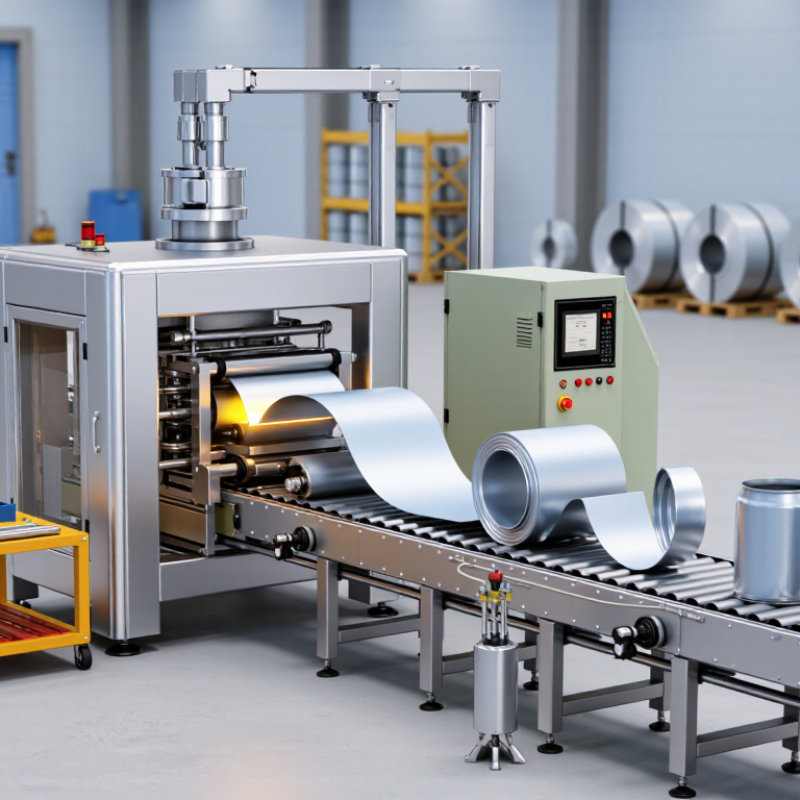
The production line usually includes a sheet feeder, printing or coating unit, cutting station, body former, welding system, and inspection devices. The feeder moves sheets at a controlled speed. Cutting tools create accurate blanks with little waste. A forming roller bends each blank into a cylinder. An electric welding unit joins the side seam. The weld must remain narrow, smooth, and clean. Small defects can weaken the body.
After welding, the machine may apply protective lacquer and create necked or flanged edges. These edges help connect the body with suitable ends during later assembly. Sensors check diameter, seam quality, coating coverage, and surface damage. Experienced operators still matter. They adjust pressure, temperature, speed, and alignment when metal behavior changes. Material thickness is never perfectly uniform. That reality is easy to overlook. A useful design can still fail when maintenance is delayed or tools become worn. Regular cleaning and measured inspections improve reliability, although they cannot remove every production risk.
What Is a Can Body Making Machine and How Does It Work?
A can body making machine converts flat metal sheets into precise cylindrical bodies. The process usually begins with a coil of tinplate or aluminum. A slitter cuts the coil into narrow sheets, while a blanking unit cuts rectangular panels. Each panel must hold a consistent thickness and smooth edge. The cut must be clean.
In a three-piece can line, a forming station bends each panel around a rotating mandrel. A welding unit then joins the vertical seam, creating a strong tube. Rollers correct the roundness before flanging and inspection. Sensors check diameter, seam position, and surface damage at production speed. Small errors multiply. A minor burr can weaken the seam or interfere with the end closure.
The World Steel Association reports that steel remains one of the world’s most recycled materials, with hundreds of millions of tonnes recycled annually. This supports continued use of steel sheets in packaging, but recycling performance depends on clean separation and reliable manufacturing. The Association of European Producers of Steel for Packaging reported an 80.5% steel packaging recycling rate in Europe for 2022. That figure is encouraging, though regional collection systems differ. Machine operators still need to monitor pressure, alignment, and lubricant levels during every shift. A machine can meet its rated output, yet poor setup may produce distorted bodies, wasted material, and hidden seam defects.
| Production Stage | Main Function | Typical Material or Dimension | Typical Machine Data | Result |
|---|---|---|---|---|
| 1. Metal Sheet Preparation | Feeds coated or uncoated sheet into the press line and maintains accurate strip or blank positioning. | Aluminum alloy or electrolytic tinplate; common sheet thickness: approximately 0.15–0.30 mm. | Servo feeding or mechanical feeding; dimensional accuracy is commonly controlled within fractions of a millimeter. | Flat sheet or accurately positioned material ready for blanking. |
| 2. Blanking | Cuts circular blanks from the metal sheet while minimizing unused material. | Blank diameter is selected according to the required can diameter, height, and drawing ratio. | High-speed blanking press; cutting clearance is set according to material type and thickness. | Flat circular metal blanks. |
| 3. Cupping | Draws each circular blank into a shallow cup using a punch, die, and blank holder. | The cup diameter is smaller than the blank diameter; the metal remains substantially the same thickness. | Drawing force depends on yield strength, lubrication, blank size, and tooling geometry. | Short cylindrical cup with a flat bottom. |
| 4. Redrawing | Reduces the cup diameter and increases its height before ironing. | A typical redraw ratio is approximately 1.15–1.30, depending on material and process design. | Uses precision redraw dies and controlled lubrication to reduce wrinkling and tearing. | Taller cup with a reduced diameter. |
| 5. Ironing | Passes the cup through one or more ironing rings to reduce wall thickness and extend body height. | Wall thickness may be reduced to approximately 0.08–0.18 mm in lightweight can designs. | Multiple ironing stages are used to distribute deformation and control material flow. | Thin-walled, elongated can body. |
| 6. Bottom Forming | Forms the shaped bottom profile that improves rigidity and resistance to internal pressure. | Domed or profiled base; the exact geometry depends on the product and filling pressure. | Forming tools control the center panel, countersink, and annular support area. | Can body with a reinforced bottom. |
| 7. Trimming | Removes the uneven upper edge and produces a uniform body height. | Typical beverage-can body heights are approximately 100–170 mm, depending on format. | Rotary or inline trimming; height tolerance is commonly controlled to around ±0.10–0.30 mm. | Uniform open-top can body ready for finishing. |
| 8. Washing and Surface Treatment | Removes drawing lubricant and metal particles before coating, printing, or further assembly. | Multi-stage cleaning may include alkaline washing, rinsing, and drying. | Process temperature and chemical concentration are monitored continuously. | Clean, dry surface suitable for internal and external coatings. |
| 9. Inspection and Rejection | Checks body height, diameter, wall integrity, bottom profile, scratches, pinholes, and wrinkles. | Non-contact sensors, cameras, leak testers, and dimensional gauges may be used. | Inspection is performed inline at production speed; defective bodies are automatically removed. | Consistent can bodies prepared for coating, printing, and end attachment. |
A can body making machine converts a flat metal blank into a thin, seamless container. The line typically handles drawing, ironing, trimming, and inspection at high speed. According to the Can Manufacturers Institute, aluminum beverage cans remain among the most recycled packaging formats in the United States. This places pressure on manufacturers to control material loss and dimensional accuracy.
The process begins with drawing. A punch presses the blank through a die, creating a shallow cup. Several ironing rings then reduce the wall thickness while extending the body. Lubrication matters here. Poor lubrication can leave scratches, uneven walls, or unstable dimensions.
The International Aluminium Institute reports that recycling aluminum can save up to 95% of the energy required for primary production, so efficient forming also supports resource conservation.
Trimming removes the uneven top edge and establishes the target height. A sharp tool and accurate feed prevent burrs and tilted rims. Inspection follows, using cameras, sensors, and periodic manual checks. Systems measure height, diameter, wall thickness, scratches, dents, and flange condition. ISO 2859-1 provides a recognized framework for sampling inspection, although continuous production often needs additional real-time controls. In practice, automation catches most visible defects, but not every process drift. Small errors can still develop slowly. Human review remains useful.
A can body making machine converts flat metal sheets into seamless cylindrical containers through cupping, drawing, ironing, trimming, and inspection. Its control system coordinates servo drives, forming dies, lubrication, sensors, and conveyor timing. A small timing error can wrinkle the wall or damage the rim.
Modern machines use programmable logic controllers, touchscreen interfaces, and real-time pressure monitoring. Operators can track stroke rates, reject counts, oil temperature, and die wear from one panel. According to the U.S. Department of Energy, electric motor systems consume about 23% of total U.S. electricity, making efficient drives important in high-speed production. Variable-speed motors can reduce unnecessary movement, although poor tuning may create new energy losses.
Safety must remain part of the control design, not an afterthought. Interlocked guards, emergency stops, light curtains, and lockout procedures help control access to moving dies and cutting tools. The U.S. Bureau of Labor Statistics recorded approximately 2.6 million nonfatal workplace injuries in private industry during 2023. That figure gives manufacturers little room for casual maintenance practices. ISO 12100 also emphasizes risk assessment across the machine’s full life cycle. In practice, sensors sometimes fail, alarms may be ignored, and production pressure can influence decisions. Human review is still necessary.