Minimal Space. Maximum Impact! Designed for when every millimeter matters> the new IRONLESS UNANO SERIES
Semiconductors
Increase throughput and precision of your system
Display
Enhance accuracy and precision with linear motors
Science and aerospace
Improve motion quality for a variety of applications
Machine tooling
Robust solutions for increased speed and precision
Digital cutting
Create modular and high throughput applications
Printing
Increase printing speed and quality using linear motors
Robotics
Integrate compact solutions for guaranteed uptime and high dynamics
Life science
Establish precise and clean integrated solutions
Woodworking
Maximize performance and accuracy for high throughput
Stages and system solutions
Compact integration and high performance for your axis
Vacuum applications
Best performance for clean and vacuum applications
Characteristics
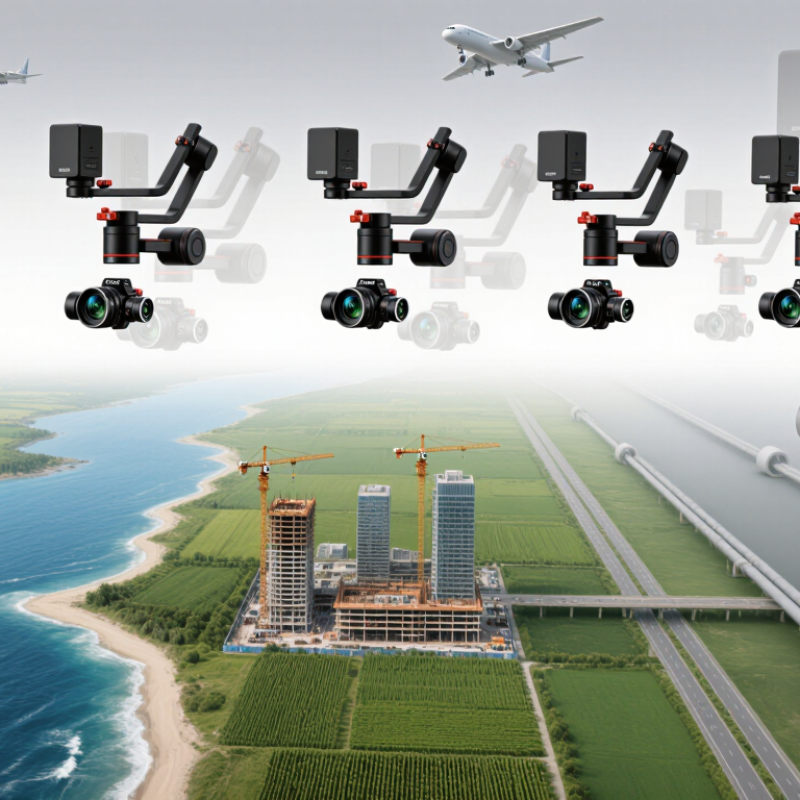
Choosing the right Uav Camera Gimbal in 2026 requires more than comparing resolution, payload ratings, or advertised stabilization. Global buyers need dependable imaging equipment that performs above fields, coastlines, farms, construction sites, and inspection corridors. A gimbal may look impressive on a product page, yet behave differently under wind, vibration, temperature changes, or rapid flight movements.
This guide examines leading UAV camera gimbals through practical specifications and field-focused considerations. We compare three-axis stabilization, sensor compatibility, optical zoom, thermal options, control latency, mounting systems, power consumption, and software integration. Build quality also matters. A loose connector or poorly sealed housing can affect an entire mission. Small details often decide the outcome.
Real-world experience remains important. Bench tests help, but they cannot fully represent dust, glare, uneven terrain, or long operating hours. Some products may deliver excellent video but lack convenient calibration tools. Others provide strong mechanical stability but consume more power than expected. That trade-off deserves attention. We also consider manufacturer support, documentation, warranty service, replacement parts, and regional purchasing requirements. Performance is only part of reliability. The best choice should match the aircraft, camera, mission, operator skill, and local operating standards. No gimbal is perfect. Careful selection is still possible.
UAV Gimbal Fundamentals: Three-Axis Control and Sub-0.1° Stabilization
Three-axis gimbals control yaw, pitch, and roll independently. This separation keeps the camera level during turns, climbs, and crosswinds. A typical system combines gyroscopes, accelerometers, brushless motors, and control software. The Global Market Insights 2024 report identifies aerial imaging as a major driver of drone technology growth. That demand increases expectations for stable, usable footage.
Sub-0.1° stabilization sounds impressive. It means the camera’s angular movement stays below one-tenth of a degree under defined test conditions. However, this figure is not universal. Manufacturers may measure it on a bench, with limited vibration and controlled temperature. In field work, propeller imbalance, sudden braking, and payload changes can reduce performance. Small errors become visible when surveying power lines or reading distant roof damage. Very visible.
MarketsandMarkets reports continued growth in the drone camera market through 2029, supported by inspection, mapping, and public-safety applications. Buyers should examine the test method behind every accuracy claim. Look for angular vibration, response latency, payload limits, and stabilization performance during acceleration. A practical evaluation should record footage while the aircraft yaws, descends, and faces gusts. I would also repeat the test after battery changes. Results can shift. Sub-0.1° control is valuable, but dependable calibration and mechanical balance often matter more than the headline number.
UAV gimbals use three-axis control—pitch, roll, and yaw—to isolate the camera from aircraft movement. A stabilization target below 0.1° equals less than 6 arcminutes of angular error.
The chart shows practical buyer reference thresholds for angular stabilization error. Lower values indicate tighter stabilization performance; a three-axis gimbal independently controls pitch, roll, and yaw.
2026 Best UAV Camera Gimbals for Global Buyers
The 2024 MarketsandMarkets UAV report projects the sector to reach USD 58.4 billion by 2029. That growth raises expectations for compact, measurable imaging systems. A 4K camera should preserve detail after cropping, not only advertise resolution. Check sensor size, bitrate, dynamic range, and frame stability during movement. Small text becomes unreadable when compression is aggressive. Field lighting changes everything.
A 30× optical zoom helps inspect distant structures, but magnification can amplify vibration. Look for repeatable focus performance across the full zoom range. Latency deserves equal attention. Measure the delay between a hand movement and the displayed image, rather than trusting a specification sheet. Under 150 milliseconds feels responsive for many inspection tasks. Lower is better. However, wireless conditions can alter results.
Payload weight affects flight time, balance, and control precision. The Drone Industry Insights Drone Market Report 2024 identifies endurance and operational efficiency as continuing commercial priorities. Compare the complete payload weight, including cables and mounting hardware. My practical mistake was judging weight only at launch. Wind exposed the imbalance later. Buyers should request raw test conditions, not polished demonstrations. A shorter flight with stable imagery may outperform a lighter system with unstable footage.
For global UAV buyers, camera gimbals with 640×512 thermal sensors offer a practical balance between detail, weight, and processing demand. This resolution can reveal heat differences across rooftops, vehicles, vegetation, and industrial equipment. However, thermal clarity depends on lens selection, weather, calibration, and viewing distance. A larger sensor alone does not guarantee better field results.
EO/IR integration adds visible-light context to thermal imagery. Operators can compare color details with heat signatures through one stabilized payload. This helps during infrastructure inspection, night observation, and search tasks conducted under applicable local rules. Look for accurate alignment between both channels, responsive switching, and reliable image stabilization. Field testing often exposes small delays that specifications fail to show. No sensor is perfect.
Tips: Test the gimbal at dawn, midday, and after sunset. Check thermal performance through light rain and haze. Confirm the aircraft can carry the payload safely. Review data security, export requirements, and operating permissions in each target market. Keep spare calibration references available. A simple heated object can reveal alignment errors quickly. I would also examine the control interface, because complicated menus slow trained operators. This is easy to overlook. Battery endurance may fall sharply in cold conditions, so published flight time needs careful interpretation.
| Configuration Class | Thermal Sensor | Electro-Optical Camera | Infrared Capability | Stabilization | Typical Payload Mass | Typical Operating Temperature | Video and Control Interfaces | Typical UAV Compatibility | Best-Fit Mission |
|---|---|---|---|---|---|---|---|---|---|
| Compact Dual-Sensor Gimbal | 640 × 512 uncooled LWIR 12 μm pixel pitch 30 Hz video output | 1/2.8-inch CMOS sensor 1920 × 1080 output Fixed or 10× digital zoom | 8–14 μm long-wave infrared band Radiometric measurement may be optional | 3-axis mechanical stabilization Typical pointing accuracy: approximately ±0.02° | Approximately 450–750 g | Approximately −20°C to +55°C | Ethernet or serial control HDMI, SDI, or IP video depending on configuration | Multirotor aircraft with a payload capacity above 1 kg | Inspection, public safety, search and rescue, night operations |
| Long-Range EO/IR Gimbal | 640 × 512 uncooled LWIR 12 μm pixel pitch 50 or 60 Hz output options | 1/1.8-inch or 1-inch CMOS sensor 4K video capability 20×–30× optical zoom | 8–14 μm long-wave infrared band Digital image enhancement and polarity control | 3-axis stabilization Typical pointing accuracy: approximately ±0.01° to ±0.02° | Approximately 1.2–2.0 kg | Approximately −20°C to +55°C | Gigabit Ethernet, serial control, or CAN-based integration IP, SDI, or HDMI video options | Heavy-lift multirotors and fixed-wing VTOL aircraft | Border observation, infrastructure patrol, utility inspection, tactical overwatch |
| High-Detail EO/IR Gimbal | 640 × 512 uncooled LWIR 12 μm pixel pitch Narrow and wide thermal fields of view | 1-inch CMOS sensor 4K or higher video output 30×–40× optical zoom | 8–14 μm long-wave infrared band Optional temperature measurement and thermal palettes | 3-axis stabilization Mechanical isolation with vibration damping | Approximately 1.5–2.5 kg | Approximately −10°C to +50°C | Ethernet, SDI, HDMI, and serial control options Supports onboard recording on selected systems | Large multirotor, VTOL, and manned-aircraft payload interfaces | Power-line inspection, industrial survey, maritime monitoring, precision observation |
| EO/IR/Laser Mission Gimbal | 640 × 512 uncooled LWIR 12 μm pixel pitch 30 Hz or higher depending on electronics | Full-HD or 4K visible camera 20×–30× optical zoom Autofocus and digital image stabilization | 8–14 μm long-wave infrared band Thermal contrast enhancement and scene tracking | 3-axis stabilization Target tracking and inertial measurement unit integration | Approximately 1.8–3.5 kg | Approximately −20°C to +55°C | Ethernet and serial interfaces Optional laser rangefinder interface IP or SDI video output | Heavy-lift UAVs and aircraft with regulated payload interfaces | Mapping support, target geolocation, emergency response, coordinated field operations |
| Quad-Sensor Survey Gimbal | 640 × 512 uncooled LWIR 12 μm pixel pitch Multiple thermal fields of view may be available | Wide-angle visible camera plus zoom camera Full-HD or 4K output Optional low-light sensor | 8–14 μm long-wave infrared band Suitable for heat-loss and anomaly detection | 3-axis stabilization Integrated attitude and position metadata | Approximately 1.0–2.2 kg | Approximately −10°C to +50°C | Ethernet, serial, USB, or manufacturer-specific payload bus Still-image and video recording options | Medium and large multirotors used for survey missions | Building inspection, solar-farm inspection, roof surveying, environmental monitoring |
| Ruggedized Maritime EO/IR Gimbal | 640 × 512 uncooled LWIR 12 μm pixel pitch Thermal imaging for low-light and reduced-visibility conditions | Full-HD or 4K visible camera 20× or greater optical zoom options Anti-glare image processing | 8–14 μm long-wave infrared band Thermal palettes and electronic image correction | 3-axis stabilization Designed for aircraft vibration and wind disturbance | Approximately 1.5–3.0 kg | Approximately −20°C to +55°C | Ethernet, serial, and IP video options Sealed connectors on ruggedized configurations | Large multirotors, VTOL aircraft, and maritime surveillance platforms | Coastal patrol, vessel monitoring, search and rescue, offshore inspection |

| Technical note: Values are representative specification ranges for UAV EO/IR gimbal configurations available to international buyers. Actual performance depends on lens selection, image-processing electronics, aircraft vibration, atmospheric conditions, mounting interface, regional export controls, and system integration. A 640 × 512 thermal detector is commonly paired with an uncooled long-wave infrared sensor operating in the 8–14 μm band; it should not be confused with a cooled mid-wave infrared detector. | |||||||||
2026 Best UAV Camera Gimbals for Global Buyers
Field Reliability Standards: IP54 Protection, Operating Range, and Endurance
Field reliability starts with realistic specifications. Under IEC 60529, IP54 means limited dust entry and protection from splashing water. It does not mean waterproof operation in heavy rain. In field trials, exposed cable joints often fail before the gimbal housing. That detail is easy to overlook. The FAA’s 2024–2044 Aerospace Forecast recorded about 960,000 commercial small UAS in 2023 and projects roughly 1.18 million by 2028. More aircraft will demand stronger maintenance evidence, not only attractive laboratory ratings.
Operating range should include temperature, wind, vibration, and altitude. A gimbal rated from -20°C to 50°C may still lose stabilization during rapid temperature changes. Cold batteries can reduce available flight power, shortening useful endurance. Endurance should therefore be measured as stabilized camera time, not simply aircraft flight time. TÜV and IEC testing principles recommend repeatable conditions, yet many product sheets provide only ideal figures. That gap deserves questioning. Record startup time, image drift, motor heat, and connector condition after every mission.
Tips: Request IP54 test documentation and temperature limits. Test one unit in dust, light spray, and cold air before buying in volume. Carry spare seals and inspect them weekly. A five-minute inspection can reveal moisture marks, loose fasteners, or rising motor noise. My own notes are sometimes incomplete, so independent logs remain essential for reliable global procurement.
For global UAV buyers in 2026, a camera gimbal must fit both the aircraft and its operating rules. CE marking indicates conformity with applicable European requirements, but it does not grant flight permission. Buyers should verify declarations, technical files, electromagnetic compatibility, and local import obligations. In the United States, FAA compliance depends on the aircraft, pilot, airspace, and mission. BVLOS operations may require specific authorization, risk assessments, reliable command links, and documented emergency procedures. Rules vary.
Use cases also change the ideal gimbal. Mapping missions need stable nadir alignment, accurate triggering, low vibration, and dependable geotagging. Inspection work benefits from precise pointing, optical zoom, and thermal compatibility where permitted. A loose connector can ruin an otherwise valuable survey. Cinema demands smooth three-axis movement, balanced payloads, high dynamic range, and controlled vibration during slow turns. Lightweight systems usually improve endurance, but they may reduce sensor size or stabilization performance.
Practical testing matters more than a specification sheet. Check horizon drift after repeated starts, temperature changes, and hard landings. Record calibration results. Review firmware controls, data security, maintenance access, and operator training requirements. A gimbal can be technically excellent yet unsuitable for a certified workflow. That is the uncomfortable part. Compliance documents may be complete, while field procedures remain weak. Global buyers should ask for independent test evidence and confirm every claim with the relevant authority before deployment.